

Key Takeaways
- Top Story: Healthcare AI is moving from controlled trials to autonomous clinical workflows, raising questions about trust, oversight, and the nature of medical expertise.
- The FDA is relaxing oversight of wellness AI solutions as the Trump administration rolls back previous safeguards, triggering ethical debates.
- The legal sector is calling for regulatory clarity, voicing concern that aggressive deregulation could undermine professional standards and public trust.
- Industrial AI is advancing beyond tool enhancement to orchestrating entire manufacturing processes, reshaping labor and organizational models.
- There is growing demand for wider societal conversations about AI, reflecting the tensions among innovation, autonomy, and the need for human judgment.
Below, the key drivers and complexities shaping today’s AI crossroads.
Introduction
On 8 January 2026, healthcare AI’s transition from experimental trials to autonomous clinical workflows marks a watershed in AI technology trends for 2026. This shift challenges assumptions about trust and expertise. The FDA’s relaxation of wellness AI rules under President Trump signals changing regulatory boundaries. Today’s press review examines the broader cultural, legal, and industrial implications of AI’s ascent in daily life.
Top Story
Healthcare AI Transitions to Autonomous Clinical Workflows
Healthcare AI is crossing from pilot projects to independently managing clinical workflows. Hospitals are authorizing AI-driven systems to oversee patient monitoring, triage, and even initial diagnoses. This development is provoking critical questions about trust in algorithms, medical oversight, and the evolving definition of expertise.
Industry leaders and ethicists are debating where human clinicians should remain central and when AI can safely intervene or take over. Dr. Eleanor Chen, Chair of Medical Ethics at Johns Hopkins University, stated that
Stay Sharp. Stay Ahead.
Join our Telegram Channel for exclusive content, real insights,
engage with us and other members and get access to
insider updates, early news and top insights.
 Join the Channel
“We are entering uncharted territory, where the line between tool and practitioner is becoming less clear.”
Regulators and hospital administrators are developing new oversight frameworks as a result.
Also Today
FDA Relaxes Wellness AI Rules as Regulations Shift
The FDA has scaled back oversight of consumer wellness AI solutions, in line with broader deregulatory efforts by the Trump administration. The relaxation affects products like AI-powered fitness trackers, wellness apps, and non-diagnostic health tools. Advocates argue the move accelerates innovation, while critics express concern that minimal safeguards may expose consumers to unproven algorithms.
This regulatory shift has reignited ethical debates about the balance between innovation and consumer protection. Regulatory agencies are facing increased pressure to define clear categories for medical versus wellness AI products in 2026.
concrete regulatory frameworks are also under discussion in the European context, reflecting global interest in harmonizing standards for AI oversight.
Legal Sector Seeks Clarity Amid Push for Deregulation
Legal professionals are calling for concrete regulatory frameworks for AI, warning that unchecked deregulation risks undermining the integrity of the legal system. Bar associations and advocacy groups have lobbied for rules that clarify professional accountability when lawyers or judges use AI-assisted tools for case research, contract analysis, or courtroom decision support.
The absence of clear standards is fueling uncertainty in courts and among clients. Legal technology experts highlight the need for balanced oversight to ensure both innovation and public trust.
ethical debates about alignment and oversight continue in legal and regulatory domains, as AI becomes more entrenched in decision making processes.
Industrial AI Orchestrates Manufacturing Systems
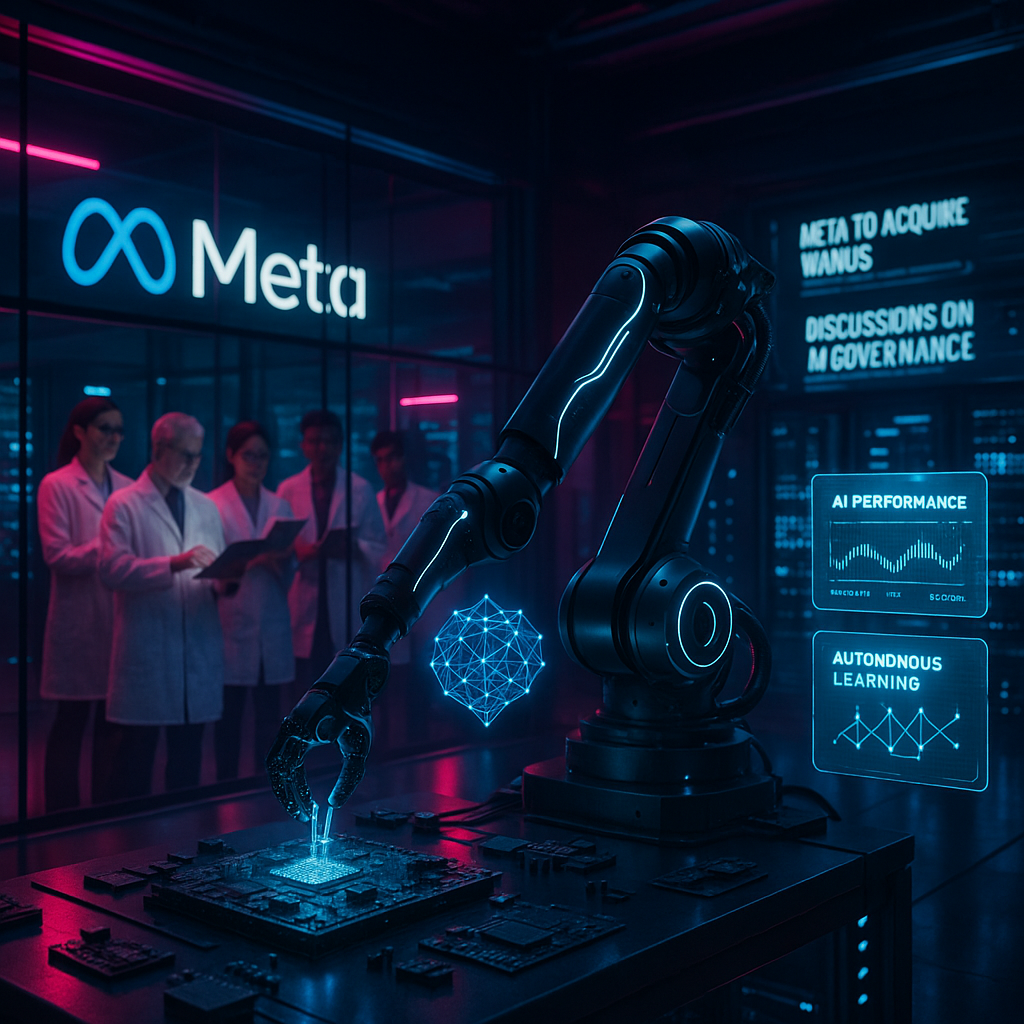
Industrial AI is moving beyond enhancing manufacturing tools and now orchestrates entire production processes. Major manufacturers have begun deploying AI agents capable of scheduling workflows, optimizing logistics, and dynamically reconfiguring production lines.
Analysts note that this evolution is driving changes in labor roles, requiring workers to collaborate with autonomous systems while focusing on oversight and problem-solving. The integration of AI in manufacturing reflects a broader trend toward autonomous, adaptable industrial ecosystems.
This organizational transformation is paralleled by trends in digital twin predictive maintenance and machine-led plant optimization, which support dynamic resource allocation and preemptive repairs.
Also Today
Creative Industries See AI-Human Collaboration Redefine Standards
AI-human collaborations have become prominent in creative industries, with this year’s Academy Award nominations including an unprecedented number of co-created films. Seven out of ten Best Picture nominees involved significant use of AI, ranging from scripting assistance to dynamic scene generation.
The Academy of Motion Picture Arts and Sciences introduced a new category, “Outstanding Achievement in Human-AI Artistic Collaboration,” to recognize these hybrid creative processes. This change highlights the shifting boundaries of artistic authorship and the birth of new forms of creativity.
In the music industry, attribution disputes are on the rise, with record labels and artists embroiled in lawsuits over unclear authorship of AI-assisted compositions. Industry leaders are advocating for clear frameworks to credit and regulate AI contributions in creative works, emphasizing that flexible models are needed to match the evolving continuum of AI involvement.
authorship crisis is an escalating theme in the creative and cultural fields as generative models reshape what it means to own or author creative products.
Market Wrap
Tech stocks rallied on the latest cross-platform AI integration news. The Nasdaq Composite rose 2.3 percent in response to expectations of increased industry interoperability. OpenAI’s valuation rose an estimated 15 percent after announcing integration with Anthropic’s Claude AI model, while Anthropic enjoyed a similar boost.
AI infrastructure providers such as Scale AI and Weights & Biases saw strong gains, up 7.8 percent and 9.1 percent respectively. Analysts attribute this to growing opportunities for specialized providers as AI ecosystems become more collaborative. Traditional tech giants posted mixed results. Microsoft gained 3.2 percent, while Alphabet declined 1.8 percent. Market analysts suggest that investors are reassessing which firms stand to benefit most from a more open AI landscape.
opportunities for specialized providers are also fueling the evolution of knowledge management and collaborative tool ecosystems across AI-driven industries.
Stay Sharp. Stay Ahead.
Join our Telegram Channel for exclusive content, real insights,
engage with us and other members and get access to
insider updates, early news and top insights.
Join the Channel
What to Watch
- 15 January 2026: Congressional hearing on “AI Safety and National Security” featuring testimony from OpenAI, Anthropic, and Google DeepMind CEOs.
- 20 January 2026: World Economic Forum session on “AI Governance Frameworks” in Davos.
- 22 January 2026: Federal Trade Commission workshop on competition in AI markets.
- 1 February 2026: Launch of OpenAI’s integrated platform featuring Claude.
- 8 February 2026: MedRobotics begins deployment of the ARTEMIS system in select teaching hospitals.
- 12 February 2026: EU Digital Services Act amendments specific to AI systems take effect.
Conclusion
AI technology trends for 2026 are reshaping core sectors across society. Autonomous clinical workflows are moving from concept to practice and regulatory positions are evolving in response. Growing collaboration and regulatory recalibration reflect a shift toward more open, infrastructure-oriented approaches to AI.
What to watch: Congressional hearings, major platform launches, and the hospital rollout of MedRobotics’ ARTEMIS system are set to illuminate the real-world impact of these changes in the coming weeks.
industry interoperability and AI’s organizational impact will remain in sharp focus as deployment continues to accelerate.


Leave a Reply