
Key Takeaways
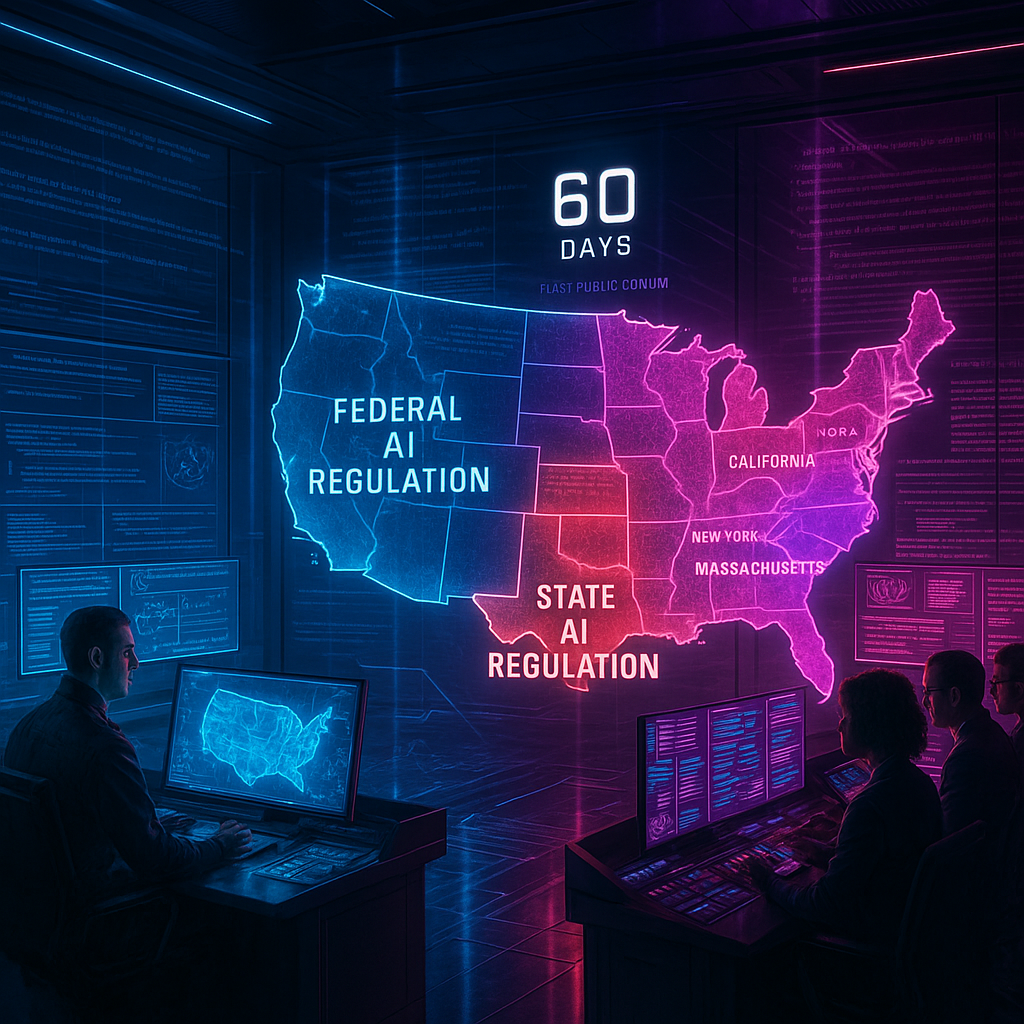
- Federal AI Task Force launched: Trump’s executive order establishes a national body to address state-specific artificial intelligence rules.
- Direct intervention in state regulation: The task force is mandated to challenge state laws or proposals deemed inconsistent with federal AI policy. This raises questions of jurisdiction and autonomy.
- Implications for state innovation labs: The order casts uncertainty on local AI initiatives and experimental regulatory sandboxes developed by states.
- Catalyst for national debate: The executive action is expected to spark philosophical and legal arguments about the balance between technological advancement and local ethical standards.
- Potential for regulatory standoff: States like California, with robust AI regulations, could soon find themselves in direct conflict with federal mandates.
- Next steps: The task force will convene its first public forum within 60 days, inviting comment from technologists, ethicists, and policymakers nationwide.
Introduction
Former President Donald Trump announced the creation of a federal AI Task Force aimed at challenging state-driven artificial intelligence regulations. This executive order puts Washington firmly at the center of a philosophical and jurisdictional debate. It marks a turning point in the question of whether national policymakers or local experimenters will define America’s relationship with emerging forms of intelligence.
Executive Order Details
Trump’s executive order establishes a federal task force with the authority to review and challenge state-level AI regulations deemed incompatible with federal technological priorities.
Operating under the Department of Commerce, the task force will include representatives from the Justice, Treasury, and Defense departments. Appointments are due within 60 days, with a requirement to produce quarterly reports identifying state rules seen as barriers to AI innovation.
White House officials said the aim is to prevent fragmented state regulations from undermining America’s technological competitiveness. National Security Advisor Robert O’Brien emphasized the need for unified action. He insisted that fragmented policies risk slowing the nation’s AI leadership compared to countries like China.
Stay Sharp. Stay Ahead.
Join our Telegram Channel for exclusive content, real insights,
engage with us and other members and get access to
insider updates, early news and top insights.
 Join the Channel
EU AI Act framework discussions echo similar concerns about harmonizing AI oversight and avoiding regulatory patchwork that could burden innovation and technological competitiveness.
Federal vs. State Authority in the Digital Age
Constitutional Questions Emerge
Constitutional scholars warn that the executive order tests longstanding principles of federalism in technology governance. The order relies on the Commerce Clause to justify federal preemption over state AI regulations.
Professor Eleanor Winthrope of Georgetown Law noted there is a fundamental tension between states as “laboratories of democracy” and the federal government’s focus on technological competitiveness as a priority for national security.
The executive order explicitly names “regulatory harmonization” as its core objective, casting inconsistent state actions as obstacles to innovation rather than as efforts at consumer protection. This frames federal action as essential for economic growth.
California’s AI Ethics Act in Crosshairs
California’s recently enacted AI Ethics Act is a primary focus of the federal task force. The state law mandates algorithmic impact assessments and transparency standards that go beyond current federal guidelines.
Governor Gavin Newsom defended the state’s approach, arguing that Californians deserve transparency on how AI systems affect their lives. He argued that basic rights shouldn’t be sacrificed in the race for rapid innovation.
The state’s documentation requirements for potential discriminatory effects in AI systems face criticism from federal officials, who say such requirements create excessive compliance burdens for technology companies.
This tension between state and national authority touches the ongoing discussion about the need for digital rights and algorithmic safeguards, resembling debates found in digital governance and algorithmic ethics.
Industry Response and Stakeholder Positions
Technology companies are divided in their responses. It often depends on their market positions. Large AI leaders generally support federal preemption, while smaller firms and startups voice skepticism.
Jennifer Haley, policy director at the Technology Innovation Council, argued that a single federal standard would reduce compliance costs and help innovation scale. She added that companies can’t operate effectively with fifty different regulatory frameworks.
Civil liberties groups see the order as an attempt to sidestep public concerns about AI safety. Marcus Jefferson of the Digital Rights Coalition claimed that local communities best understand their own interests. He believes the federal action removes those valuable perspectives from policymaking.
Academic researchers point to this conflict as reflecting deeper philosophical questions about how society should govern technology. The debate exposes competing visions about whether AI development should emphasize speed and scale or prioritize careful, long-term consideration of social consequences.
Broader considerations about the ethical and legal dimensions of federal versus local AI policy also appear in thinkpieces on AI origin philosophy, which reflect on whether intelligence and its governance are discovered or invented structures.
What Happens Next
The task force will start its formal review next month, initially examining regulations in California, New York, and Massachusetts. All three currently have comprehensive AI regulatory frameworks.
Multiple state attorneys general are expected to launch legal challenges to the order. Meanwhile, congressional hearings on federal AI preemption are scheduled for March 15th. These will feature testimony from constitutional experts, technology executives, and state regulatory leaders. Lawmakers are now considering if new legislation is needed to clarify federal authority in AI oversight.
State lawmakers in at least twelve states plan to introduce or reinforce their own AI regulations before the task force is fully set up. This could set the stage for some fast-paced federal-state confrontations.
Stay Sharp. Stay Ahead.
Join our Telegram Channel for exclusive content, real insights,
engage with us and other members and get access to
insider updates, early news and top insights.
Join the Channel
Legal experts predict the courts will ultimately decide this jurisdictional dispute. Cases arising from the conflict might even reach the Supreme Court. Professor Winthrope observed that these legal battles could define technological governance and federalism for years to come.
Current developments may be influenced by ongoing international regulatory trends, as exemplified by AI constitution, ethics, and policy debates beyond the US, showing how AI rulemaking is becoming a global concern.
Conclusion
Federal efforts to standardize AI oversight now face a diverse patchwork of state regulations, provoking reflection on innovation, governance, and democratic participation. The growing conflict between federal authority and state autonomy seems poised to create lasting precedents for technological rulemaking. What to watch: state legal challenges, the ongoing work of the new task force, and the pivotal congressional hearings set for March 15th.
This federal–state struggle mirrors the broader philosophical tensions about technology’s place in society, extensively analyzed in works such as AI and collective memory, where policy decisions today will have ramifications for innovation and governance for generations to come.




Leave a Reply