
Key Takeaways
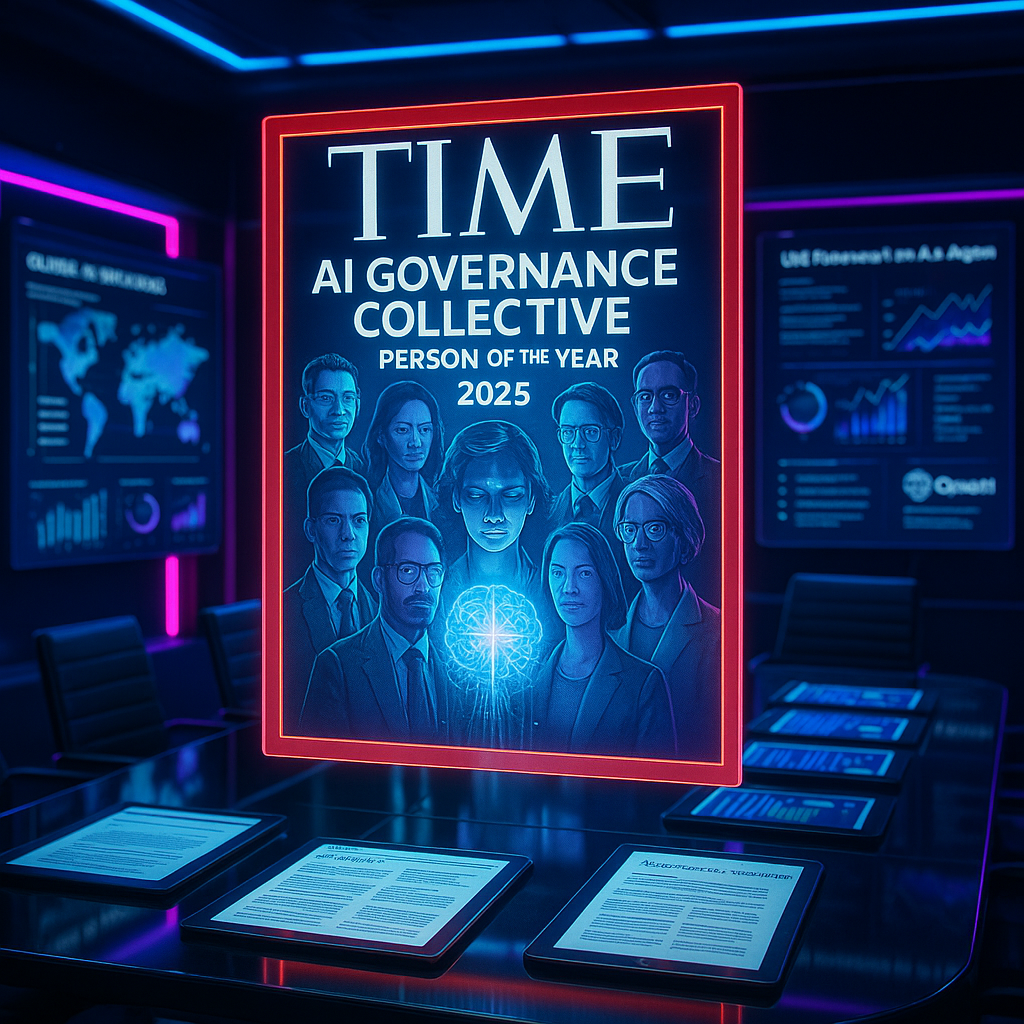
- Top story: AI innovators are named Time’s 2025 Person of the Year, highlighting the influence of AI architects on global culture.
- The EU begins enforcement of workplace-focused AI legislation, increasing scrutiny on employer use of algorithms.
- A major news organization implements formal generative AI guidelines, prompting discourse on transparency, clarity, and public trust in synthetic content.
- Deepfake voice scams are rising, intensifying calls for updated telecom safeguards and regulatory intervention.
- Philosophical and ethical questions are increasingly prominent as AI integrates further into daily work and media creation, prompting challenges to existing norms.
- The AI impact on society has become central both to regulatory action and public conversations.
Introduction
Time’s announcement on 12 December 2025, naming AI architects as Person of the Year, highlights the powerful resonance of artificial intelligence in today’s culture. This milestone appears amid the EU’s enforcement of new workplace AI laws and evolving ethical and regulatory boundaries affecting technology, media, and daily life. It underscores the growing relevance of AI’s impact on society.
Top Story: Time Names “AI Governance Collective” Person of the Year
The announcement
Time magazine named the “AI Governance Collective” as its 2025 Person of the Year on 12 December 2025. This distinction recognizes a diverse group of policymakers, technologists, ethicists, and activists who have shaped AI oversight. The collective encompasses leaders from various sectors who contributed to the first comprehensive international AI governance frameworks.
Why it matters
This is the first time Time has selected a conceptual group focused on technology governance rather than individual inventors or innovators. Editor-in-chief Maya Richardson stated the decision reflects “a pivotal moment where humanity collectively decided how to integrate artificial intelligence into society’s fabric.” The choice marks a shift from speculation about AI’s potential to concrete action on its integration and governance.
Key figures recognized
Figures highlighted in the collective include EU Digital Commissioner Elena Dubois, responsible for implementing the AI Act; Sam Altman of OpenAI and Demis Hassabis of Google DeepMind, who advocated for voluntary industry safeguards; and civil liberties proponents such as the Coalition for Responsible AI, which prioritized public interests in the regulatory process. Time’s feature includes interviews with twenty-eight individuals from six continents who influenced key AI policy debates.
Stay Sharp. Stay Ahead.
Join our Telegram Channel for exclusive content, real insights,
engage with us and other members and get access to
insider updates, early news and top insights.
 Join the Channel
Historical significance
This selection follows Time’s tradition of recognizing technological milestones, such as naming “The Computer” in 1982 and “You” (representing user-generated content) in 2006. The commemorative issue, out on 15 December 2025, will feature essays from global leaders on how AI is transforming society, as well as the level of cooperation achieved among competitors to establish ethical boundaries.
Also Today: International AI Governance
UN adopts AI rights framework
On 11 December 2025, the United Nations General Assembly approved the first global non-binding framework for AI rights with a 178-3 vote. This resolution sets foundational principles for human autonomy, transparency, and accessibility in AI systems. Secretary-General Amara Patel described it as “a milestone that acknowledges both AI’s transformative potential and the necessity of human-centered safeguards.”
OECD reports standardization progress
The OECD released its quarterly AI Policy Observatory findings, documenting substantial alignment of technical AI standards among member nations. Forty-two instances of technical standard harmonization were observed over the past three months. OECD Technology Policy Director Jean Baptiste noted, “We’re witnessing the formalization phase of AI governance where theoretical frameworks are becoming operational protocols.”
US-China cooperation emerges
Despite ongoing tensions, US and Chinese officials met in Singapore on 11 December 2025 and announced limited cooperation on AI safety research. Their joint statement commits both countries to sharing information on containment protocols for advanced systems and to establishing a hotline for AI incidents with potential global repercussions. Analysts consider the development significant given the broader competitive relationship between the two countries.
Also Today: Corporate Accountability
OpenAI introduces oversight innovations
On 11 December 2025, OpenAI launched its “Distributed Governance System,” a new accountability structure dispersing decision-making across technical teams, ethicists, and public representatives. The approach includes mandatory delays for deploying systems with substantial societal risks and features transparency dashboards on system capabilities.
Finance industry adopts AI audit standards
The Global Financial Institutions Consortium, which represents 86 percent of global banking assets, announced the unanimous adoption of an international AI Audit Protocol established earlier in 2025. Institutions have committed to quarterly third-party verification of AI systems used in credit scoring, risk assessment, and customer service. The Financial Times called this “the most sweeping industry-wide technology oversight mechanism ever established.”
Whistleblower protection strengthened
On 11 December 2025, nine major tech firms (including Microsoft, Meta, and Anthropic) jointly announced enhanced protections for AI ethics whistleblowers. The measures include non-retaliation policies, independent review panels, and financial assistance for employees identifying potential harms. The announcement follows recent congressional testimony from former employees who experienced retaliation after raising concerns about AI practices.
Also Today: Societal Impact Assessments
Healthcare AI demonstrates mixed outcomes
The National Institutes of Health published findings from a two-year study covering AI deployment at 1,200 healthcare facilities. Results indicate significant gains in diagnostic accuracy (27 percent improvement on average) and administrative efficiency, but also point to disparities in effectiveness for rural patients and certain ethnic groups.
Education systems balance benefits and concerns
A coalition of educational organizations released new guidelines for AI use in K-12 classrooms, following trials in 150 school districts. The framework seeks to foster creative thinking while supporting individualized learning. Education Secretary Benjamin Harris stated, “We’ve moved past both technophobia and techno-utopianism toward a nuanced understanding of appropriate boundaries.”
Creative industries establish attribution protocols
Major publishers, music labels, and film studios reached agreement on an industry-wide standard for AI training data transparency and attribution. The new system, developed with input from creators’ guilds, mandates compensation structures for works used in AI training and obligates disclosure when AI contributes to creative production. Adoption will begin in January 2026 under agreements reached at the Creative Rights Summit in London on 11 December 2025.
What to Watch: Key Dates and Events
- December 14-16: The G20 AI Ministers Summit in Jakarta will review implementation timelines for new governance frameworks.
- December 18: Congressional hearings on amendments to the AI Safety Act, featuring testimony from regulatory agencies and industry leaders.
- January 5: The EU AI Oversight Body holds its inaugural public meeting in Brussels.
- January 15: Deadline for large language model providers to submit risk assessment documentation to international regulators.
- January 20-24: World Economic Forum in Davos features three sessions on AI governance with public and private sector participation.
Conclusion
Time’s decision to honor the “AI Governance Collective” signals a pivotal societal advance. This is a move from debate to structured, cross-sector management of the AI impact on society. The coordinated introduction of new frameworks and standards reflects growing dedication to ethical development and oversight as core practices. What to watch: Major summits and regulatory milestones in December 2025 and January 2026 will reveal how these frameworks are adopted in practice worldwide.



Leave a Reply