
Key Takeaways
Artificial intelligence is swiftly transforming the landscape of humanitarian logistics, making disaster relief operations more nimble, efficient, and responsive to the needs of vulnerable populations. As organizations deploy disaster relief AI in an ever-growing range of global crises, understanding the interplay of technical promise and the social-ethical responsibilities surrounding algorithmic decision-making becomes crucial, especially when human lives, cultures, and local wisdom are inextricably involved.
-
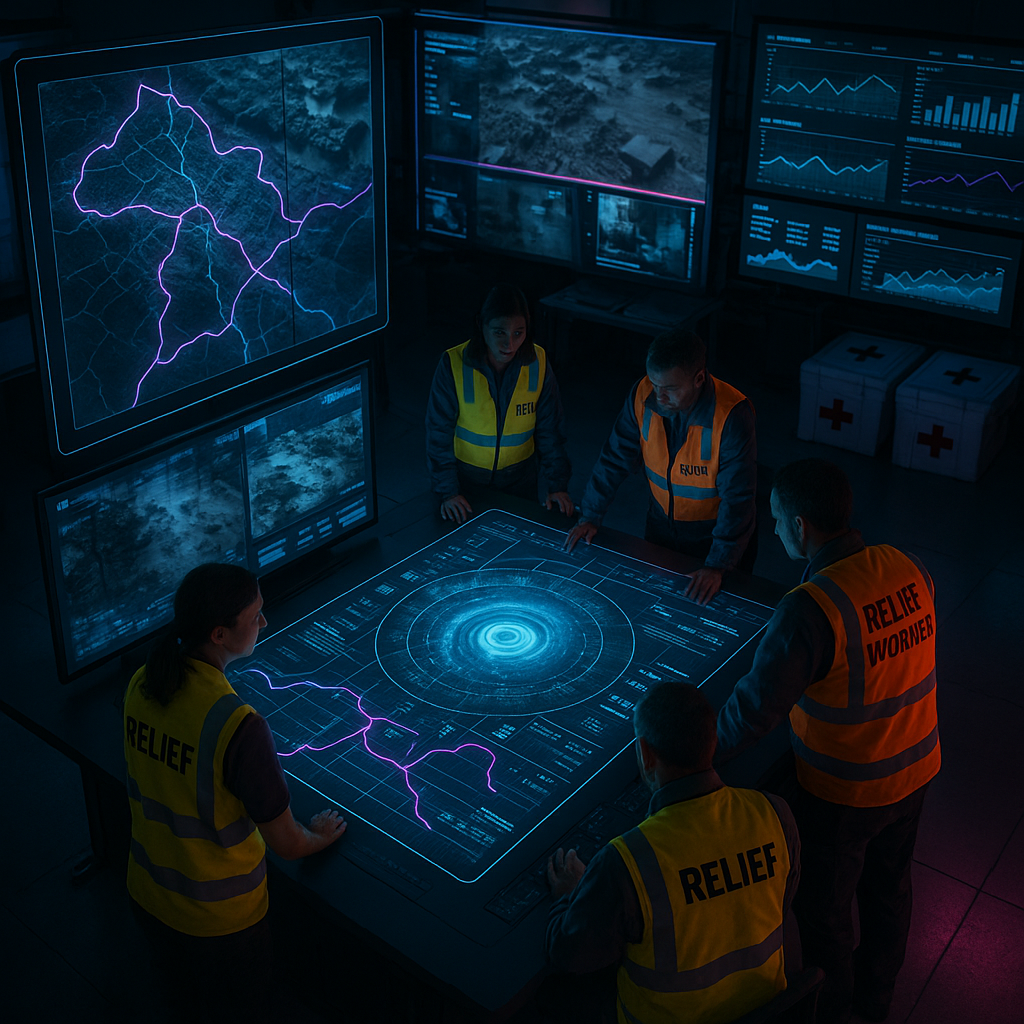
AI revolutionizes crisis coordination with real-time insights. Modern disaster relief AI assimilates massive, fragmented data streams from satellites, social platforms, IoT devices, and on-the-ground sensors. This integrated intelligence empowers humanitarian teams to swiftly assess needs, allocate scarce resources, and coordinate multifaceted response efforts with speed and precision that far outstrip traditional methods.
-
Machine learning drives efficiency, maximizing aid impact. Predictive analytics and supply chain optimization allow AI-driven systems to anticipate demand patterns and fine-tune delivery routes. This sharp reduction in supply inefficiencies and resource waste ensures that a greater proportion of aid reaches those in dire need, even when budgets and timelines are tight.
-
Algorithmic agility tackles chaos in unpredictable disaster zones. Logistics platforms powered by AI can rapidly respond to changing ground conditions. By rerouting supplies when infrastructure is compromised or new hazards arise, these platforms support agile, data-informed decisions.
-
Ethical stewardship: AI must honor local context and culture. As algorithms streamline operations, there is a genuine risk of overshadowing the nuanced judgment and lived experience of local actors. Overreliance on data-driven decisions can potentially neglect cultural sensitivities and context-specific ethics, raising critical questions about the long-term impacts of delegating crisis decisions to machines.
-
Adoption obstacles remain in resource-limited environments. Many humanitarian entities grapple with the complexities of digital infrastructure gaps, limited technical expertise, and constrained funding. Bridging these divides through collaborative partnerships, open-source solutions, and investment in digital skills is a precondition for democratizing advanced humanitarian logistics.
-
AI actively supports global Sustainable Development Goals (SDGs). By optimizing supply chains, enhancing transparency, and boosting operational accountability, intelligent systems advance SDG-related objectives in health, hunger eradication, equality, and disaster resilience.
Grasping these diverse impacts is vital for relief agencies, governments, technologists, and communities aiming to build smarter, more ethical systems of care. In the following sections, we’ll explore how disaster relief AI is being implemented, the practical challenges and innovations it introduces, and the deeper philosophical dilemmas that surface when algorithmic logic is entangled with human vulnerability and hope.
Introduction
A cyclone cuts off supply lines. An earthquake severs communications. In moments where every minute lost or resource misallocated can mean the difference between life and death, the urgency is palpable. Disaster relief AI has entered this high-stakes arena, reimagining humanitarian logistics. The promise is compelling: deliver critical insights in real time, forecast fast-changing needs, and orchestrate the flow of aid with precision, all while calamity unfolds in real time.
Yet the promise of machine-led acceleration collides with a set of profound questions. Who ensures that AI decisions reflect the lived realities of affected communities? How do we preserve the intuition and experience of human actors in a landscape of seamless optimization? As the sector speeds toward algorithmic crisis management, organizations must navigate not only data infrastructure and funding hurdles, but also the imperative to ensure AI serves as a scaffold for human wisdom, not as its replacement.
Stay Sharp. Stay Ahead.
Join our Telegram Channel for exclusive content, real insights,
engage with us and other members and get access to
insider updates, early news and top insights.
 Join the Channel
With these tensions in mind, we’ll delve into how AI is reshaping the optimization and coordination of relief supply chains, and explore both the transformative potential and the critical challenges (technical, social, and ethical) at the heart of this new humanitarian frontier.
The Evolution of Humanitarian Logistics
From Manual Processes to Intelligent Systems
Over the past several decades, the field of humanitarian logistics has evolved from labor-intensive, reactionary models to a landscape shaped by interconnected, intelligent systems. Early disaster response, from the 1970s through the 1990s, leaned heavily on manual tracking, analog communications, and subjective human assessment. These approaches, while rooted in lived experience, struggled with delays, fragmented information, and suboptimal resource deployment.
The arrival of digital tools in the 1990s and early 2000s began the slow transition to more systematic operations. Electronic inventory, basic GIS, and centralized process management laid the groundwork for more coordinated responses.
Today’s landscape has advanced far beyond these first steps. Modern humanitarian logistics harnesses machine learning, automation, and predictive analytics, creating responsive, self-improving networks that can adapt in real time.
The surge in available data is a major accelerant. Humanitarian operations now generate torrents of information from satellites, mobile phones, IoT sensors, social networks, and field deployments. This data-rich environment offers fertile ground for machine learning, fueling the move from static, guesswork-driven processes to dynamic, resource-optimized networks.
Data-Driven Decision Making in Crisis Response
The heart of modern humanitarian logistics is its shift from intuition-bound improvisation to rigorously data-driven decision making. In the past, logistics coordinators relied on firsthand knowledge, experience, and ad hoc networks, producing uneven results and risking loss when expertise left the field. Today, AI systems work alongside humans, providing analytical depth and real-time insights that were previously unattainable.
The World Food Programme’s OPTIMUS is a standout. It pulls together the nutritional values, sourcing locations, delivery times and costs of different foods, so that food baskets can be adjusted without reducing their nutritional value. According to the WFP, it has saved more than US$30 million in the operations where it is used or tested, and could save up to US$100 million a year once rolled out more broadly.
What sets these modern systems apart is their ability to simultaneously process starkly different kinds of data: quantitative inventory tallies, qualitative field reports from social media, geo-spatial analyses, and future-facing forecasts. This holistic, multilayered intelligence enables operational leaps that would daunt even the most committed teams of human experts.
As we explore AI’s core applications across industries, it’s worth recognizing that similar tools have begun to upend operations in healthcare (streamlining emergency supply distribution and acute care triage), finance (flagging bottlenecks and reallocating funding during disaster response), and education (coordinating emergency learning kits and resources in the aftermath of crises), further amplifying their humanitarian impact.
Core AI Applications in Disaster Relief
Predictive Analytics for Disaster Preparedness
Predictive analytics is redefining preparedness strategies, turning what was once an almost exclusively reactive field into a science of anticipation and pre-positioning. By sifting through historical patterns, monitoring environmental cues, and learning from real-time anomalies, these AI tools illuminate threats before they reach critical mass.
Elsewhere, the Pacific Disaster Center’s DisasterAWARE, a multi-hazard early warning platform, produces dynamic threat assessments usable by response teams, governments, and NGOs.
Health emergencies are no exception. AI-driven disease forecasting systems such as BlueDot and HealthMap routinely monitor diverse streams, from online news and eyewitness reports to international air travel, to issue alerts on emerging outbreaks. BlueDot, for example, says it alerted its clients on December 31, 2019 to what would become known as SARS-CoV-2, five days ahead of the World Health Organization. Such foresight can recalibrate the entire humanitarian supply apparatus, speeding up deployments and saving lives.
More advanced predictive systems, such as Google’s Flood Forecasting Initiative, now forecast riverine floods up to 7 days in advance, pairing a hydrology model with an inundation model that predicts affected areas and water levels. These forecasts give governments, aid organizations, and at-risk communities time to act.
This predictive lens is being applied far beyond natural disaster relief. In finance, similar analytics assess market volatility, enabling swift fund allocation for crisis-affected populations. In environmental science, AI models help predict and mitigate the secondary effects of climate disasters on food security and water resources, strengthening community resilience.
Supply Chain Optimization Algorithms
Humanitarian supply chains, unlike their commercial counterparts, must grapple with volatility, damaged infrastructure, limited distribution channels, and relentless urgency. AI-driven optimization algorithms have emerged as indispensable tools to navigate these constraints, ensuring resources flow where and when they are needed most.
At the last mile, often the most challenging and dangerous segment, route optimization engines analyze live road and security data, optimize scheduling, and coordinate vehicle dispatch in real time.
Stay Sharp. Stay Ahead.
Join our Telegram Channel for exclusive content, real insights,
engage with us and other members and get access to
insider updates, early news and top insights.
Join the Channel
Crucially, the principles underlying these advancements are spilling into other domains as well. In retail, AI optimizes inventory to reduce perishables’ waste and responds adaptively to supply disruptions, which can be repurposed for delivering humanitarian goods in conflict zones. In education, machine learning tools route mobile classrooms and digital learning kits to displaced students in disaster areas, ensuring continuity of learning amidst chaos.
Intelligent Resource Allocation Systems
Allocation of resources in crises is always fraught with difficult trade-offs: How should food, medicine, or funding be prioritized when needs are overwhelming? Intelligent allocation systems, powered by AI, make these ethical and logistical dilemmas explicit, bringing systematic rigor and transparency to decisions that once relied on hasty judgment calls.
The Netherlands Red Cross’s 510 data team illustrates this well. Its Priority Index for typhoons in the Philippines utilizes demographic, vulnerability, and damage data to rapidly recommend where limited supplies will do the greatest good. Built on 12 past typhoons, the model placed municipalities at most 1 damage class off, on a 5-class scale, in 73% of cases. For Typhoon Mangkhut, it was first run on forecast wind speeds, before landfall.
In legal and regulatory fields, similar optimization systems have been used to allocate scarce legal aid services to the most urgent needs during natural disasters or migration surges, ensuring a fairer and more data-driven triage process.
What unites these systems is their capacity to weigh operational efficiency, equity, compliance, and long-term recovery (simultaneously). By surfacing these trade-offs and making their logic visible, AI-supported allocation mechanisms foster greater accountability and trust across the humanitarian spectrum.
Maximizing Impact Through AI Integration
By now, it is clear that integrating AI into humanitarian logistics is not a matter of simply plugging in a new tool. It is an organizational transformation that demands a rethinking of workflows, relationships, and value systems. Efficiency is only the first benefit that emerges. The true impact is unlocked when intelligent automation is woven into every aspect of crisis response, creating feedback loops between strategy, field experience, and adaptive algorithms.
For example, when predictive analytics inform not just supply allocation but also workforce deployment and community engagement, relief operations become more holistic and resilient. Similar principles are being leveraged in healthcare, where AI-optimized logistics are used to deliver vaccines and medical staff to outbreaks in near-real time. In finance, rapid fund disbursement platforms now use AI to ensure aid reaches verified recipients quickly, reducing fraud and bottlenecks.
Environmental science further benefits from AI integration, with predictive models guiding the restoration of damaged ecosystems post-disaster, ensuring that recovery efforts not only save lives but build longer-term climate resilience. In the education sector, disaster relief AI helps coordinate the deployment of mobile classrooms and digital resources to ensure that learning continues for displaced students.
A cross-sectoral approach amplifies the potential of AI in humanitarian contexts. When relief agencies coordinate with financial institutions, healthcare providers, education systems, and local government, AI-driven logistics become a keystone for rebuilding not just infrastructure, but social fabric and opportunity.
Conclusion
The relentless advance of AI in humanitarian logistics represents far more than a technical upgrade. It signals a fundamental evolution. It is a move from improvisation and institutional memory toward systems that can anticipate, adapt, and optimize with breathtaking speed and scale. Gone are the days when paper records and ad hoc solutions defined the crisis response toolkit. Today, algorithmic intelligence is shaping a new paradigm. Predictive analytics, real-time data fusion, and ethical algorithms now define how hope, resources, and resilience are delivered to those teetering on the brink.
This transition is as much philosophical as it is operational. AI, as an “alien mind,” augments our capacity to care precisely, to act transparently, and to support far more lives than ever before. Yet, for all its promise, true progress demands that we never abdicate the wisdom of human intuition and lived experience. The design of humanitarian AI must continually reflect, adapt, and embrace the complex realities of local contexts, cultural history, and ethical nuance.
Looking ahead, those organizations and communities that foster deep partnerships, invest in accessible digital infrastructure, and cultivate pluralistic, data-aware cultures will define the future of disaster relief. The competitive edge will go to those not content to simply react, but willing to anticipate, harnessing the best of both human ingenuity and machine insight.
Ultimately, the question is not only how AI will transform humanitarian logistics, but also how we, as a global society, will use these emerging capabilities to widen the circle of care, rebuild dignity amid disaster, and imagine the next era of resilient, interconnected response. The challenge is ours: to ensure that alien minds advance not only efficiency, but justice, empathy, and the shared pursuit of a safer, more responsive world.


Leave a Reply