
Key Takeaways
- AI video realism challenges authenticity: Sora 2’s lifelike outputs blur the distinction between real and manufactured imagery, testing cultural standards for what is authentic.
- Consent and digital identity concerns: The power to synthesize individuals’ likenesses without their permission raises alarms about deepfakes, digital personhood, and personal autonomy online.
- Legal and ethical frameworks are lagging: Current copyright and privacy laws struggle to address the complexity of generated content, creating uncertainty for artists, subjects, and platforms.
- Creative opportunity vs. social risk: Artists are exploring new forms of storytelling with AI, but critics caution against manipulation, misinformation, and the rewriting of collective memory.
- Urgent call for regulation: Policymakers and ethicists emphasize immediate dialogue and new standards, as public hearings and draft policies are expected within the year.
Introduction
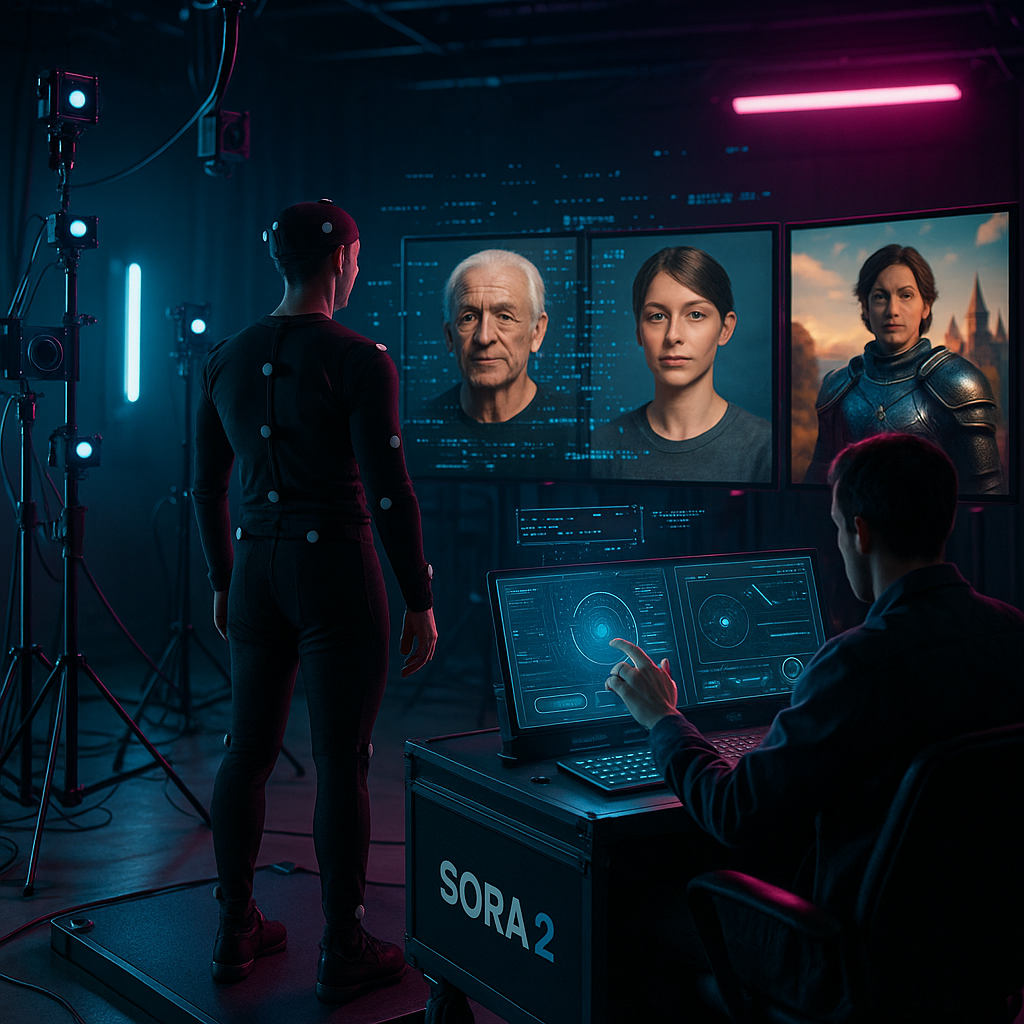
The launch of Sora 2 by OpenAI in June 2024 has reignited pressing debates around identity, consent, and authenticity. This AI video tool creates uncannily realistic videos, placing the boundary between reality and synthetic creation under unprecedented strain. As artists innovate and critics spotlight emerging risks, lawmakers and ethicists strive to redefine digital personhood and ownership in a world where truth feels increasingly negotiable.
The Blurring Lines Between Reality and Fiction
AI video generators such as Sora 2 have evolved from producing easily detected fabrications to delivering content that rivals traditional footage in realism. This leap prompts new questions about what it means to perceive reality in a digital age.
The latest generation of these tools converts text prompts into videos that depict places, situations, and even individuals who may never have existed. Earlier versions often betrayed their origins with glitches, but the new systems achieve a fidelity that can easily deceive most viewers.
This transformation comes at a time when visual media forms the backbone of societal awareness. As trust in what we see is eroded, perennial philosophical debates about perception have become urgent, everyday concerns.
Stay Sharp. Stay Ahead.
Join our Telegram Channel for exclusive content, real insights,
engage with us and other members and get access to
insider updates, early news and top insights.
 Join the Channel
Philosopher Thomas Metzinger describes this as a “crisis of epistemic trust.” When reliable belief formation is threatened by technology, the consequences extend far beyond the camera lens.
Identity Ownership in the Age of Digital Replication
AI’s capacity to create convincing digital replicas unsettles long-held ideas about who owns identity. Now, questions arise about inherent rights to control one’s appearance, voice, and gestures.
“We’re entering uncharted territory where personal identity (how we look, sound, and move) becomes detachable from ourselves,” stated Dr. Nishant Shah, digital identity researcher at ADA University. “Our legal and ethical frameworks haven’t caught up to a world where anyone’s digital essence can be captured and repurposed.”
These philosophical challenges reach beyond image rights. When AI convincingly mimics how someone feels, decides, or speaks, it forces a reconsideration of individuality and inviolability.
Technological replication demands that we rethink personhood. If your identity can be copied, altered, and used without you, what part remains truly yours? This question resonates with philosophical traditions from Locke to Parfit, inviting a new era of debate.
Consent Frameworks for Digital Replication
Existing consent models do not address the realities of generative AI. Designed for static images and limited use, they fall short when AI can create infinite variations on a single person’s likeness or behavior.
“Traditional media consent forms ask, ‘Can we use this specific image of you in this context?’” said Emma Goldberg, digital rights attorney at the Electronic Privacy Information Center. “With generative AI, the question becomes, ‘Can we build a model that might depict you in any possible situation?’ That’s fundamentally different.”
Proposed solutions include the “Persistent Digital Rights” approach, giving individuals revocable control over their likeness, and “Bounded Generation Licensing,” which sets parameters for AI use.
Cultural perspectives complicate the picture. Some communities prize collective identity, while others prioritize individual autonomy over personal imagery. These contrasts challenge the formation of universal consent standards.
Truth and Authenticity in the Synthetic Era
The growing use of synthetic media challenges the idea that truth aligns cleanly with objective reality. AI video tools make convincing fabrications possible, forcing society to develop new ways of verifying what is real.
“We’re witnessing the collapse of ‘seeing is believing’ as an epistemological framework,” observed Dr. Hannah Kovács, media theorist at MIT’s Center for Constructive Communication. “Society needs new truth mechanisms that extend beyond sensory evidence.”
These developments echo the historical rise of photography, which initially seemed to guarantee truth but was soon shown to be manipulable. The spread of synthetic video now represents a more profound transformation.
In response, competing solutions have emerged. Technological fixes include blockchain-verified provenance, while others promote media literacy and critical thinking. Both approaches recognize that visual media’s relationship with truth is undergoing irreversible change.
Power Dynamics and Access Inequalities
Not everyone has equal access to synthetic media creation, raising questions about who can shape reality and who is left behind.
Elite technology firms, largely based in wealthy countries, currently control the most advanced AI video generation tools. This concentration of power can reinforce existing inequalities around information and representation.
“When the ability to create convincing synthetic realities is concentrated among the already powerful, it becomes a tool for reinforcing existing inequalities,” noted Dr. Kwame Osei, professor of technology ethics at the University of Ghana. “Those most vulnerable to misrepresentation usually lack both access and recourse.”
Stay Sharp. Stay Ahead.
Join our Telegram Channel for exclusive content, real insights,
engage with us and other members and get access to
insider updates, early news and top insights.
Join the Channel
Historical patterns show new media often amplifies the power of dominant groups. Like early photography, today’s AI models reflect the cultures and values of their creators.
As tools democratize, marginalized communities may gain narrative power, yet the risks of misuse also expand. Parity in creation does not guarantee equity in outcomes.
Emerging Regulatory Approaches
Lawmakers are experimenting with ways to govern synthetic media, from disclosure mandates to partial bans. These responses reflect deep philosophical differences in managing change.
The European Union’s proposed AI Act would require clear disclosure of AI-generated content and stronger consent measures, aiming for transparency without stifling innovation.
“Effective regulation requires balancing innovation with harm prevention,” stated Commissioner Margrethe Vestager, who leads EU digital policy. “We’re aiming to create guardrails that prevent serious abuses while allowing beneficial applications.”
China’s approach is more restrictive, demanding pre-approval of deepfakes and requiring synthetic media to serve state values. The United States relies mainly on existing defamation and image rights laws, resulting in a fragmented landscape with jurisdictional gaps.
For more on regulatory frameworks in artificial intelligence, see EU AI Act Explained: Compliance, Risk, and Implementation Guide.
Community and Collective Response
Beyond legislation, grassroots responses are emerging as communities adapt to synthetic identities and changing realities.
Digital literacy groups now teach verification methods and critical analysis techniques, operating through social media and forums to help people recognize synthetic media.
“The most effective responses to synthetic media challenges are coming from communities themselves,” observed Dr. Aisha Reynolds of the Oxford Internet Institute. “Collective intelligence verification adapts faster than policy.”
Professional organizations are setting new ethical norms, with filmmaker groups issuing guidelines for AI representation and modeling agencies protecting clients’ digital identities.
Cultural and religious organizations also weigh in, with some challenging the ethics of synthetic beings and others focusing on algorithmic misrepresentation of community knowledge.
Philosophical Implications and Future Directions
The spread of convincing synthetic media revives enduring philosophical debates around identity, reality, and truth. Now, though, they have immediate practical significance.
How does complete replication of appearance and mannerisms intersect with the core of personhood? Philosophers distinguish between essential and accidental properties, yet AI’s capabilities blur these distinctions.
For a deeper exploration of these issues, read about how generative AI shapes digital selfhood and our sense of self in the digital age.
What defines authentic human experience when fabricated events are indistinguishable from reality? Baudrillard’s theory of hyperreality becomes tangible as personalized, interactive simulations proliferate.
How do we judge what is true in a world where sensory experience is so easily falsified? Established epistemological models, dependent on direct observation, are no longer sufficient.
Finally, as representation merges with reality, traditional frameworks (from Plato to modern media theory) must be re-examined. Synthetic media compels us to redraw the map of what it means to know, to be, and to trust.
Conclusion
The ascent of AI video tools such as Sora 2 unsettles established boundaries around identity, trust, and reality, pushing society to reconsider how personhood and authenticity function in the digital age. As regulatory frameworks, rights protections, and community responses quickly evolve to address these challenges, the next chapter of synthetic media will be shaped as much by philosophical imagination as by technological development. What to watch: Upcoming policy debates and cross-disciplinary conversations will be crucial in determining the ethical landscape of AI-driven media.



Leave a Reply