
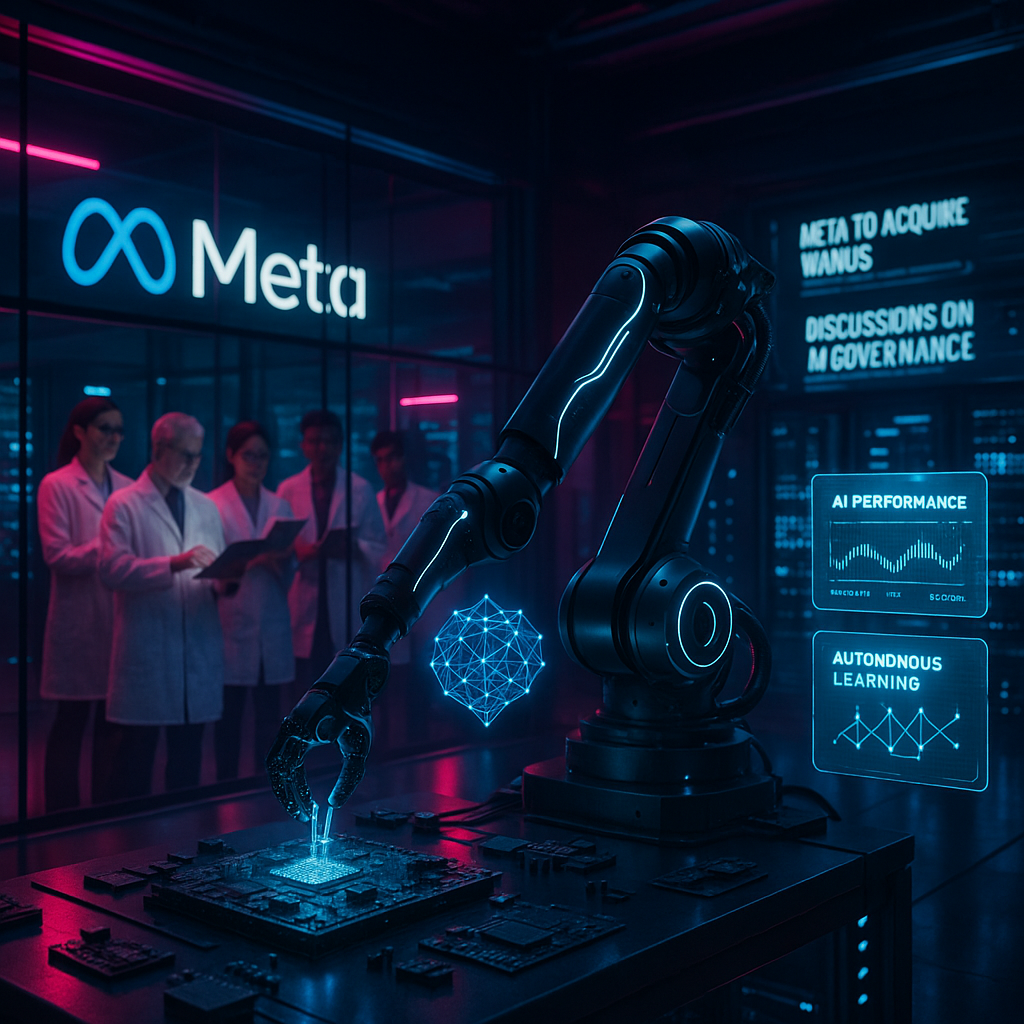
Key Takeaways
- Meta’s acquisition of Manus sets the tone for this Press Review. The progression toward AI autonomy raises new questions about labor, ethics, and societal transformation.
- On 10 January 2026, oversight mechanisms strengthen, critical infrastructure adapts to potential AI disruption, and faith communities encounter digital challenges.
- Meta expands its AI ambitions by acquiring Manus, marking a strategic shift toward autonomous digital workers and influencing AI society impact trends in 2026.
- OpenAI formalizes “extreme risk” governance by creating a Head of Preparedness role as AI systems approach greater influence.
- NIST launches AI Economic Security Centers to enhance resilience in essential infrastructure, underscoring national priorities in the age of autonomous systems.
- AI-powered spiritual applications are prompting religious communities to reassess devotion and authenticity in a digital context.
- What to watch: Public response and policy debates as Meta integrates Manus technology into its AI ecosystem.
Introduction
On 10 January 2026, Meta’s acquisition of Manus brings the global discussion on autonomous digital workers and AI society impact trends to the forefront. This highlights the increasingly blurred boundaries between human and machine labor. At the same time, OpenAI’s steps toward formalizing extreme risk governance underscore the need for responsibility in an era of rapid technological change.
Top Story
Meta Acquires Manus Robotics
Meta has finalized a $4.3 billion acquisition of Manus Robotics, a leading company specializing in autonomous AI agent technology. Announced yesterday, this is Meta’s largest acquisition since 2014. It reflects a strategic shift toward embodied AI systems capable of operating in physical environments.
Manus Robotics has developed advanced algorithms that allow AI to perform complex tasks with minimal human input. Their approach bridges the gap between language models and real-world action, enabling AI to learn from demonstration rather than explicit programming.
Stay Sharp. Stay Ahead.
Join our Telegram Channel for exclusive content, real insights,
engage with us and other members and get access to
insider updates, early news and top insights.
 Join the Channel
This move occurs amid ongoing debates regarding AI’s effects on labor. Analysts have suggested that autonomous agents could accelerate workforce displacement, while ethics researchers have emphasized the importance of robust safety protocols. Dr. Sarah Chen of Princeton stated that autonomous systems require new forms of oversight when functioning in human spaces.
Meta CTO Andrew Bosworth confirmed plans to deploy Manus technology throughout the Reality Labs division, while continuing to support Manus’s existing enterprise clients. Regulatory approval is pending in the European Union. A decision is anticipated by March 2026.
Also Today
AI Governance
EU Proposes First “AI Constitutional Court”
The European Commission has introduced a plan for an independent judicial body that would resolve complex AI accountability cases. The proposed “Constitutional Court for AI” aims to set binding precedents on issues such as algorithmic transparency, data rights, and liability within the European Union’s 27 member states.
Digital Rights Commissioner Maria Hoffmann described the proposal as a step toward establishing “coherent jurisprudence for the algorithmic age.” The court would incorporate technical experts and legal scholars in evaluating cases where existing courts may lack specialized understanding.
Industry reactions are mixed. Many technology firms in Europe favor consistent standards but have reservations about potential impacts on innovation. The proposal awaits approval from the European Parliament. A vote is scheduled for February 2026.
China Revises AI Security Classification System
China’s Cyberspace Administration has announced an update to its AI security classification framework, introducing stricter rules for systems considered “societally foundational.” The system will now feature five tiers for AI applications, rather than the previous three, to more clearly assess systemic risk.
Developers of the highest-tier AI must now provide expanded access to model weights and training data for Chinese regulators. Foreign firms operating in China, such as OpenAI and Anthropic, will need to comply with these requirements by mid-2026.
This revision highlights China’s focus on technological sovereignty and data protection. Tech policy analyst Wei Zhang stated that these measures represent the most comprehensive global regulatory framework for foundation models and may influence international standards.
Vatican Launches AI Ethics Initiative
The Vatican has established an institute dedicated to exploring AI from theological and ethical perspectives. The Pontifical Academy for Digital Ethics will unite religious scholars, technologists, and philosophers to develop guidelines on AI’s implications for human dignity and spiritual well-being.
Pope Francis, at the launch conference, emphasized that technology should serve to enhance humanity. The academy will issue guidance on AI in areas such as healthcare, education, and social services, with particular attention to vulnerable groups.
Major technology firms including Microsoft and IBM have pledged support for collaborative research within this initiative. The Academy also plans to host quarterly symposia examining subjects from algorithmic bias to the theological consequences of machine consciousness.
What to Watch
Key Dates and Events
- The U.S. Senate Intelligence Committee will begin hearings on autonomous AI systems on 15 January 2026, featuring testimony from Meta and Manus executives.
- Stanford University’s Human-Centered AI Conference is set for 22 to 24 January 2026, focusing on AI and labor displacement.
- The World Economic Forum’s “AI Governance Summit” will convene in Geneva on 1 February 2026, gathering policymakers and industry leaders.
- DeepMind’s research on self-correcting AI systems will be published in Nature on 8 February 2026.
- The European Parliament vote on the proposed AI Constitutional Court is scheduled for 18 February 2026.
Conclusion
Meta’s acquisition of Manus marks a critical juncture for AI society impact trends in 2026. As issues of autonomy and governance dominate global debate, the interaction among industry, policy, and ethics takes on renewed urgency. The trajectory of these discussions will influence regulatory reviews, upcoming Senate hearings on AI autonomy, and the European Parliament’s February decision on legal frameworks.



Leave a Reply