
Key Takeaways
- AI regulation in the US is becoming fragmented, as states advance separate rules while federal policy remains stalled. This reflects the complexity at the core of AI society implications.
- The Press Review for 28 December 2025 explores how communities and tech regions are rethinking AI’s promises, responsibilities, and meaning.
- Top story: US states are developing local AI regulations, revealing both divides and experimentation as national policy remains behind.
- Religious leaders and communities are encountering new ethical dilemmas as AI-generated spiritual content challenges questions of authenticity and authority.
- Platform moderation remains insufficient, with AI algorithms generating extremist content that outpaces existing efforts at control.
- Technology industry hubs are reassessing the economic gains promised by AI for 2025, confronting disrupted labor markets and unmet expectations.
- Current debates around AI society implications bring to light an ongoing tension between innovation, empowerment, oversight, meaning, and potential misuse.
Introduction
As federal AI policy continues to lag, US states are moving forward independently with new regulations, highlighting both innovation and fragmentation in addressing AI society implications. On 28 December 2025, religious communities are confronting the authenticity of AI-generated spiritual content, and tech hubs are reconsidering economic prospects. Today’s stories examine how different sectors are navigating AI’s evolving meaning, impact, and accountability.
Top Story: US States Diverge on AI Regulation
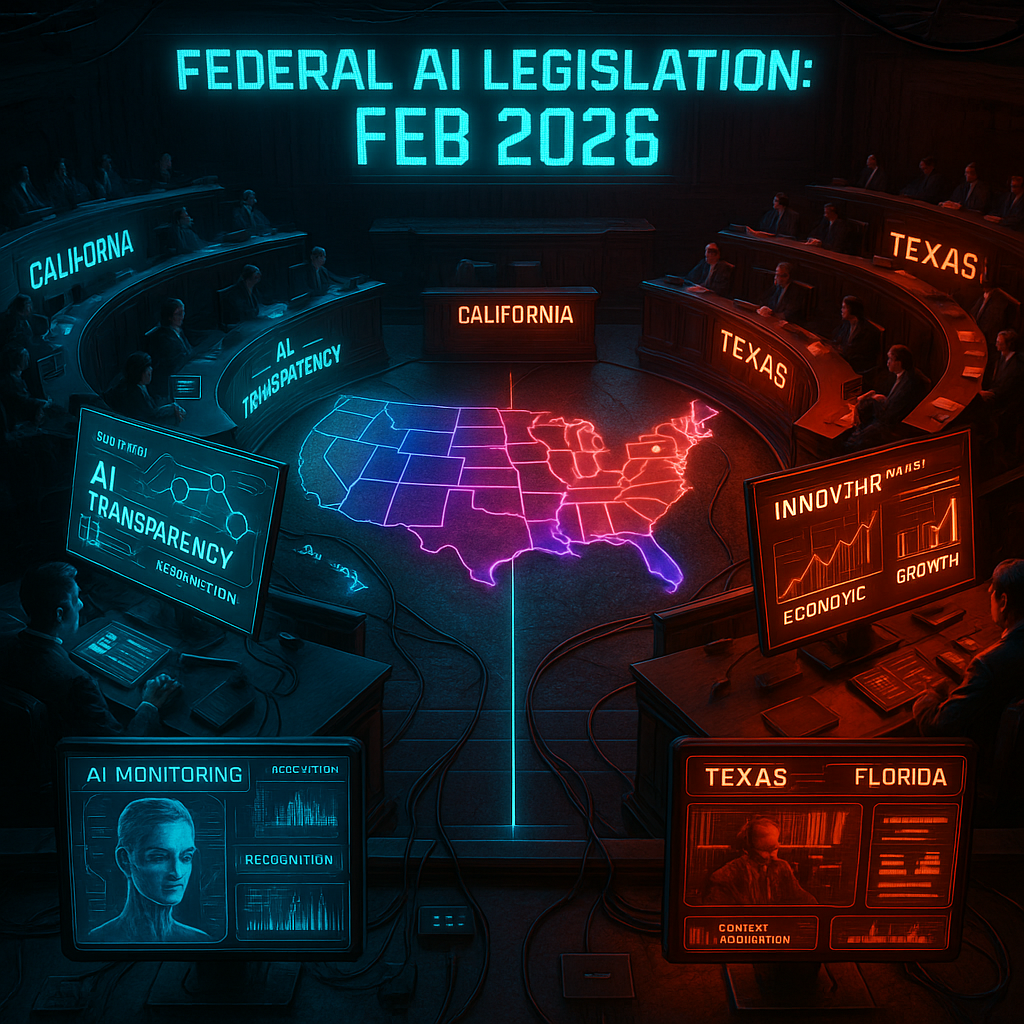
California has enacted the country’s widest-reaching AI regulatory framework, introducing mandatory transparency requirements for generative AI systems used in public services. The legislation, signed on 27 December 2025, compels agencies to disclose when AI is used in government decision-making and sets up an independent oversight board with enforcement authority.
In contrast, Texas and Florida have adopted measures limiting governmental restrictions on AI development. Policymakers in both states argue that excessive regulation could hinder innovation and economic growth. Florida’s governor stated that too many rules risk driving tech talent to more business-friendly environments.
This divergence in regulation leads to a complex patchwork of compliance obligations for technology companies operating nationwide. Legal experts observe that companies might need to create state-specific versions of AI systems or apply the strongest standards across all jurisdictions to ensure compliance.
Stay Sharp. Stay Ahead.
Join our Telegram Channel for exclusive content, real insights,
engage with us and other members and get access to
insider updates, early news and top insights.
 Join the Channel
While the federal government has not yet passed comprehensive AI legislation, a bipartisan congressional working group announced plans to introduce draft federal guidelines by February 2026. This absence of national policy has prompted more responsive actions from local governments to address constituent concerns.
As AI’s regulatory landscape evolves, organizations are increasingly required to align with emerging standards for ethical AI practices and risk management. For businesses operating in the European market or globally, understanding the comparative frameworks like the EU AI Act is now essential to navigate compliance and technological uncertainty.
Also Today: AI and Society
Religious Communities Respond to AI-Generated Spiritual Content
Major religious bodies are facing new challenges regarding AI-generated spiritual guidance. The Vatican recently issued its first official statement on AI-created religious content, asserting that algorithmic interpretations of sacred texts cannot replace human discernment. A number of leading Islamic scholars have also released guidelines limiting the role of AI in religious rulings.
Concerns have grown after millions turned to AI chatbots designed to provide spiritual guidance. A Pew Center study found that 28 percent of Americans have used AI for religious or spiritual purposes, with higher usage among younger people.
Religious leaders highlight concerns about AI offering spiritual direction without acknowledging its limitations or lack of authentic authority. Rabbi David Wolpe of Temple Sinai stated that technology companies are positioning themselves as new arbiters of faith without the accountability or theological foundation of established religious traditions.
Amid these debates, the question of how algorithms enter sacred and ritual spaces is gaining traction among scholars across faiths. For more on the broader impact of technology in spiritual domains, see algorithms in sacred spaces.
Platform Moderation Struggles with Harmful AI Content
Social media platforms are increasingly unable to prevent the spread of AI-generated misinformation, according to a recent report by the Digital Integrity Coalition. The study tracked more than 75,000 cases where AI-generated falsehoods reached large audiences before being removed by moderation systems.
Existing content moderation tools, mostly designed for human-generated posts, have proven less effective against more sophisticated AI outputs. The report identified particular difficulties in catching nuanced medical misinformation and altered news content closely replicating legitimate sources.
While platform representatives report improvements in detection over recent months, researchers remain skeptical. Many moderation teams are persistently outpaced by evolving generative AI technologies.
With the ongoing evolution of content authenticity challenges, digital forensics and deepfake detection methods are becoming critical for trust and verification. For a detailed look at these tools, see deepfake detection strategies and supply chain integrity.
Also Today: AI and the Economy
Tech Regions Reconsider AI’s Economic Impact
Several leading technology regions are finding a gap between the promised and actual economic impacts of AI development. Silicon Valley, Austin, and Boston reported lower-than-expected job creation in AI-related fields, based on a Brookings Institution study released this week.
Despite a record $42 billion in venture capital for AI startups in the third quarter of 2025, most benefits have remained concentrated within a limited number of companies. The study also found that for every new high-paying AI job, about 2.3 jobs were lost to automation. That’s a much higher displacement rate than previously forecasted.
Local governments, who had provided significant tax incentives to attract AI businesses, are now reconsidering their strategies. Portland’s mayor noted the need for technological progress to support inclusive economic growth, echoing broader concerns about whether AI’s benefits will be broadly shared or limited to industry leaders and shareholders.
The distributional consequences of automation and the role of digital rights are at the center of current economic debates. For further reading on the ethical and governance complexities, refer to digital rights and algorithmic ethics.
What to Watch: Upcoming Dates and Events
- January 10, 2026: Congressional AI Oversight Committee hearing on regulatory frameworks
- January 15, 2026: World Economic Forum special session on AI governance in Davos
- January 22, 2026: Release of UNESCO’s global AI ethics implementation report
- February 3, 2026: Supreme Court review of a case addressing AI-generated content and First Amendment protections
- February 12, 2026: Major technology companies’ quarterly earnings reports with details on AI investments
Conclusion
The fragmented landscape of state-led AI regulation in the United States highlights rising tensions over social, ethical, and economic aspects of AI society implications. Both religious and civic institutions are navigating new questions about authority and risk. Meanwhile, technology’s impact remains unsettled as federal policymakers delay comprehensive action. What to watch: key hearings, international forums, and court rulings set for January and February 2026 will shape the evolving debate on AI regulation and content.
For a philosophical perspective on whether AI is a human invention or a discovered structure, explore AI origin philosophy.
Stay Sharp. Stay Ahead.
Join our Telegram Channel for exclusive content, real insights,
engage with us and other members and get access to
insider updates, early news and top insights.
Join the Channel




Leave a Reply