
Key Takeaways
- Investor funding for humanoid robots hits all-time highs: Recent months have seen multi-million dollar raises for robotics startups, fueled by hopes of transformative leaps in AI and automation.
- Deployment reality trails investor optimism: Despite funding surges, actual adoption of humanoid robots in workplaces and public spaces remains limited, highlighting a widening gap between promise and practice.
- Hype cycle risks loom for newcomers: The current climate reflects a classic “hype cycle,” where technological excitement may outpace substantive progress, serving as a cautionary tale for both investors and the intellectually curious.
- Societal implications spark fresh debate: The allure of humanoid robots reignites deep questions about labor, human replacement, and the nature of interacting with entities that challenge our definitions of “mind.”
- Major deployments and regulatory milestones expected in late 2024: Key companies and governing bodies plan announcements, pilot rollouts, and ethical guidelines in the coming quarters, setting the stage for the next chapter in the humanoid narrative.
Introduction
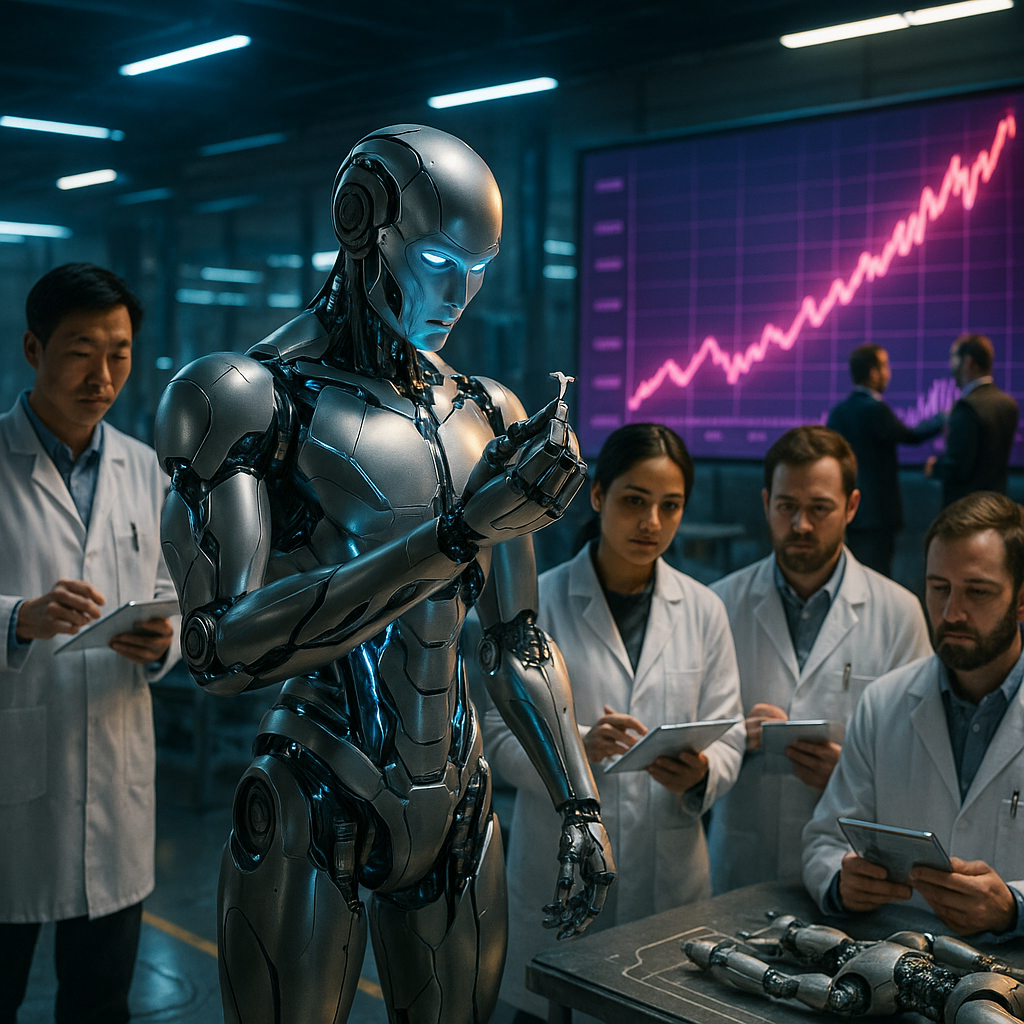
Investor enthusiasm for humanoid robots is soaring in 2024, with startups attracting record-breaking funding amid anticipation for AI-powered labor and companionship. As billions flow into the sector and expectations rise for “alien minds” in homes and workplaces, real-world deployments tell a different story. This sparks debate over whether investors are fueling substantial progress or projecting hope ahead of reality.
Surge in Humanoid Robot Investments
Venture capital investment in humanoid robotics has reached new highs, with more than $4 billion invested over the past 18 months. Figure AI secured $675 million from prominent investors, including Jeff Bezos and Microsoft. Apptronik raised $100 million for its Apollo robot, and Tesla continues to allocate significant resources to its Optimus platform.
This surge reflects a belief that general-purpose robots could revolutionize labor-intensive industries struggling with worker shortages. Jeff Bezos described humanoid robots as “the ultimate form factor” for tackling real-world physical tasks in diverse environments.
Interest is no longer confined to traditional tech investors. Manufacturing leaders like Foxconn have committed substantial resources to developing humanoid systems, aiming to maintain productivity amid rising labor costs and demographic shifts.
Stay Sharp. Stay Ahead.
Join our Telegram Channel for exclusive content, real insights,
engage with us and other members and get access to
insider updates, early news and top insights.
 Join the Channel
Financial analysts note a departure from previous robotics bubbles. This time, investors prioritize platform versatility over narrowly focused solutions. Robotics analyst Maria Chen stated, “Investors are betting on platforms, not point solutions. The vision of a general-purpose physical worker represents a much larger total addressable market.”
The Reality Check: Hype vs. Deployment
Social media showcases impressive demonstrations, but these can exaggerate humanoid robots’ true capabilities in active workplaces. Figure AI’s robot navigates confidently in controlled settings, but cannot yet operate independently on construction sites or in busy warehouses.
Battery constraints remain significant, with advanced humanoid robots typically functioning for only one to two hours before requiring recharging. This technical barrier makes current models impractical for full manufacturing shifts.
Cost presents another challenge. Humanoid platforms range from $100,000 to $1 million per unit, with added expenses for programming, maintenance, and inevitable repairs. MIT robotics professor Erin Hartman stated, “We’re seeing capabilities improve dramatically, but the timeline to general-purpose deployment is measured in years, not quarters.”
Dexterity is another major limitation. Humans effortlessly manipulate objects of various shapes and materials, but current humanoid robots struggle with reliable grasping and manipulation beyond tightly controlled scenarios.
Navigating the Hype Cycle
Humanoid robotics occupies what many see as the “peak of inflated expectations” in Gartner’s hype cycle framework. Past trends with technologies such as autonomous vehicles reveal that timelines for widespread deployment are often optimistic, despite substantial investment.
For investors, red flags include an overreliance on slick demonstration videos instead of consistent, reproducible performance metrics. Robotics venture capitalist Sarah Lin emphasized, “Ask about mean time between failures in unstructured environments. The companies that can answer this question honestly are the ones making real progress.”
Historical parallels with the industrial robot revolution of the 1980s bring insight. Industrial robots succeeded by abandoning human-like designs for task-specific functionality, even though their market transformation took decades longer than predicted.
Sophisticated investors understand that technological breakthroughs rarely align with quarterly targets. Benchmark Capital’s Peter Fenton described their approach as “decade-long bets with nonlinear progress curves,” underscoring the patience required in this sector.
Societal and Philosophical Implications
Beyond economics, the humanoid form prompts questions about humanity’s relationship with technology. Philosopher Kate Darling of MIT argues that human-like robots provoke unique social and emotional responses, offering opportunities and challenges not present with more utilitarian machines.
The concentration of capital in humanoid robot development also raises concerns about who determines technological direction. As technologist Jaron Lanier noted, “When we build machines in our image, we embed our values, biases, and assumptions into systems that may long outlive their creators.”
Labor economists reference the historical trend of technology-driven displacement and subsequent job creation in new fields. However, philosopher Nick Bostrom of Oxford cautions that general-purpose humanoids target substitution for human labor across domains, not just specific tasks.
Such deeper questions tend to receive limited attention in investor briefings. Yet, they may ultimately influence public acceptance and policy. Anthropologist Lucy Suchman observed, “The narrative of the helpful humanoid assistant shapes development priorities in ways that may not align with actual social needs.”
Upcoming Milestones
Several developments will soon test investor confidence. Tesla plans to deploy the first production Optimus robots in its manufacturing facilities by Q2 2023, offering a real-world test for humanoid robots in industry.
Boston Dynamics is preparing to release its commercial Atlas model to selected industrial partners in Q3. This initiative focuses on hazardous environments where higher costs are justified by safety gains.
December’s inaugural World Humanoid Challenge will establish standardized benchmarks for capabilities in mobility, manipulation, and autonomy. Sponsored by major industry players, the event aims to encourage objective assessments beyond curated demonstrations.
Stay Sharp. Stay Ahead.
Join our Telegram Channel for exclusive content, real insights,
engage with us and other members and get access to
insider updates, early news and top insights.
Join the Channel
On the regulatory front, the European Union’s AI Act framework will be finalized in October. It includes provisions for embodied AI systems and could significantly shape deployment timelines in Europe.
Where Curiosity Leads Next
The investment surge in humanoid robots reopens questions about the relationship between a robot’s form and its function. Are human-like shapes truly essential for certain jobs, or do they simply make robots more relatable to people?
Researchers are now exploring how embodiment affects cognition. If artificial intelligence develops within humanoid bodies, its understanding of the world could differ from that of disembodied AI, such as language models.
The economic debate goes beyond labor replacement. Should humanoid robots master general-purpose tasks, they might generate new job categories, as prior technological revolutions have. However, when technology mimics human capabilities so closely, classic historical patterns may no longer apply.
Perhaps the most intriguing aspect is how humanoid robots could reshape humanity itself. As these machines take on more human-like traits, our sense of what it means to be human may evolve in response to sharing space and context with these new entities.
Conclusion
The surge in humanoid robot investment marks a turning point for technology, work, and society, intertwining economic ambition with profound questions of human identity and values. As real-world deployments and new benchmarks emerge, the coming months will challenge both the technical promise and philosophical relevance of these machines. What to watch: Tesla’s Optimus rollout, Boston Dynamics’ Atlas launch, the World Humanoid Challenge in December, and the European AI Act regulations due in October.


Leave a Reply