
Key Takeaways
- Top story: U.S. studios support licensing-first AI video tools to avoid legal complications in copyright disputes.
- Federal policymakers have launched coordinated initiatives to standardize AI oversight nationwide, raising questions about governance and accountability.
- The spread of companion AI draws attention as a Japanese woman’s marriage to her AI partner gains public interest.
- AI models now match human performance in specialized technical work, prompting renewed debate over expertise and trust.
- The day’s developments highlight how advances in AI tools are driving significant shifts in law, culture, and everyday life.
Introduction
On 22 December 2025, U.S. studios have adopted a licensing-first approach to AI video tools. This move is reshaping the dialogue on AI ethics and society by sidestepping copyright conflicts, sparking broader discussions on creativity and legality. As federal initiatives seek unified AI oversight and companion technologies influence personal relationships, today’s developments illustrate how “alien minds” are redefining expertise, trust, and human connection.
Top Story: Hollywood Studios Embrace Licensing-First AI Video Tools
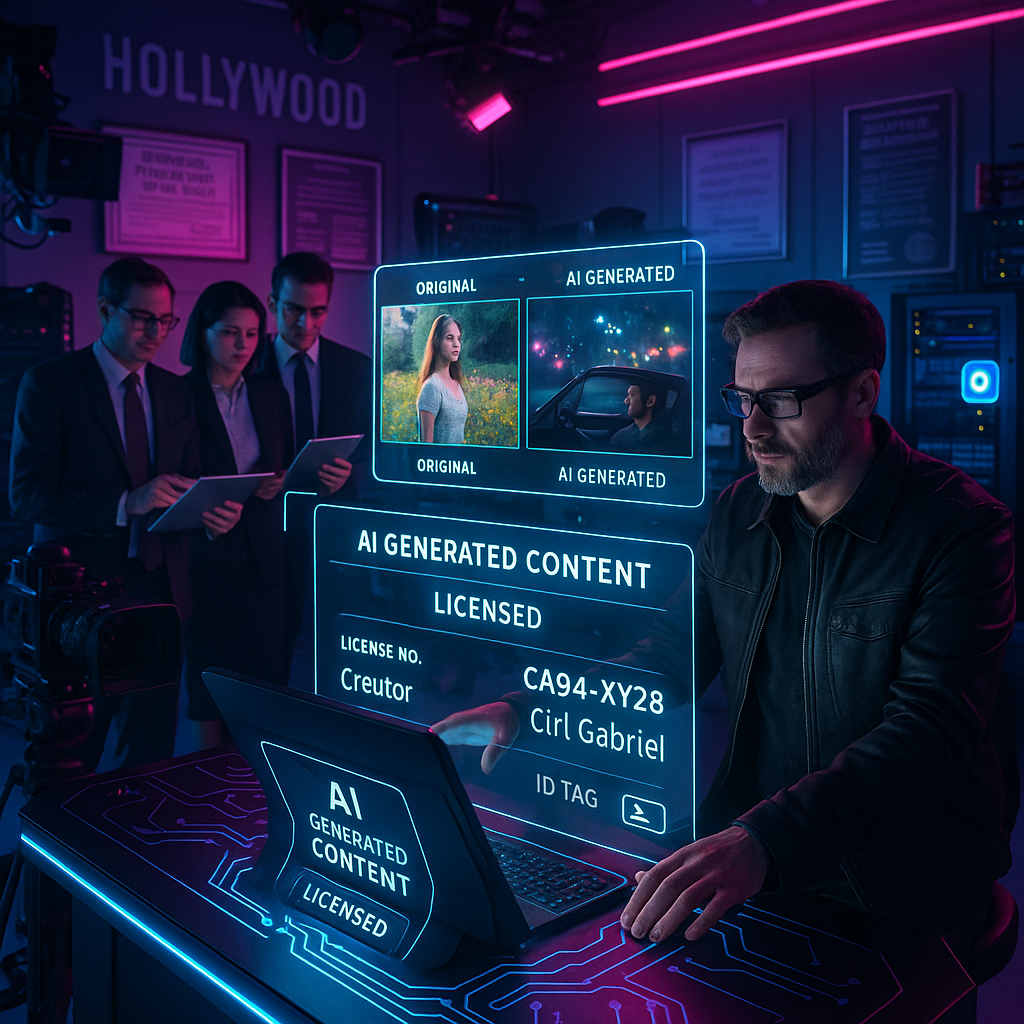
Major film studios such as Universal, Warner Bros., and Disney have announced their support for a new generation of AI video tools built on licensed content rather than scraped data. This initiative, revealed on 21 December 2025 during a joint industry press conference, marks a notable shift in how creative industries approach AI integration.
Unlike earlier generative AI systems, these tools are trained exclusively on properly licensed intellectual property and feature transparent compensation models for original creators. This approach offers clear attribution pathways and supports new creative opportunities.
Industry executives indicated that the move represents both a practical and ethical step forward. Maria Johnson, head of emerging technology at Universal Pictures, stated that the industry is moving beyond the old debate between innovation and rights protection.
Stay Sharp. Stay Ahead.
Join our Telegram Channel for exclusive content, real insights,
engage with us and other members and get access to
insider updates, early news and top insights.
 Join the Channel
The partnership is seen as a possible resolution to the contentious debates between AI developers and content creators that have persisted throughout 2025.
Also Today: Federal AI Oversight
Congress Proposes Unified AI Regulatory Framework
Bipartisan legislation introduced on 21 December 2025 seeks to consolidate fragmented AI oversight across twelve federal agencies under a coordinating body. The AI Governance Act aims to streamline regulatory practices and establish consistent standards across various sectors.
The proposed framework assigns domain-specific enforcement authorities and creates a central clearinghouse for addressing issues such as bias mitigation, safety standards, and transparency requirements.
Congressional sponsors noted that the legislation is meant to address the regulatory patchwork currently posing compliance challenges. Senator James Wilson stated during the bill’s introduction that companies are forced to navigate conflicting guidance, which impedes both innovation and public protection.
regulatory patchwork is not unique to the U.S.—similar concerns have emerged around the implementation of the EU AI Act, which also seeks to harmonize standards while balancing innovation and accountability.
Accountability Debate Intensifies
Policy experts remain divided over whether AI system developers should hold primary responsibility for algorithmic harms or if accountability should also extend to those who deploy and use these systems. A report from the Georgetown Tech Policy Institute published on 16 December 2025 examines different accountability models and their implications.
The report points out considerable gaps in current liability frameworks when applied to autonomous systems that evolve after deployment. Established concepts of foreseeability and causation become complex when dealing with emergent behaviors.
Several industry leaders advocate a shared accountability approach. Tech ethicist Dr. Sarah Cohen stated at a recent Senate Commerce Committee hearing that no single actor in the AI value chain can reasonably carry full responsibility.
Also Today: AI-Human Relationships
Dating Apps Introduce AI Relationship Coaches
Three major dating platforms have launched AI coaching features aimed at helping users develop healthier relationship habits and communication skills. Unlike earlier approaches focused on algorithmic matching, these systems actively engage users in reflecting on relationship behaviors.
The tools analyze conversation patterns, provide tailored feedback, and suggest evidence-based strategies for addressing relationship challenges, drawing on established therapeutic practices.
Privacy advocates have voiced concerns over the sensitive nature of the data involved. Thomas Chen, a researcher at the Data Ethics Coalition, cautioned that these systems may gain unprecedented insights into users’ emotional vulnerabilities.
Virtual Companions Raise New Ethical Questions
A recent Stanford University study explores the psychological impact of forming deep emotional connections with non-human AI companions. The research followed 2,500 participants over eighteen months who regularly interacted with conversational AI systems.
Findings indicate that socially isolated participants reported reduced loneliness, while a significant minority experienced problematic patterns of emotional dependency. Researchers noted challenges related to disclosure boundaries and unrealistic relationship expectations.
disclosure boundaries and the blurring of digital selfhood reflect broader questions about how generative AI mirrors and reshapes identity—complicating expectations for human-AI relationships.
Mental health professionals are urging the development of ethical guidelines as these technologies evolve. Dr. Michael Rodriguez, president of the American Psychological Association, stated that clear boundaries are needed to recognize both the benefits and limits of AI companionship.
Also Today: AI in Technical Professions
Engineering Benchmark Results Show AI Reaching Human Parity
Recent results from the Technical Problem-Solving Assessment show that specialized AI systems now match mid-career human engineers in several areas. The assessment, conducted by a consortium of technical universities, evaluates performance on real-world engineering tasks.
Stay Sharp. Stay Ahead.
Join our Telegram Channel for exclusive content, real insights,
engage with us and other members and get access to
insider updates, early news and top insights.
Join the Channel
AI systems demonstrated strong abilities in systems integration that require cross-disciplinary knowledge, while humans excelled in novel scenarios demanding creative solutions.
The industry now faces issues that extend from workforce changes to questions of certification and responsibility. Engineering ethicist Dr. Rebecca Zhang noted the need for accountability frameworks in critical infrastructure projects once AI reaches human levels of performance.
The discussion around workforce changes and technical capability echoes advances described in real world AI models, as new architectures enable AI to perform technical and creative work with increasing autonomy.
Professional Organizations Update Practice Guidelines
Leading engineering and architectural associations have released revised guidelines for AI integration in professional certified work. These standards address disclosure, verification, and human oversight for projects involving AI contributions.
The framework distinguishes between automating routine tasks and requiring human judgment for safety-critical decisions. This approach recognizes AI’s growing capability while preserving essential professional standards.
Implementation training will begin in January 2026, with certification requirements phased in over the year to help organizations adapt processes and documentation.
What to Watch: Key Dates and Events
- Congressional hearings on AI transparency requirements scheduled for 12 January 2026
- Industry consortium to release cross-sector ethical AI development guidelines on 3 February 2026
- International AI Ethics Summit in Geneva, 18 to 20 February 2026, with representatives from 87 countries
Further insights on the evolution of ethical development and summit discussions can be found in the analysis of AI origin philosophy and the structuring of digital constitutions for artificial intelligence.
Conclusion
Hollywood’s shift to licensing-first AI video tools marks a decisive step in aligning creative rights with technological innovation. This change illustrates the practical application of AI ethics and its impact on society. As federal policymakers pursue unified oversight and professional sectors update standards, the focus sharpens on balancing AI’s transformative power with responsible governance. What to watch: upcoming congressional hearings on AI transparency, the release of industry guidelines, and the International AI Ethics Summit in early 2026.


Leave a Reply