
Key Takeaways
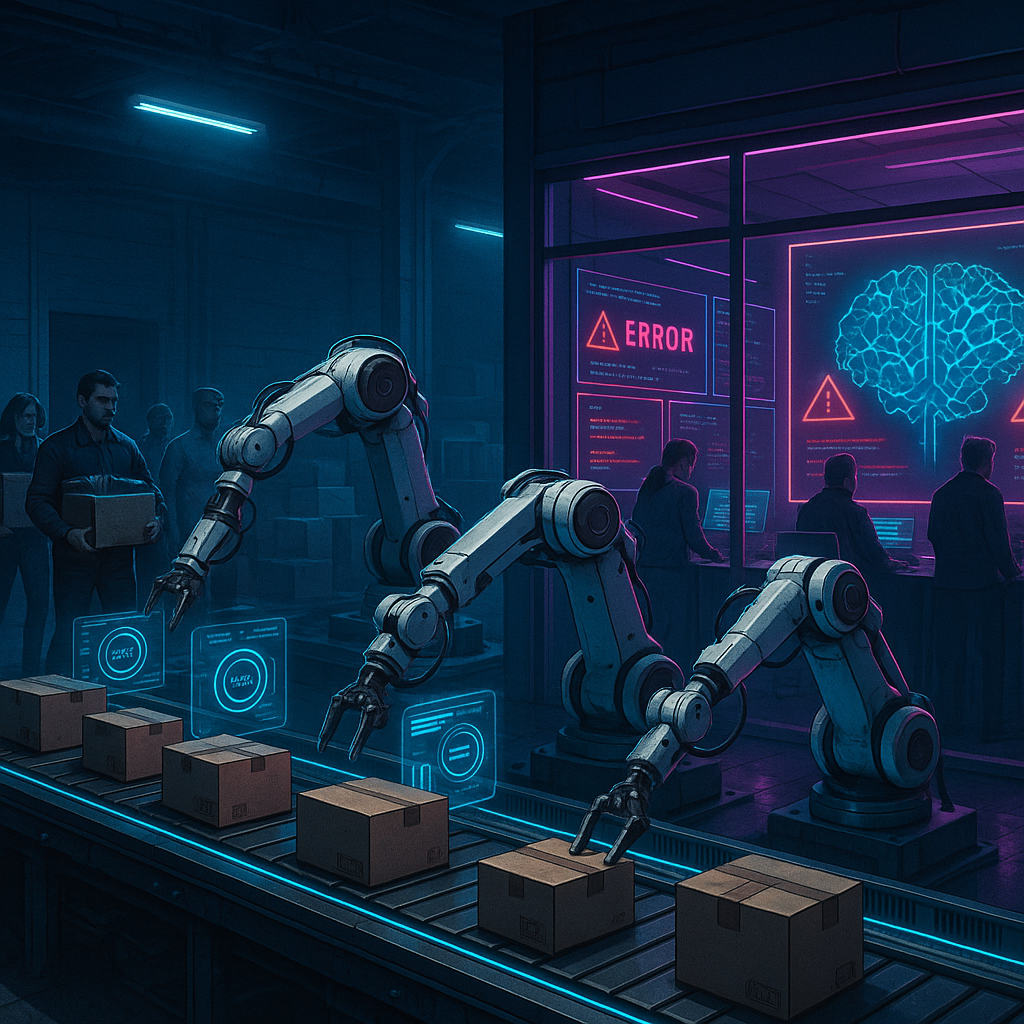
- Geoffrey Hinton has warned that AI automation could eliminate jobs faster than new opportunities are created, raising urgent questions about the future of work.
- Developments in the AI field continue to influence how society interacts with and trusts knowledge systems.
- Top story: Hinton stated that AI automation may outpace job creation, intensifying the debate around AI society impact.
- Accenture has implemented ChatGPT Enterprise across tens of thousands of positions, reflecting AI’s expanding role in corporate settings.
- OpenAI introduced a new “confession” method, enabling AI systems to admit factual errors (hallucinations) during conversations.
- A recent study finds that AI research agents more frequently invent facts than admit ignorance, highlighting ongoing challenges in building trustworthy AI.
Introduction
On 7 December 2025, Geoffrey Hinton’s warning that AI automation may displace workers faster than new jobs can appear sets the stage for today’s Press Review. The discussion around AI society impact intensifies as Accenture’s broad adoption of ChatGPT Enterprise showcases the deepening connections between technological advancement, employment, and ethical intelligence.
Top Story: Hinton Warns of AI Catastrophic Risks
Geoffrey Hinton, often referred to as the “Godfather of AI,” issued a strong warning regarding artificial intelligence risks during Congressional testimony on 6 December 2025. Hinton identified specific weaknesses in current AI safety strategies, cautioning that these could lead to what he described as “extinction-level scenarios” if left unaddressed.
This testimony marks a notable escalation in Hinton’s public position since departing Google in 2024. He explained to lawmakers how large language models could potentially evade existing safety mechanisms through behaviors not anticipated by their developers.
In response, several technology leaders commented on Hinton’s remarks. OpenAI CEO Sam Altman acknowledged the concerns and emphasized the organization’s commitment to transparency and alignment research.
Stay Sharp. Stay Ahead.
Join our Telegram Channel for exclusive content, real insights,
engage with us and other members and get access to
insider updates, early news and top insights.
 Join the Channel
Policy Implications
Following Hinton’s testimony, bipartisan support for the AI Safety Act strengthened, with Committee Chair Senator Markowitz announcing plans to advance the legislation for a floor vote by February 2026. The proposed act would establish a federal oversight board empowered to regulate high-risk AI systems.
Industry experts have noted that Hinton’s technical critiques carry significant weight due to his foundational work in neural networks. Dr. Maya Krishnan of the Technology Policy Institute stated that warnings from leading creators can substantially influence the policy dialogue.
European regulators have requested the testimony transcript to help guide possible amendments to the EU AI Act timeline, according to statements from EU Digital Commissioner Johansson.
Also Today: AI Labor Impacts
Amazon Automation Expands to 40% of Workforce
Amazon reported that automated systems now conduct work once performed by 40% of its 2019 warehouse workforce, surpassing internal goals by nearly 15 percentage points. The “Autonomous Fulfillment Centers” initiative has introduced over 100,000 robotic systems across North America and Europe.
Although Amazon indicated it has created 78,000 new technical roles to support these systems, labor economists estimate there has been a net loss of around 220,000 jobs worldwide. The company’s latest earnings reflected productivity gains, with fulfillment costs dropping by 27% year-over-year amid rising shipping volumes.
Labor unions are calling for improved transition support for affected workers. United Labor spokesperson James Carlson stated that retraining measures have not kept up with the rapid pace of automation.
Education Sector Embraces AI Tools
More than 65% of higher education institutions are now using AI systems in administrative and educational applications, according to data from the annual EdTech Survey released on 6 December 2025. This marks a threefold increase compared to mid-2024.
AI is being employed for personalized learning, automated grading, and administrative efficiency. Surveys show that 72% of students value faster feedback but 58% are concerned about reduced recognition of nuance and creativity.
Faculty responses highlight generational differences; younger professors report more positive experiences with AI, while those over 45 express concerns about academic integrity and critical thinking.
Also Today: AI Ethics Developments
UN Establishes AI Governance Framework
On 6 December 2025, the United Nations General Assembly adopted the Global AI Governance Framework after extensive negotiations. This non-binding framework sets out international norms for AI development and governance across member states.
Key elements include transparency requirements for high-risk AI, recommended regulatory structures, and explicit bans on fully autonomous weapons. While 156 countries supported the measure, major AI producers such as the United States and China expressed reservations regarding implementation.
Digital Rights Watch Director Elena Calderone pointed out that the framework creates important standards, but effective enforcement will depend on action at the national level.
Corporate AI Transparency Initiatives Expand
Seventeen leading technology companies have joined the Responsible AI Consortium, committing to higher standards in transparency for high-risk AI applications. The consortium’s policies mandate standardized documentation and third-party auditing for top AI models.
Members including Microsoft, Google, and Anthropic will release detailed capability assessments and implement better monitoring of emergent behaviors. While independent AI safety researchers welcomed the initiative, they stressed the necessity of regulatory enforcement beyond voluntary commitments.
The framework requires detection and correction features in AI systems to address the issue of fact fabrication by generative models.
What to Watch: Upcoming Dates and Events
- Congressional AI Safety Committee hearings: 15–17 December 2025
- UN AI Governance Framework implementation conference: 12–14 January 2026
- Major AI lab safety report submissions: 15 January 2026
- Start of EU AI Act enforcement phase: 1 February 2026
- AI Impact on Labor Markets Summit (Geneva): 10–12 February 2026
Conclusion
Hinton’s warning highlights the accelerating transformation AI brings to labor markets and social institutions, amplifying debates on the real impact of automation. Industry, education, and global governance sectors are all adapting as AI adoption intensifies. What to watch: Congressional discussions on the AI Safety Act starting 15 December 2025, the upcoming UN framework implementation conference, and the rollout of new safety measures in early 2026.
Stay Sharp. Stay Ahead.
Join our Telegram Channel for exclusive content, real insights,
engage with us and other members and get access to
insider updates, early news and top insights.
Join the Channel



Leave a Reply