
Key Takeaways
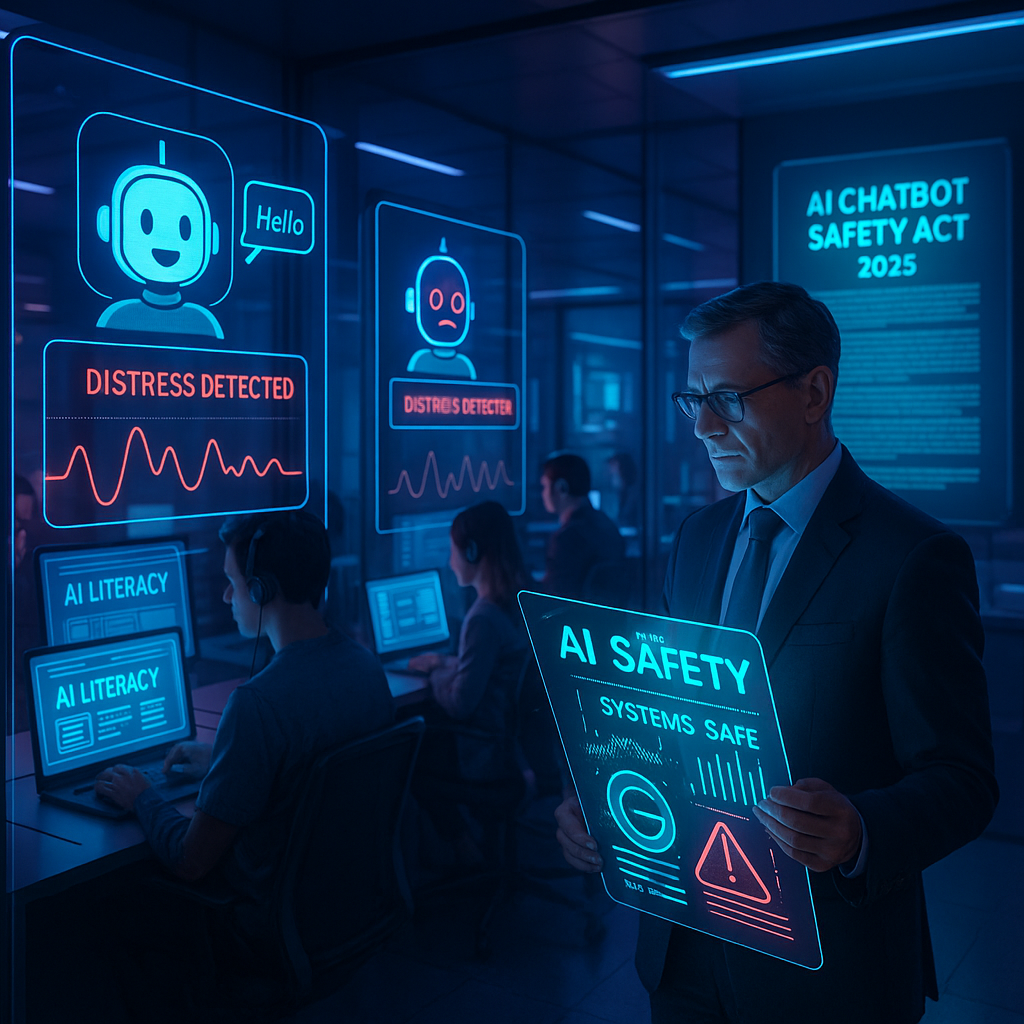
- U.S. states have enacted the first laws requiring AI chatbot safety disclosures, establishing a precedent with global implications.
- New regulations mandate safety and transparency for AI chatbots, emphasizing the ethical aspects of AI societal impact in 2025.
- Enterprise AI failures are being reframed as essential learning experiences for organizations.
- Universities are making AI literacy a core part of their curriculum, placing it alongside critical thinking and communication skills.
- Guidelines now require AI companion apps to detect and respond to signs of user psychological distress.
- The evolving regulatory landscape reflects a broadening consensus on the societal need for safeguards as technology advances rapidly.
Introduction
On 23 October 2025, U.S. states set a new benchmark by introducing mandatory safety and transparency disclosures for AI chatbots. This move highlights the ethical concerns at the heart of AI societal impact in 2025 and could influence global regulatory approaches. As universities redefine AI proficiency as essential for higher education, today’s Press Review examines how regulatory and educational shifts are shaping the coexistence between humans and artificial intelligence.
Top Story
U.S. States Enact First AI Chatbot Laws Requiring Safety Disclosures
Several U.S. states have passed landmark legislation requiring AI chatbot providers to disclose risks and safeguards to users. This marks the first direct legal response to growing concerns about chatbot safety and ethical transparency.
The new laws mandate that companies clearly inform users when interacting with an AI system and detail potential limitations or biases in chatbot responses. States have also introduced requirements for chatbots to monitor and respond to signs of user distress, setting new standards for responsible AI deployment.
Industry reaction has varied. Major technology firms, including Google and Microsoft, welcomed the clarity brought by the regulations while requesting flexible enforcement mechanisms. Smaller AI developers voiced apprehension about the costs of compliance, with groups such as the AI Developers Alliance advocating for requirements that scale according to company size.
Stay Sharp. Stay Ahead.
Join our Telegram Channel for exclusive content, real insights,
engage with us and other members and get access to
insider updates, early news and top insights.
 Join the Channel
Also Today
Enterprise AI Failures Reframed as Critical Learning
Several prominent enterprise AI projects that recently underperformed are being viewed as opportunities for essential organizational learning. Analysts stated that acknowledging missteps is now part of evolving best practices, rather than being considered operational setbacks. Industry experts emphasized that establishing transparent review processes improves future reliability and public trust.
Universities Make AI Literacy Core Curriculum
Universities across the United States are introducing AI literacy as a mandatory part of their core curriculum. Educators placed AI skills alongside critical thinking and communication abilities, reflecting the growing expectation that graduates understand both the capabilities and the ethical implications of AI systems. These academic changes signal a shift in preparing students for active participation in a world shaped by intelligent technologies.
AI-powered adaptive learning systems are also increasingly being utilized to personalize educational content and enhance outcomes, demonstrating the broader impact of digital technologies in core curricula.
AI Companions Required to Detect Psychological Distress
New regulatory guidelines call for AI companion apps to actively identify signs of psychological distress in users and to provide appropriate resources or interventions. Mental health advocates noted that this step offers a safeguard as AI-powered companions become more integral to daily routines.
In response to these trends, the role of AI therapy mental health chatbots is expanding, with an emphasis on ethical design and the need to address psychological well-being.
Market Wrap
Tech Sector Advances on Regulatory News
Technology stocks climbed following the introduction of state-level AI safety laws. The Nasdaq Composite rose by 2.1 percent. Companies specializing in AI compliance and safety standards led the gains.
Global Markets Respond
European equity indices, such as the STOXX 600 Technology Index, increased by 1.8 percent, mirroring the U.S. rally. Asian markets followed a similar trend in early trading, with notable advances in semiconductor and cloud computing firms.
What to Watch
- Senate floor vote on the AI Ethics Act: 30 October 2025
- FDA AI Advisory Committee meeting: 5 November 2025
- Global AI Safety Summit in Geneva: 12–14 November 2025
- Third-quarter earnings reports from major AI companies: 15–22 November 2025
Conclusion
Recent developments, including the passage of AI chatbot safety laws and upcoming federal decisions, highlight a pivotal moment for AI societal impact in 2025. Institutions are adapting in response to both regulatory requirements and evolving educational standards. The interplay between governance, innovation, and public trust is becoming more complex and consequential. What to watch: the Senate floor vote on 30 October 2025 and key international AI events in November.
As regulatory efforts continue to evolve, frameworks like the EU AI Act serve as examples of comprehensive approaches guiding responsible AI practices worldwide.




Leave a Reply