
Key Takeaways
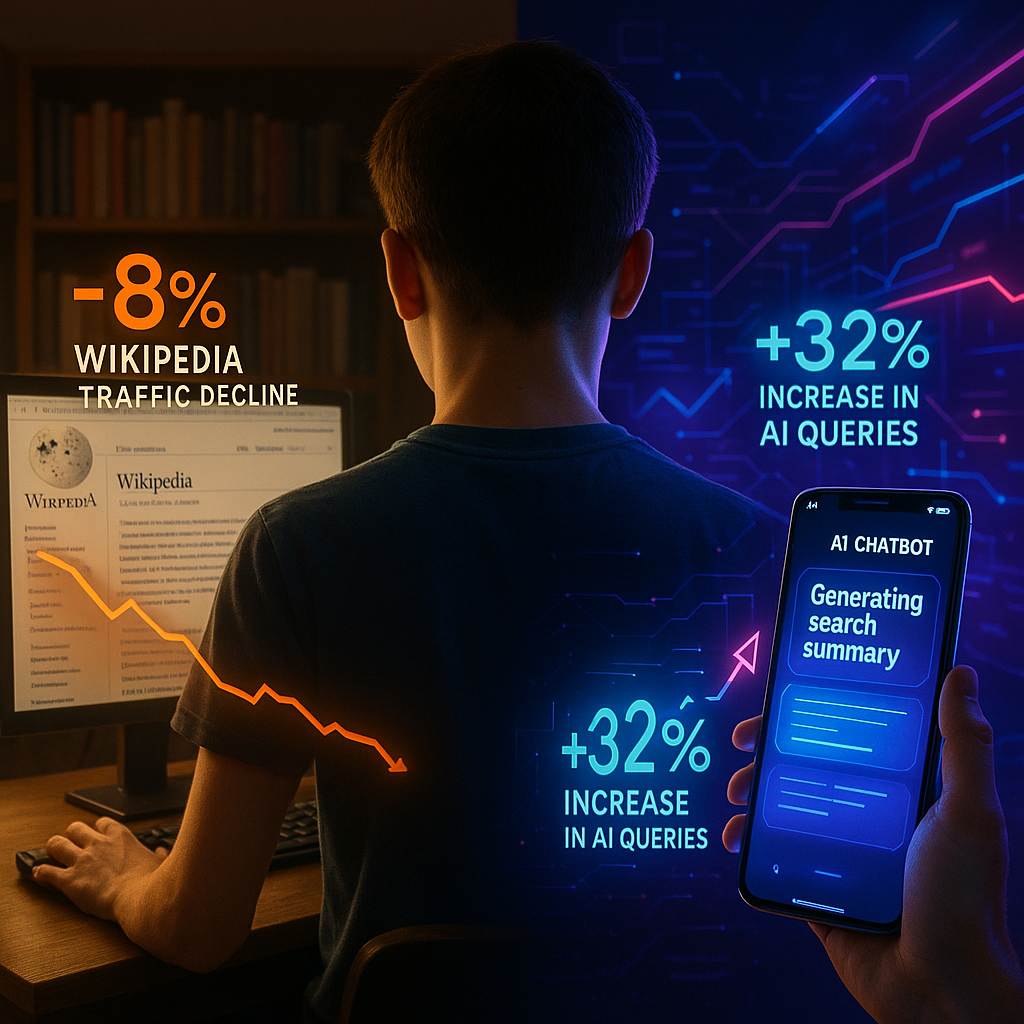
- On 19 October 2025, the Press Review highlights a significant shift in online information habits as Wikipedia traffic falls by 8%, driven by the rise of AI-generated search summaries.
- The impact of AI on society is evident as knowledge access, curation, and valuation continue to evolve.
- Wikipedia visits have dropped 8% as users rely on instant AI search answers, indicating a shift in digital learning and trust.
- OpenAI now allows ChatGPT adult content for verified users, further blurring boundaries between human inquiry and AI facilitation.
- Major funding from Big Tech targets teacher AI literacy, aiming to bridge the gap between classroom realities and digital fluency.
- San Francisco’s luxury rents have surged 13%, propelled by AI startups reshaping the tech landscape and urban life.
- The rapid adoption of AI-driven search and content generation is challenging traditional sources of authority and knowledge.
Introduction
On 19 October 2025, Wikipedia’s 8% drop in user visits, driven by the dominance of AI search summaries, underscores a profound AI society impact. This shift raises questions about trust in traditional knowledge sources as algorithms quietly reshape access and authority. Today’s press review examines how these developments are reflected in Big Tech’s investments in teacher AI literacy, redefining how information is accessed, taught, and valued.
Top Story
Wikipedia Traffic Shows Growing AI Dependence
Wikipedia recorded an 8% decline in overall page views during the third quarter of 2025. This is the steepest drop since the platform’s inception. This decline correlates with a 32% increase in the use of AI language models for information queries.
Search patterns show that users increasingly turn to AI chatbots for quick answers rather than reading entire Wikipedia articles. According to the Wikimedia Foundation, science and technology entries have experienced the sharpest decrease, with a 12% reduction in engagement.
Internal analytics indicate that younger users, particularly members of Generation Z, now favor AI-driven knowledge tools. Sixty-five percent of Gen Z respondents stated a preference for conversational AI interfaces over traditional encyclopedia formats.
Stay Sharp. Stay Ahead.
Join our Telegram Channel for exclusive content, real insights,
engage with us and other members and get access to
insider updates, early news and top insights.
 Join the Channel
Also Today
AI Ethics and Education
Harvard University has announced a comprehensive revision of its curriculum, introducing AI literacy across all departments. The initiative features mandatory courses on AI ethics and new guidelines for AI-assisted academic work.
Student surveys reveal mixed reactions. Seventy-eight percent support integrating AI but express concerns about preserving critical thinking skills. Faculty members are developing new assessment methods that focus on analytical abilities rather than fact retention.
The American Library Association reports that 42% of public libraries now offer AI literacy programs. Traditional reference services are being reimagined as AI advisory centers.
Digital Relationships
A recent Pew Research study found that 28% of Americans now regularly interact with AI companions for emotional support or conversation. Mental health professionals have noted both benefits and challenges related to this trend.
The increasing use of AI companions prompts new questions about authentic connection in an AI-augmented world. Social scientists note the emergence of digital intimacy forms that blur boundaries between human and machine interaction.
Market Wrap
Technology stocks specializing in AI infrastructure recorded strong gains, with the AI-Tech Index up 3.2%. In contrast, traditional education technology companies declined by 2.1% collectively due to concerns about market disruption.
European markets reflected similar trends; AI-focused firms outperformed traditional technology sectors, with the STOXX AI & Robotics Index reaching an all-time high.
What to Watch
- 21 October 2025: Global AI Ethics Summit in Geneva, where policymakers and tech leaders will convene.
- 23 October 2025: Release of UNESCO’s annual report on AI’s impact on education systems.
- 28 October 2025: Congressional hearings on AI regulation and public safety in Washington, DC.
Conclusion
Wikipedia’s sharp traffic decline highlights a pivotal transformation in how people seek information. AI-driven tools are becoming integral to daily routines and deepening the AI society impact. Both educational and social domains are rapidly adapting, reshaping the definitions of knowledge and human connection. What to watch: upcoming AI summits, UNESCO’s education report, and Congressional hearings will continue to frame the debate and inform policy direction.
AI origin philosophy
generative AI tools
AI-mediated feedback




Leave a Reply