
Key Takeaways
Documentary AI is fundamentally reshaping how stories are conceived, refined, and shared. It is ushering in a new era where algorithms serve as collaborative partners in the creative process, not just as digital assistants. As story-editing and narrative AI break down old barriers to professional-quality documentary production, creators with minimal resources and experience can now craft cinematic narratives that resonate on a global scale. The following takeaways reveal how this technological evolution is democratizing documentary filmmaking, stirring important debates about authorship and ethics, and inviting us to imagine the future of storytelling.
- AI expands creative access, erasing traditional gatekeepers: Documentary AI platforms empower creators without expensive gear or industry networks, making it possible to produce polished, narrative-rich films. This access disrupts longstanding obstacles, opening the field to more diverse voices.
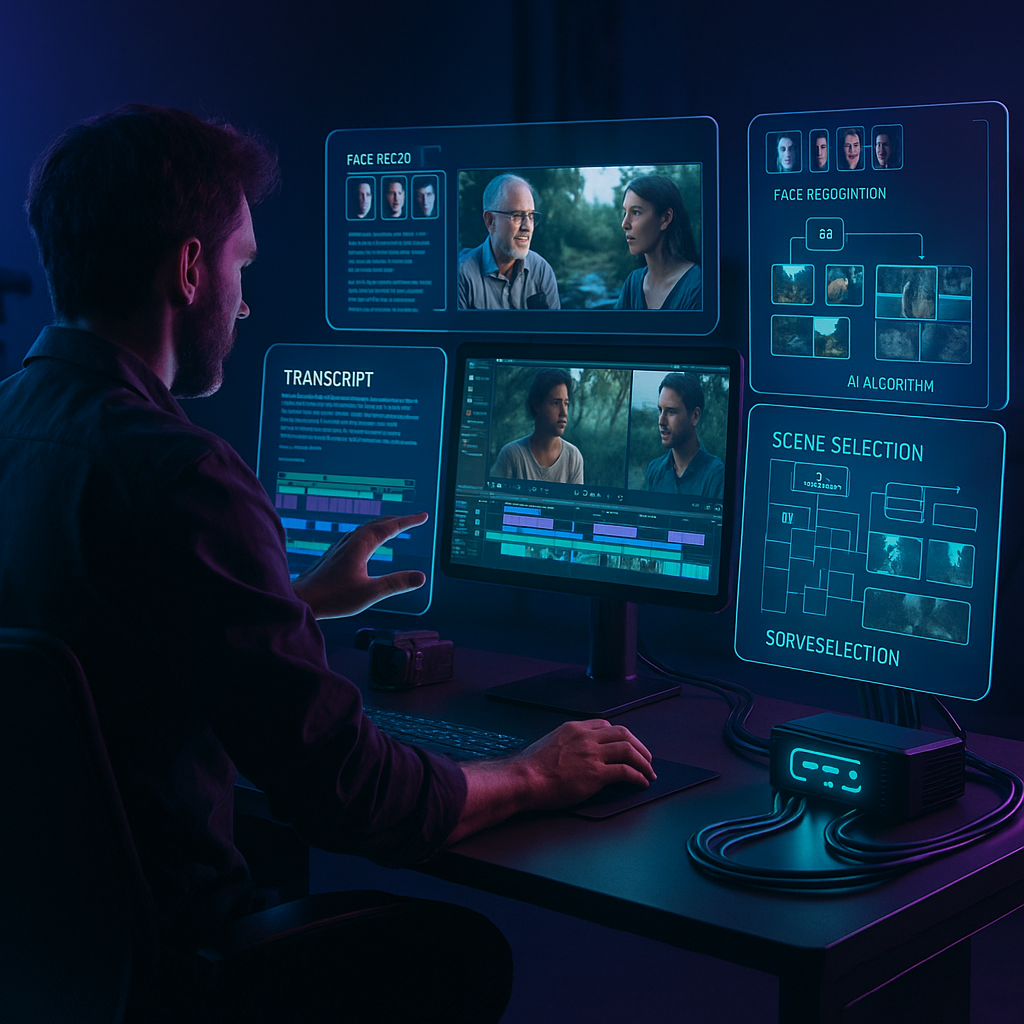
- AI video editors transform chaotic footage into cohesive stories: Sophisticated algorithms now sort, tag, and prioritize scenes, freeing storytellers to focus on artistic vision rather than getting bogged down in manual tasks. This elevates even rough footage into compelling storytelling.
- AI-assisted scriptwriting unlocks new narrative horizons: Narrative AI tools automate transcription and organization, but also inspire creative leaps through prompts, story arc suggestions, and emotionally resonant edits. Human imagination is amplified rather than replaced.
- Democratized filmmaking: Professional quality without steep learning curves: Robust AI-powered editing suites and user-friendly workflows lower the technical bar for entry. Novice and emerging filmmakers can achieve results previously reserved for well-funded professionals, bringing authentic, multifaceted stories to wider audiences.
- Ethical frontiers: Navigating authenticity in AI-powered documentaries: As AI becomes a co-author, documentarians confront complex questions around truth, manipulation, and creative responsibility. Transparency about where human judgment ends and machine intervention begins will be essential.
- Emerging hybrid workflows blend human insight with agentic AI: The most compelling documentaries now achieve a dynamic interplay between human intuition and AI analytics. These intentional combinations enhance both narrative nuance and emotional depth.
- Future-forward: AI continually evolves the language of documentary storytelling: Rapid advances in AI avatar narration, real-time translation, and generative storytelling are expanding the documentary form itself, unlocking entirely new storytelling grammars and possibilities.
As we explore these mechanisms further, we will discover both the transformative power and the underlying philosophical challenges of marrying AI with documentary artistry. We’ll see how anyone, regardless of background, can now participate in the new frontier of narrative creation.
Introduction
A new kind of creative partner has entered the documentary editing room. Unlike the seasoned editor or visionary director, this one isn’t human. Documentary AI is rewriting the very code of cinematic storytelling, turning raw footage and scattered concepts into nuanced narratives with unprecedented speed and subtlety. What was once the preserve of major studios and experienced filmmakers is now within reach for anyone with a camera and a compelling curiosity.
This technological wave offers more than mere automation. Intuitive AI editors can craft order from visual chaos, while narrative AI assistants provoke new emotional dimensions and unexpected storylines. The result: a democratization of documentary filmmaking and a profound expansion of creative voices. Of course, as algorithms assume more creative influence, we must ask new questions about authorship, authenticity, and the shifting boundaries of artistic control. Let’s examine how documentary AI is opening the craft to all, casting a spotlight on practical innovation, ethical tension, and future possibilities where storytelling becomes not just more efficient, but fundamentally more inclusive.
Stay Sharp. Stay Ahead.
Join our Telegram Channel for exclusive content, real insights,
engage with us and other members and get access to
insider updates, early news and top insights.
 Join the Channel
AI-Driven Narrative Assistance in Documentary Filmmaking
Documentary filmmaking has long demanded a blend of technical know-how, narrative craft, and relentless attention to detail. In the traditional paradigm, even short productions could consume countless hours of sifting through footage, logging interviews, and wrestling structure from chaos. For many passionate creators, that was simply out of reach.
Now, AI technologies are reshaping this process at its core. Intelligent systems can rapidly organize footage, highlight emerging narrative threads, and synthesize compelling stories from vast quantities of raw material. Tasks once entrusted only to seasoned editors are now accessible to independent filmmakers, educational groups, and grassroots organizations.
The implications go beyond productivity. As AI’s analytical reach extends, it democratically distributes the tools of professional storytelling. Platforms can now analyze extensive interview data, map recurring motifs, and suggest narrative arcs based on content, regardless of the user’s experience or resources. As Emily Zhao, a prominent documentary producer, shares, “AI doesn’t replace the filmmaker’s vision; it amplifies it. The technology reveals patterns and opportunities that would otherwise remain buried, sometimes for weeks.”
This paradigm shift is expanding the diversity of voices and topics in documentary film. Stories that might never reach the public now find audiences eager for new perspectives.
Core AI Technologies Transforming Documentary Production
To fully appreciate the power of documentary AI, it’s essential to understand the core technologies at play and how they extend across disciplines, transforming not just film but a wide span of creative and analytical industries.
Automated Transcription and Content Analysis
The bedrock of modern documentary AI lies in automated transcription: the rapid, accurate conversion of spoken word to searchable, editable text. Today’s AI transcription engines routinely exceed 95% accuracy for clear audio, with the added ability to assign speakers, detect sentiment, and flag emotional or pivotal moments.
AI content analysis tools then extract value from this textual data by identifying:
- Thematic links across interviews, even when separated by time, language, or geography
- Shifts in emotional tone, helping to signal dramatic pivots and story climaxes
- Contrasts and corroborations between sources, essential for investigative journalism and advocacy films
- Emergent narrative themes or motifs that can become story anchors
For documentary filmmaker Jordan Reeves, this technology was revolutionary for his environmental justice project: “The AI connected interviews months and miles apart, revealing a pattern of corporate behavior that ultimately gave our film its central arc. Without it, such connections would have taken months of manual review to uncover.”
Crucially, these transcription and content analysis tools find resonance beyond filmmaking. In healthcare, they enable rapid synthesis of patient interviews for qualitative research. In legal and compliance contexts, AI assists in parsing hours of testimony to find critical data points. The real impact is in how these systems turn overwhelming complexity into actionable storylines, insights, or strategies.
Machine Learning for Visual Recognition and Scene Organization
Machine learning-powered visual recognition has fundamentally altered how filmmakers and content creators handle raw assets. AI can now:
- Recognize individuals, objects, or recurring locations in hours of unedited footage
- Detect nuanced emotional expressions and nonverbal cues
- Sort scenes by lighting, shot composition, or action sequences, aiding both creative and technical workflows
- Spot continuity between takes, propose seamless transitions, and surface overlooked connections
For director Sophia Kim, working on an urban farming documentary, this capability made an immediate impact. “Using AI, we instantly tagged every sequence involving planting, harvests, and community events. It let us quickly assemble montages and narrative threads that previously would have required days of manual effort.”
Visual recognition extends its influence far beyond filmmaking. In environmental science, such tools process vast image archives to track deforestation or wildlife migration. In retail, AI streamlines inventory categorization and layout design by analyzing camera footage. In education, schools use AI-driven video analysis to study student engagement and refine teaching methods.
This evolution signifies a shift from mere content sorting to more sophisticated creative assistance, empowering artists, researchers, and strategists with a new class of visual intelligence.
Narrative Structure Generation and Story Suggestion
The most paradigm-shifting feature of documentary AI is its capacity to generate narrative structures based on a holistic analysis of content. This goes beyond simple cataloging. These systems can propose entire story frameworks tailored to the footage, theme, and emotional journey embedded within the material.
Advanced narrative AI systems analyze emotional progression, visual motifs, and interviews to offer:
- Natural division points for segmenting multipart documentaries
- Character-based arcs spotlighting pivotal individuals or voices
- Conflict-resolution trajectories drawn straight from unfolding events
- Adaptive pacing suggestions responding to content intensity and audience attention patterns
As Marcus Chen, a filmmaker exploring urban migration, recounts, “AI didn’t just organize footage. It gave us competing narrative blueprints: chronological, thematic, and character-driven. We could experiment with each to see what truly brought out the emotional heart of our film.”
Stay Sharp. Stay Ahead.
Join our Telegram Channel for exclusive content, real insights,
engage with us and other members and get access to
insider updates, early news and top insights.
Join the Channel
The influence of such systems is felt outside the film realm as well. In marketing, similar AI tools generate campaign narratives from consumer data. In education, automated curriculum designers craft modules tailored to student needs and responses. For legal professionals, narrative AI can structure case presentations from massive document troves.
In documentaries, these systems increasingly serve as creative muses, proposing narrative possibilities that challenge and inspire the filmmaker. Human creators remain in command, but now have an AI partner to provoke deeper exploration and unexpected creative leaps.
Democratizing Documentary Creation Through AI
The AI-driven transformation of documentary filmmaking is, at its core, an act of democratization. By dramatically lowering the barriers of technical expertise, resource needs, and production time, AI invites a broader spectrum of voices into what was once a tightly guarded arena.
Today’s AI-powered tools enable:
- Simplified management of complex footage, allowing non-experts to structure and refine raw material
- Reduced search time for meaningful quotes or pivotal scenes, hastening both editing and research cycles
- Accessible, end-to-end workflows for creators with minimal prior experience
- High production values, even for short films or community-driven projects
Tanisha Williams, a community media educator, sees this change in action. “Students in our afterschool program are now producing sophisticated short documentaries. The technology takes care of the technical background, letting these young storytellers tackle tough topics with authenticity and confidence.”
Grassroots organizations, advocacy groups, and independent investigators have also embraced AI in their fight to surface under-told stories and social injustices. Environmental activist Carlos Mendez recalls, “Our small team created a measured, impactful documentary about local water contamination, something we would never have been able to accomplish just a few years ago due to limited funds and expertise.”
The reach of this democratization even spans sectors like healthcare, where patient advocacy groups produce testimonial documentaries to influence public policy, and education, where classroom documentaries drive curricular reform. As powerful tools fall into more hands, the tapestry of stories entering the public conversation becomes richer, more representative, and ultimately more influential.
Ethical Considerations and Creative Control
Yet, as with any powerful technology, AI-driven storytelling brings a host of ethical questions, especially around creative agency, transparency, and authenticity. How much narrative influence should be delegated to an algorithm? When does AI support cross the line into undue manipulation?
Preserving the Human Element in Storytelling
Skeptics warn that overreliance on AI may lead to stories shaped by algorithmic bias or formulaic templates, dulling the edge of creative risk-taking. As documentary filmmaker Elena Patel cautions, “AI suggestions can be helpful, but if filmmakers surrender their creative judgment, we risk a cultural landscape of predictable, safe, and ultimately less relevant films.”
To address these fears, AI developers are foregrounding human-centered design in their tools. Features such as adjustable parameters, transparent suggestion rationales, and filmmaker-defined guiding values place creative agency firmly back in the human’s hands.
Balanced workflows often include:
- AI-driven organization paired with human editorial selection
- Multiple narrative suggestions from which human creators choose or blend elements
- Cultural and contextual awareness features reducing the risk of inappropriate or insensitive automation
- Transparent, explainable AI processes to clarify how narrative suggestions were formulated
These solutions extend to sectors like finance, where automated insights must be vetted by human analysts to avoid misleading decisions, or education, where adaptive learning paths respect instructor oversight.
Transparency and Attribution in AI-Assisted Documentaries
As AI’s role in creative decision-making increases, so does the imperative for openness about its influence. Viewers, policy makers, and creative collaborators deserve honest insight into who or what shaped a documentary’s most critical elements.
Dr. James Liu, an ethicist in digital storytelling, notes: “Transparency is not just about admitting AI was used. It’s about revealing how pivotal the technology was in shaping the film’s perspective or argument. If the AI’s choices determine key structural or thematic moves, viewers should be told plainly.”
The industry is already developing standards and guidelines for attribution. Some festivals now require filmmakers to disclose the extent of AI involvement, especially when the system influences story arcs or editorial direction. Many producers are experimenting with supplemental essays or even behind-the-scenes videos revealing the AI’s role in the process.
Such transparency is not exclusive to filmmaking. In marketing, regulatory agencies are beginning to mandate disclosure when algorithms play decisive roles in shaping ad content or targeting. Legal professionals face similar calls for traceability when relying on AI-authored analyses or recommendations.
Clear acknowledgment of AI’s contributions not only preserves public trust but also sustains the integrity of documentary as an art form grounded in truth. Even as its methods evolve.
Case Studies: AI-Enhanced Documentary Production Across Sectors
Concrete examples best illustrate the potential and breadth of documentary AI. The following case studies show how AI-driven storytelling tools are transforming film, healthcare, education, and more.
“Ocean Memory Project”: Navigating Massive Archival Content
The “Ocean Memory Project” documentary began with a daunting challenge: over 200 hours of archival footage chronicling decades of oceanographic discovery. Director Amina Hassan adopted an AI workflow to:
- Transcribe and categorize interviews rapidly, even with specialized scientific terminology
- Cross-reference historical and contemporary visuals, finding continuity and evolution in scientific understanding
- Generate thematic maps showing the progression of concepts like ocean acidification or coral reef decline
- Propose narrative structures, emphasizing pivotal discoveries and paradigm shifts
With AI, the team discovered hidden through-lines connecting interviews from the 1970s with contemporary breakthroughs. This enabled them to craft a cohesive narrative that might have otherwise remained fragmented.
“Voices for Health”: Amplifying Grassroots Patient Advocacy
A public health nonprofit utilized documentary AI to synthesize hundreds of patient interviews from around the country, many conducted in different languages. The AI:
- Auto-translated and transcribed multilingual footage
- Tagged recurring topics, from insurance struggles to medical mistrust
- Suggested a narrative that brought marginalized patient experiences to the documentary’s forefront, influencing public health policy debates
The result was a film that not only educated but mobilized a wider audience. It showed the power of AI to spotlight community voices in healthcare advocacy.
“Beyond Borders”: AI in Educational Storytelling
In an educational initiative, a group of university students used AI-assisted editing to document stories of international students adapting to remote learning during a global pandemic. The software:
- Organized footage based on emotional tone, highlighting resilience and adaptation
- Suggested interwoven multi-perspective story arcs, making the narrative more dynamic
- Assisted in real-time translation for subtitles, broadening accessibility
This project’s success led to its inclusion in curriculum development efforts. It’s just one way AI-driven documentaries are now shaping teaching resources as well as stories.
Conclusion
AI-driven narrative assistance is fundamentally redrawing the maps of documentary filmmaking and beyond. Automated transcription, machine vision, and adaptive narrative structuring now turn mounds of raw footage—even from disparate sources and languages—into expertly crafted stories. And this democratization means that polished, impactful documentary films are no longer the domain of major studios. They’re arising from classrooms, advocacy groups, medical communities, and independent creators all over the world. That introduces audiences to a broader, richer spectrum of human experience.
Yet, with this new creative freedom comes a responsibility to preserve authenticity and promote transparency. The most enduring collaborations position AI as an enabling force, one that amplifies human intuition, uncovers hidden insights, and supports, but never overshadows, the filmmaker’s vision. As we contemplate the next evolution of documentary storytelling, the real challenge is no longer whether we will blend human and machine intelligence, but rather how thoughtfully, ethically, and creatively we will do so.
Looking forward, those who embrace adaptable, transparent approaches and remain willing to question their own assumptions will lead the charge into this new narrative landscape. The future of storytelling belongs not just to those who operate the cameras or program the algorithms, but to those who can sense the shifting contours of truth, meaning, and connection in a world increasingly shaped by both human and alien minds. The invitation is clear. Will you use these new tools to illuminate, challenge, and reinvent the stories that shape our world, or let the opportunity slip by? The next chapter of documentary, and indeed of our collective narrative, awaits those who are ready to create it.



Leave a Reply