
Key Takeaways
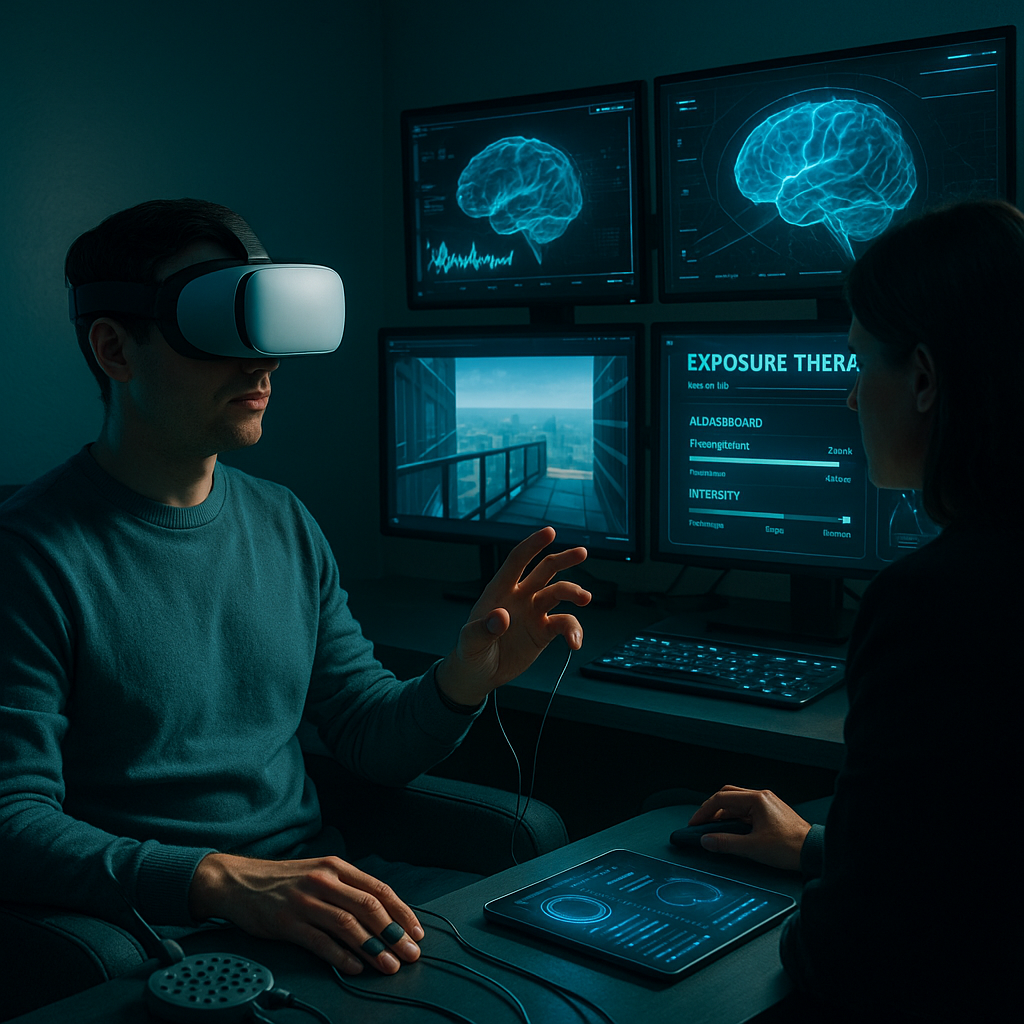
- AI tailors virtual exposure for maximum therapeutic impact: Advanced algorithms dynamically personalize VR environments to align with each patient’s unique triggers and tolerance thresholds. This ensures exposure therapy is both effective and adaptive, optimizing the experience for every individual regardless of their background or phobia type.
- Immersive environments accelerate progress over traditional therapy: By engaging multiple senses and placing patients directly into controlled simulations of feared scenarios, VR therapy enables repeated practice and faster desensitization. This multisensory approach has demonstrated improved results compared to standard exposure techniques, significantly shortening recovery timelines.
- Safety and clinician oversight are built into virtual sessions: Therapists have real-time visibility into patient reactions, allowing them to adjust difficulty levels and provide instant support. This continuous oversight enhances safety, helps build trust, and encourages patient persistence through high-stress exposures.
- Integration with evidence-based practices ensures clinical rigor: AI-powered VR therapy does not exist in isolation. It delivers best results when combined with cognitive behavioral therapy (CBT) frameworks, grounding immersive experiences within validated mental health methodologies and ensuring that innovation never outpaces clinical responsibility.
- Telehealth VR solutions expand access to specialized care: Remote delivery of AI-driven VR sessions brings expert phobia treatment to underserved populations. By overcoming geographic barriers, reducing stigma, and addressing resource gaps, these solutions increase equity in mental health care access for individuals worldwide.
- Continuous data-driven optimization refines treatment strategies: Every virtual session generates detailed analytics, which empower AI systems to automatically refine exposure levels and therapeutic interventions. Clinicians receive actionable, personalized feedback, enabling truly adaptive care tailored to each patient’s evolving needs.
- AI-enabled personalization demystifies progress and outcome tracking: Patients and therapists gain access to clear, quantifiable insights into anxiety reduction and skill mastery, making progress transparent and goals tangible. These metrics build engagement and foster collaboration throughout the therapeutic journey.
Collectively, these advancements establish AI-powered VR therapy as a transformative force in mental health care. They offer hope and practical solutions for individuals confronting stubborn phobias. As we delve deeper, we will explore the inner mechanics, clinical effectiveness, and far-reaching future implications of this rapidly evolving therapeutic frontier.
Introduction
Phobias maintain their grip by hiding in the shadows. They are difficult to confront, resilient against conventional therapies, and often obscured in everyday life. VR therapy AI is now shining a transformative light into these corners of the mind, harnessing artificial intelligence and immersive virtual environments to personalize every step of exposure. In doing so, it is fundamentally reshaping the treatment of anxiety disorders.
At the crossroads of AI and virtual reality, a profound new modality for mental health intervention emerges. Patients step into multisensory simulations precisely tuned to their unique triggers. Clinicians gain immediate, actionable insights that allow for rapid iterative care. Telehealth platforms expand the reach of expert mental health support to anyone with a headset and an internet connection, regardless of geographic location. This is not merely a technological upgrade. It is a reimagining of what therapy can achieve. Let us explore how AI-driven mental health tools not only accelerate recovery but open entirely new vistas for therapeutic intervention, outpacing the capabilities of traditional therapy.
How VR Therapy Works for Phobia Treatment
Virtual Reality Exposure Therapy (VRET) marks a paradigm shift in addressing phobias and anxiety disorders by immersing patients in realistic simulations of the situations they fear. Unlike conventional exposure approaches that depend heavily on imagination or sometimes unwieldy real-world scenarios, VRET leverages cutting-edge graphics and sensory feedback to place patients in controlled, graded experiences where progress is measurable and repeatable.
Stay Sharp. Stay Ahead.
Join our Telegram Channel for exclusive content, real insights,
engage with us and other members and get access to
insider updates, early news and top insights.
 Join the Channel
The Neurological Basis of VRET
The core of VRET’s therapeutic power lies in its activation of neural pathways associated with fear, specifically, regions like the amygdala, which governs fight-or-flight responses. When a patient faces a virtual spider, stands atop a digital skyscraper, or navigates a simulated crowd, their brain registers these experiences as emotionally significant, closely mirroring real-life encounters. Over time, this controlled confrontation teaches the brain that these stimuli do not guarantee danger. This allows for extinction learning and new neural associations to form.
Studies, such as those from the University of Southern California’s Institute for Creative Technologies, confirm that this neurological engagement is deep enough to yield lasting symptom reduction, while still preserving the patient’s sense of safety and autonomy. The result? The mind updates its internal model of threat, paving the way for genuine behavioral change.
Technical Foundations of Advanced VR Therapy Systems
The efficacy of VR therapy depends not just on psychological principles, but on a suite of high-end technical features that maximize immersion, comfort, and realism:
- Ultra-high resolution displays (4K+): Delivering crisp, believable visuals that maintain presence and realism.
- Spatial audio systems: Surround-sound environments enhance realism and heighten emotional resonance.
- Haptic feedback devices: Simulating touch or movement, allowing patients to physically interact with, and acclimate to, feared stimuli.
- Six-degrees-of-freedom motion tracking: Enabling natural, intuitive movement within safe virtual spaces.
- Low-latency response times (<20ms): Preventing motion sickness and breakage of immersion that can disrupt therapy progress.
The interplay of these technologies directly impacts therapeutic outcomes. Research indicates that high-fidelity, immersive VR produces significantly stronger reductions in fear behaviors, sometimes more than 25% better, even after accounting for therapist skill, than lower-end platforms.
Structured, Stepped Exposure Protocols in VR
VR therapy follows a widely-recognized exposure therapy protocol, but supercharges it with precision and flexibility:
- Baseline assessment: Objective measures establish the patient’s initial level of fear.
- Technology orientation: Patients familiarize themselves with VR controls and basic navigation.
- Progressive exposure: Therapy proceeds from low-intensity to high-intensity fear triggers, always within a controllable, safe setting.
- Skills integration: Patients practice coping tools, such as breathing techniques or positive self-talk, as part of their virtual experiences.
- Bridging exercises: The final phase focuses on translating virtual gains to the real world through carefully crafted homework or in-person challenges.
By making each scenario dynamically adjustable, VR therapy prevents stagnation or overwhelming stress. This allows for a smooth, individually tailored gradient of challenge that eludes traditional real-world exposure therapy.
The AI Enhancement: Transforming VR Therapy
Bringing AI into the heart of VR therapy takes treatment far beyond static programming. No longer are experiences pre-scripted or dependent on one-size-fits-all protocols. AI infuses adaptability, responsiveness, and intelligent guidance into every session.
Real-Time Physiological Monitoring and Adaptive Response
AI-powered VR platforms continuously collect and analyze biometric signals from:
- Heart rate and variability: Indicators of stress and engagement.
- Galvanic skin response: Real-time feedback on emotional arousal.
- Eye tracking: Revealing focus points, avoidance behaviors, and engagement levels.
- Facial recognition: Detecting subtle shifts in emotion.
- Voice measurement: Picking up stress or hesitation in verbal responses.
Sophisticated algorithms analyze these data streams and make rapid adjustments within the simulation. If signs of excessive anxiety appear, such as marked heart rate spikes during a simulated flight, the AI might incrementally reduce turbulence in the virtual airplane, introduce supportive cues, or prompt coping interventions. A Journal of Anxiety Disorders study in 2023 showed that this kind of dynamic, AI-guided exposure delivers notably faster symptom reduction (34% quicker habituation) compared to standard, non-adaptive VR sessions.
Machine Learning for Hyper-Personalized Treatment Paths
The real genius of AI resides in its capacity to learn from each patient’s journey. By parsing historical session data, machine learning models can detect patterns in resistance, avoidance, or breakthrough moments. This empowers the system to:
- Tailor future exposures to maximize engagement and therapeutic window efficiency.
- Proactively uncover and address safety behaviors (subtle ritualistic actions that undercut progress).
- Adapt learning pace to match the patient’s readiness, ensuring neither stagnation nor sudden overwhelm.
For example, a patient afraid of elevators might be guided through cartoon-like, low-stress simulations before facing highly realistic scenarios. In other cases, the system may notice progress plateaus sooner than a human therapist, suggesting alternate strategies or triggers.
Conversational Intelligence: The Power of AI-Driven Language Interaction
Natural language processing (NLP) deepens therapeutic engagement by facilitating lifelike conversation, guidance, and feedback during sessions. AI-augmented virtual therapists can:
- Lead patients through mindfulness or grounding exercises in moments of distress.
- Deliver cognitive restructuring or insight-building prompts based on detected negative self-talk.
- Consistently inquire about subjective fear (scaling, naming, exploring avoidance) in ways that adapt to the patient’s progress.
- Offer reinforcement and encouragement at key milestones to keep motivation high.
Research out of Stanford’s Virtual Human Interaction Lab shows that some patients, especially those battling social anxiety or shame-based disorders, feel more comfortable disclosing sensitive fears to AI helpers. The combination of real-time support with nonjudgmental inquiry helps lower psychological barriers and build therapeutic momentum.
Real-World Applications Across Diverse Disorders
The versatility of AI-enhanced VR therapy extends well beyond the treatment of classic phobias, touching virtually every branch of anxiety and trauma care.
Treating Specific Phobias: Highly Targeted Interventions
AI-VR allows for micro-personalized exposures that would be logistically or ethically impossible in the real world. For example:
- Arachnophobia: Simulate spiders that grow more realistic, mobile, or numerous as the patient progresses, with real-time analytics enabling precisely-timed advancement.
- Acrophobia (heights): Instantly shift between different elevation scenarios, carefully moderating peripheral cues and floor transparency to match anxiety levels.
- Aviophobia (fear of flying): Replicate all phases of flight, varying turbulence, noise, and passenger density based on biometric feedback. AI calibrates scenario intensity, providing a nuanced, stepwise challenge.
- Claustrophobia: Virtually adjust room size, lighting, and exit accessibility, escalating only as tolerated to foster agency and autonomy.
King’s College London found that four AI-driven VR sessions lowered spider phobia symptoms by an average of 75%. For many, that’s transformative relief after years of traditional treatment failures.
Stay Sharp. Stay Ahead.
Join our Telegram Channel for exclusive content, real insights,
engage with us and other members and get access to
insider updates, early news and top insights.
Join the Channel
Addressing Social Anxiety and Public Speaking Fears
For those battling social phobia or performance anxiety, AI-VR constructs layered social environments where virtual humans dynamically react. Such systems can offer:
- Virtual audiences whose facial expressions, attentiveness, and reactions reflect real-time performance and physiological distress.
- Simulated conversations for practice in job interviews, networking, or dating, with adaptive escalation from supportive to challenging interactions.
- Progression from low-key audiences to critical or distracted crowds, always within the patient’s capacity.
The University of Barcelona reports a 43% improvement in public speaking confidence when audiences respond to the patient’s actions, rather than remaining static and unreactive. This nuanced feedback transforms social simulation from a simple script to a living, responsive environment.
Advanced Applications in PTSD, Trauma, and Beyond
For post-traumatic stress disorder and exposure-based trauma therapy, AI-VR introduces profound therapeutic opportunities with rigorous ethical oversight:
- Personalized trauma scenarios: Developed collaboratively, ensuring sensitive, relevant, and meaningful reconstructions.
- Biometric safety thresholds: Allowing immediate interventions or scenario pausing to guard against retraumatization.
- Graduated re-exposure: Presenting traumatic cues sequentially, providing ample time for mastery before progressing.
- Support for memory reconsolidation: Applying evidence-based interventions in moments of peak emotional engagement.
VA studies show that AI-integrated VRET for combat-related PTSD leads to a 67% remission rate, compared to 38% with conventional exposure approaches. This is opening new chapters for those previously unresponsive to care.
Expanding Across Additional Sectors and Mental Health Needs
The applicability of AI-driven VR therapy spans beyond phobias and trauma. In healthcare, this technology supports pain management, rehabilitation for neurological conditions, and mindfulness training. In education, VR exposure helps students overcome test anxiety and improves focus through virtual classroom environments tailored to individual stress responses. In corporate training and legal settings, simulated negotiation or high-stakes scenarios build resilience, providing safe rehearsal for challenging real-world encounters. This adaptability shows that AI-powered VR therapy is not a niche solution, but a flexible, cross-sector tool capable of improving mental and emotional wellbeing in multifaceted ways.
Clinical Evidence and Effectiveness Metrics
A rapidly expanding corpus of clinical research anchors the promise of AI-augmented VR therapy in quantifiable outcomes. Multiple randomized controlled trials highlight that VRET, particularly with AI-driven adaptivity, produces faster, longer-lasting reduction in anxiety and avoidance behaviors than traditional exposure alone.
For example, a 2023 meta-analysis of over 40 studies revealed that patients undergoing AI-personalized VRET were twice as likely to complete treatment protocols and reported higher satisfaction rates, driven in part by the transparency of progress tracking and sense of agency. Outcomes such as reduction in avoidance behaviors, boost in general quality of life, and long-term anxiety relapse prevention are steadily being documented across age groups, cultural backgrounds, and a diverse spectrum of clinical diagnoses.
Conclusion
Virtual Reality Exposure Therapy, supercharged with artificial intelligence, is ushering in a new era for mental health treatment. No longer defined by static scripts or generalized approaches, therapy becomes a living process. It is ever responsive to the unique neurobiological and psychological contours of each individual. Through the real-time integration of biometric feedback, personalized exposure sequencing, and AI-powered therapeutic dialogue, care evolves at the pace and in the rhythm most suitable to every patient’s recovery.
This revolution is not theoretical or reserved for the distant future. Today, AI-enhanced VR therapy is conquering previously unyielding phobias, accelerating trauma recovery, democratizing access for remote and underserved communities, and bringing the laboratory of the mind to anyone with a headset.
Looking forward, the possibilities expand even further. As AI and VR converge with advances in wearable tech, remote collaboration tools, and cross-industry integration, mental health care will become more adaptive, equitable, and tailored than ever before. The real question is not if these advancements will reshape the landscape of psychological wellness, but how swiftly organizations, clinicians, and innovators will harness their potential to outpace stigma, overcome legacy barriers, and redefine what it means to heal in the digital age. For those prepared to blend human wisdom with adaptive, alien intelligence, a new era of empowerment and liberation from fear is just beginning.



Leave a Reply