
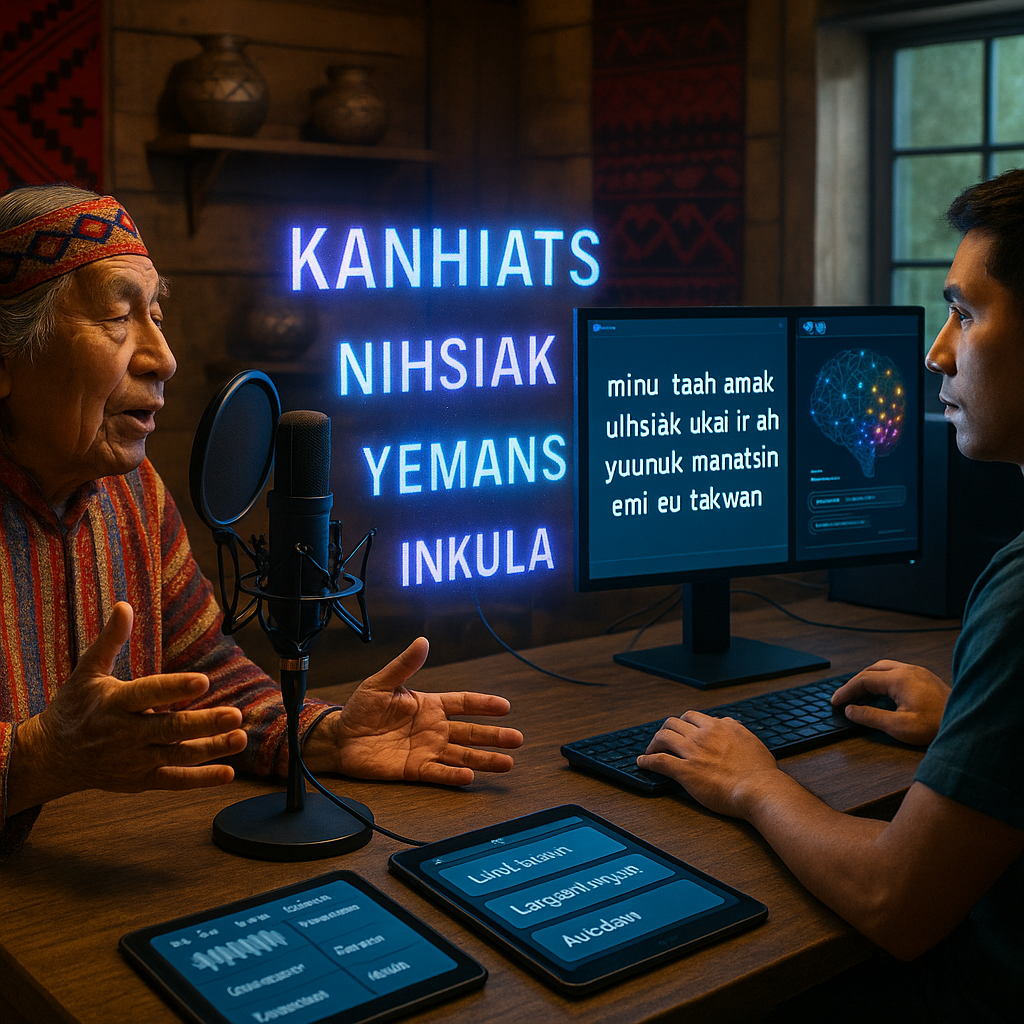
Key Takeaways
- AI breathes new life into language documentation: The convergence of natural language processing, speech recognition, and innovative EdTech platforms allows for rapid analysis, transcription, and archiving of endangered languages. This transformation turns ephemeral spoken histories into enduring digital resources, preserving the stories and wisdom of cultures for future generations across multiple continents.
- Beyond automation, the human element remains essential: Even the most advanced AI-powered language preservation tools require the wisdom, creativity, and participation of native speakers. Technology alone lacks the nuance, emotional resonance, and lived context that communities bring. The heart and soul of language revitalization are in human stewardship.
- AI overcomes technical barriers but not all social, ethical, or cultural limits: Language preservation technology reduces the time and cost of creating educational materials but still grapples with obstacles, including data scarcity, dialect diversity, complex grammar, and the ethical dilemmas of digitizing sacred or sensitive knowledge.
- Targeted AI tools address data scarcity across industries: By leveraging techniques such as transfer learning, data augmentation, and low-resource adaptation, AI systems can generate valuable educational content and documentation, even for languages with very few speakers. These approaches mirror strategies used in other sectors, such as personalized medicine in healthcare and rare event prediction in finance.
- Community-EdTech partnerships foster authentic cultural transmission: Hybrid models that combine AI’s efficiency with community-driven initiatives produce platforms capable of teaching not just words, but also culture, context, and tradition. This synergy sparks more holistic, vibrant, and sustainable language revitalization, similar to community engagement strategies in environmental science and education sectors.
- Global success stories map the road ahead: Projects like Living Tongues in the Americas, Masakhane in Africa, and digital archives in Australia and Canada prove that local involvement, when empowered by sophisticated AI, can lead to renewed fluency, intergenerational pride, and cultural resilience. These cases underscore that the future of linguistic diversity is shaped as much by community-driven effort as by digital innovation.
Given the precarious fate of our global linguistic heritage, the interplay between emerging technologies and community wisdom is rapidly redefining what it means to keep a language (and a culture) vibrant and alive. In the following sections, discover the innovations, collaborations, and ethical dilemmas driving this profound transformation.
Introduction
Every two weeks, a language vanishes from the earth, carrying away with it stories, worldviews, and the deep memory of generations. When a tongue falls silent, the collective wisdom embedded within communities (medicinal knowledge, ecological insight, poetry, humor, history) risks being lost forever.
Facing this linguistic crisis, language preservation AI and a new wave of EdTech tools are emerging as digital allies. These technologies are rewriting the possibilities for endangered language revitalization. Advanced algorithms now sift through rare audio archives, transcribe spoken legends, and power dynamic learning spaces that connect the voices of elders with the curiosity of learners seeking to reclaim their roots. Yet, amid every technological leap, one truth endures: the promise of these solutions is only realized through collaboration with community leaders and the lived expertise of native speakers.
By examining the intersection of AI-powered tools, collaborative EdTech strategies, and grassroots initiative, we begin to understand how the future of language (and culture) depends on a synthesis of alien logic and deeply human stewardship.
Stay Sharp. Stay Ahead.
Join our Telegram Channel for exclusive content, real insights,
engage with us and other members and get access to
insider updates, early news and top insights.
 Join the Channel
The Rising Threat to Linguistic Diversity
The world’s tapestry of languages is undergoing an unprecedented unraveling. Of nearly 7,000 languages still spoken globally, UNESCO projects that between 50% and 90% could vanish by the century’s end. The stakes extend far beyond mere communication. Each disappearing language erases a distinct worldview, a unique philosophy, and vital knowledge systems honed over countless generations.
The Acceleration of Language Loss
Language extinction has accelerated to a staggering pace. Every two weeks, another language joins the graveyard of silence, together with the wisdom it bore. Critically, the vast majority of the world’s languages (nearly 40%) are spoken by communities of fewer than 1,000 people, placing them at the highest risk.
Several forces converge to threaten linguistic diversity:
- Globalization and economic pressures: The careers and opportunities tied to dominant languages often push minority tongues to the fringes.
- Assimilation policies and historic injustice: Many states have actively discouraged or even criminalized indigenous language use, leading to generations of lost speakers.
- Migration and diaspora: Displacement, whether for economic or environmental reasons, pulls communities away from their linguistic homelands.
- Media and technological hegemony: The overwhelming presence of global languages in entertainment, education, and online content increasingly marginalizes minority languages.
- Climate change and displacement: As communities are forced from ancestral lands, vital intergenerational language transmission breaks down.
The loss has profound consequences for all of humanity:
- Ecological loss: Traditional ecological knowledge about plants, animals, and sustainable practices is often encoded in language.
- Medicinal knowledge: Indigenous languages preserve unique healing methods and information yet to be documented in modern science.
- Cultural loss: Oral literature, song, humor, and nuanced philosophical concepts often do not survive translation.
- Conceptual diversity: Many languages express concepts of time, space, and relationship that are absent from more widely spoken tongues.
- Cognitive diversity: Languages provide distinct frameworks for perceiving and interpreting the world.
The urgency of the crisis is captured by linguist Dr. K. David Harrison, who observes, “When we lose a language, we lose a culture, intellectual wealth, a work of art. It’s like dropping a bomb on the Louvre.”
Against this backdrop, today’s innovators are turning to technology to bridge the gap between urgent documentation and sustainable revitalization. This shift heralds a new era of AI-assisted linguistic preservation that partners with people at its core.
AI-Powered Language Preservation Technologies
The infusion of artificial intelligence into language preservation is unlocking unprecedented speed, accuracy, and scale in documenting and revitalizing endangered languages. Drawing from innovations across diverse industries, these tools are transforming the once painstaking work of linguistic fieldwork into agile, adaptable, and community-responsive initiatives.
Natural Language Processing Innovations
With major breakthroughs in NLP now tailored for low-resource languages, AI-driven systems are redefining what’s possible:
- Automatic Speech Recognition (ASR): State-of-the-art ASR technologies can now transcribe spoken language with growing accuracy, even with scant training data. Projects like the CoEDL Transcription Acceleration Project in Australia have cut transcription time by 30% for Aboriginal languages.
- Machine Translation with Transfer Learning: Algorithms trained on robust languages can “transfer” linguistic knowledge to less-documented ones. Africa’s Masakhane initiative has built translation systems for over 30 African languages using minimal data, reflecting advancements also seen in medical diagnosis and low-data financial outlook modeling.
- Morphological Analyzers: AI can detect and map intricate grammatical structures from small datasets, as shown by the LORELEI program, which has helped document languages with fewer than 10,000 speakers. This mirrors advances in education technology where algorithms personalize curricula from limited student data.
Interactive and Immersive Learning Platforms
AI-powered EdTech is making language relearning accessible and engaging, mirroring successful strategies from diverse domains:
- Adaptive Learning Systems: Platforms like Duolingo have incorporated endangered languages such as Hawaiian and Navajo, with their adaptive AI algorithms boosting user retention by 23%, similar to personalized adaptive curriculum tools in education.
- Augmented Reality Experiences: By connecting words with 3D visuals and objects, AR projects developed for languages like Cree and Inuktitut have increased vocabulary retention by 40%, paralleling AR used in healthcare training and customer engagement.
- Conversational AI Partners: In language communities where fluent speakers are scarce, simulated AI partners like those used in the Tuva Language Preservation Initiative have improved learners’ confidence and conversational skills, much like virtual customer agents in business and finance sectors.
Documentation and Archiving Systems
AI is revolutionizing the documentation and safeguarding of linguistic materials for future generations:
- Automated Metadata Tagging: Pattern recognition systems now instantly classify and organize thousands of hours of audio and video, as seen in the PARADISEC archive. Borrowing methods from e-commerce inventory optimization and environmental data archiving, these tools make rare language data easily discoverable.
- Discovery of Linguistic Patterns: The Endangered Languages Documentation Programme at the University of Edinburgh employs AI to reveal hidden phonological structures in critically endangered languages, uncovering subtleties not easily detected by human linguists alone.
While these technologies offer transformative power, their success relies on thoughtful integration with community values and priorities. That connection is the heartbeat of sustainable revitalization.
The Heartbeat of Revitalization: Community-Led Initiatives
Despite the promise of advanced technology, genuine language revitalization flourishes only when anchored in community leadership, intergenerational connection, and cultural sovereignty. The fusion of digital innovation with local knowledge ensures that revitalization is more than a technical exercise; it becomes an act of living culture.
Intergenerational Knowledge Transfer
Sustainable preservation efforts foreground relationships between elders and youth, using both tradition and technology:
- Master-Apprentice Programs: Personal transmission between elder speakers and learners, amplified by digital tools, has revived semi-fluent speakers in California and elsewhere.
- Family Language Policies and Digital Resources: In New Zealand, family-centered platforms have raised at-home Māori use by 35%, proving that digital resources strengthen rather than replace daily cultural practice.
- Community Language Nests: Immersive, tech-enhanced spaces (such as Hawaii’s ‘Aha Pūnana Leo) bring endangered languages to everyday life, resulting in measurable growth in child fluency.
Digital Community Archives
Control over documentation empowers communities, protects sensitive knowledge, and fosters vibrant identities:
- Community-Controlled Databases: Platforms like Mukurtu CMS allow Indigenous and minority cultures to set access protocols, ensuring respectful stewardship of tradition while benefiting from AI-powered search and annotation tools.
- Participatory Documentation: Initiatives like Living Tongues’ Digital Homelands empower locals to create and annotate language content, generating tens of thousands of hours of authentic, community-led documentation.
- Integration of Local Knowledge: Co-created resources, such as the Me’phaa automated dictionary in Mexico, blend algorithmic analysis with cultural categories defined by native speakers.
Creating New Domains for Language Use
Survival depends on relevance. Communities are expanding language into media, technology, education, and professional life:
- Indigenous Language Social Media: With tailored keyboards and predictive text systems, projects like the Inuktitut Social Media Initiative have spurred a 60% rise in youth engagement.
- Culturally Driven App Development: Applications like FirstVoices in Canada pair cultural protocols with learning activities, attracting higher rates of participation than generic EdTech offerings.
- Technical Terminology Formation: Agencies like the Māori Language Commission, by combining AI analysis with elder guidance, are preparing endangered languages for contemporary discourse, adding thousands of essential new terms.
These approaches are echoed globally, from legal contract automation respectful of cultural protocols to environmental science data collection projects that enlist local ecological insight. Across all fields, blending cutting-edge technology with human agency is the proven path to sustainable, authentic outcomes.
Stay Sharp. Stay Ahead.
Join our Telegram Channel for exclusive content, real insights,
engage with us and other members and get access to
insider updates, early news and top insights.
Join the Channel
Bridging Worlds: Successful AI-Community Partnerships
The most transformative language preservation projects balance the strengths of AI and community collaboration, spanning sectors from education to environmental policy.
Co-Development and Ethical Partnership
Meaningful progress arises when community members, linguists, and technologists engage as co-equals in the design and implementation of language tools:
- Participatory Design Workshops: The “Breath of Life” program demonstrates that inclusive workshops harness both ancestral wisdom and computational insight, enabling the recovery and rebirth of languages bereft of fluent speakers.
- Sector-Crossing Collaboration: Language documentation initiatives are increasingly learning from successful models in healthcare (patient-community-data partnerships), finance (risk analytics balanced with consumer advocacy), and legal technology (co-creation of accessible compliance systems with affected communities).
By engaging communities as codevelopers, not just beneficiaries, these partnerships produce tools and platforms that respect cultural nuance, build local capacity, and ensure broad, enduring impact.
Conclusion
The accelerating extinction of the world’s languages is not merely a linguistic tragedy. It is the unraveling of intellectual diversity, ecological wisdom, and the subtle scaffolding of human thought. In the race against time, artificial intelligence emerges not as a savior, but as a powerful companion in the hands of determined communities. It accelerates documentation, lowers barriers to learning, and brings visibility to voices long silenced or ignored. Yet the story does not end with algorithms or digital archives. The decisive ingredient lies in the partnership between technology and cultural stewardship: AI’s alien logic paired with the lived, embodied knowledge of those who call each language home.
As AI’s capabilities continue to evolve (mirroring advances in healthcare, education, finance, and beyond), the pressing question is not simply whether these tools will be adopted, but whether we will use them to amplify community agency, protect ethical boundaries, and catalyze a renaissance of global linguistic and cultural diversity.
Looking to the future, those who foster collaborative, ethically rooted, and adaptable models (not just in language but across every sector touched by AI) will shape the landscape of human knowledge for generations. Our challenge is not only to adopt these transformative advancements, but to anticipate and steward their impact with wisdom, creativity, and compassion. The legacy we leave, in every word and every voice preserved, depends on how skillfully we navigate this convergence of alien minds and human aspirations.
AI linguistics
audio archives
collective memory
cultural analysis




Leave a Reply