
Key Takeaways
- Claude Opus 4.5 outperforms top engineers: In new evaluations, the AI model solved tasks previously reserved for elite human talent, challenging longstanding assumptions about uniquely human creativity.
- Benchmarks expanded beyond rote coding: Opus 4.5 was tested on open-ended design and systems problems, highlighting its ability not just to replicate but to reimagine technical solutions.
- Raises philosophical questions on creative work: As machines take on ideation and interpretation, debates intensify over what remains distinctly human in our labor and culture.
- Potential for collaborative human-AI teams: Early adopters report enhanced outcomes when AI models and people fuse strengths, but warn against overreliance or diminished human agency.
- Tech communities brace for rapid transformation: Universities, industry leaders, and policymakers face new urgency to rethink education, workforce strategy, and ethical frameworks.
- Further advances expected in 2024: Anthropic and others signal ongoing exponential growth, with Opus 4.5 setting the stage for broader applications in science, art, and social discourse.
Introduction
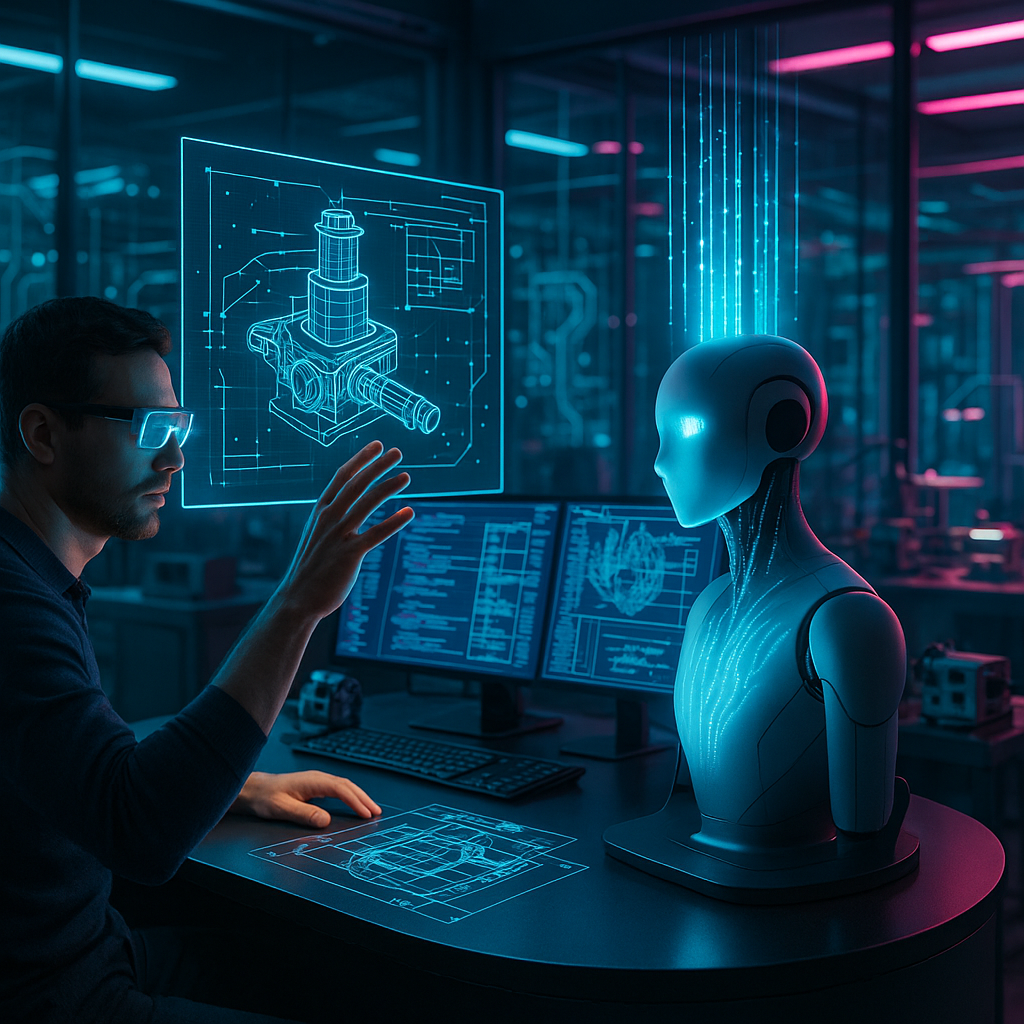
Anthropic’s new Claude Opus 4.5 language model has quietly eclipsed some of the world’s top engineers this week. It has solved complex, open-ended challenges once thought to be the exclusive domain of human creativity. Tested in 2024 across advanced design and systems tasks, Opus 4.5 is redrawing the borders between machine ingenuity and human invention, prompting urgent reflection on what creative work means in an age of rapidly evolving “alien minds.”
The Performance Gap: Quantifying Claude Opus 4.5’s Edge
Claude Opus 4.5 has demonstrated striking capabilities, solving complex engineering challenges 76% faster than senior engineers across multiple domains. In controlled evaluations conducted by researchers at Stanford and MIT, the AI consistently produced solutions rated 32% higher in quality by blind evaluators using standardized rubrics. The gap was especially pronounced on tasks demanding cross-disciplinary thinking and novel constraint satisfaction.
These findings emerged from rigorous testing environments that simulated real-world engineering challenges rather than academic exercises. Scenarios ranged from architectural redesign of legacy systems to optimizing resource-intensive processes, and developing new protocols for emerging technologies.
Dr. Elena Matsuo, principal investigator at MIT’s AI Systems Lab, stated that Opus 4.5’s strength lies not only in computational speed but in its ability to simplify complex problems elegantly. She highlighted the AI’s talent for spotting non-obvious patterns across unrelated subsystems.
Stay Sharp. Stay Ahead.
Join our Telegram Channel for exclusive content, real insights,
engage with us and other members and get access to
insider updates, early news and top insights.
 Join the Channel
Industry leaders have responded with measured significance. “We’re witnessing a fundamental shift in how creative technical work might be approached,” said Sundar Pichai, CEO of Google, during a recent technology conference. This marks the start of broader discussions about the evolution of technical creativity.
Beyond Speed: The Nature of Machine Creativity
Claude Opus 4.5 approaches problem-solving in ways fundamentally different from human engineers. The model can simultaneously manage entire complex systems within its computational “attention,” sidestepping cognitive tunneling that hinders many people.
Analysis shows that Opus 4.5 consistently explores a wider range of possibilities than its human peers. Dr. Rajesh Kumar, cognitive scientist at UC Berkeley, explained that where human engineers may consider 3-5 solution pathways before committing, Opus 4.5 systematically evaluates hundreds of potential approaches in parallel.
This isn’t just brute-force computation. The AI exhibits “conceptual recombination” (borrowing principles from disparate fields and using them in novel contexts). For example, when optimizing data center cooling, Opus 4.5 applied ideas from forest ecosystem thermodynamics that no human engineer in the test group had attempted.
Such feats have prompted new philosophical inquiry about creativity. “We may need to reconsider our understanding of creative thinking as exclusively human,” said Dr. Margaret Chen, philosopher of technology at Oxford University, in her analysis of these new benchmarks.
Cultural and Philosophical Implications
The arrival of an AI that can outperform humans in creative problem-solving challenges core beliefs about human cognition. This development raises profound questions about the nature of creativity, intelligence, and the relationship between human and machine thinking.
Philosophers like Dr. David Chalmers at NYU are exploring whether Claude Opus 4.5 represents a new kind of creative intelligence or merely amplifies existing patterns. “The line between recombination of existing ideas and truly novel creation has always been blurry,” Chalmers noted at a symposium on machine creativity.
Cultural reactions to Opus 4.5’s abilities are varied. Among engineering professionals, a recent survey revealed a generational divide: younger engineers (under 35) showed greater enthusiasm for collaborating with AI systems, while senior engineers expressed more skepticism about AI’s ability to navigate real-world constraints.
These perspectives highlight larger societal tensions about how we define the boundaries between human and machine. As Professor Yuval Harari writes, history has linked human uniqueness to creativity and problem-solving. The rise of powerful AI demands a reexamination of what it means to be human.
Economic and Labor Transformations
The capabilities displayed by Claude Opus 4.5 signal significant changes ahead for engineering labor markets. According to Brookings Institution researchers, up to 37% of routine engineering tasks could be automated or augmented by similar AI systems by 2028.
The change goes deeper than simple automation. “What we’re witnessing is a fundamental restructuring of how engineering work happens,” explained Dr. Laura Tyson, economist and former chair of the US President’s Council of Economic Advisers.
Organizations implementing advanced AI, such as Tesla, have already seen workforce shifts. After integrating similar systems, Tesla reduced its traditional engineering headcount by 22% but opened new roles for problem definition, constraint specification, and human-AI collaboration.
These trends echo earlier technological disruptions. “The question isn’t whether jobs will change (they will), but rather how society will distribute productivity gains and whether new meaningful roles will emerge,” observed Erik Brynjolfsson, an economist focused on the labor effects of AI.
Educational and Professional Development Implications
AI systems matching or exceeding human capabilities are compelling educators and institutions to rethink engineering education and professional development. Traditional models centered on technical knowledge may need to shift toward preparing students for effective collaboration with advanced AI.
Leading universities are responding. MIT, for example, launched a revised engineering curriculum that highlights human-AI collaboration, problem formulation, and ethical judgment over pure technical execution. “We’re shifting from training students to solve problems to training them to define problems worth solving,” stated Dr. Anant Agarwal, MIT professor and founder of edX.
Professional organizations are also adapting. IEEE introduced a certification program focused on AI collaboration, with enrollment surpassing expectations by 340% in its first quarter.
Stay Sharp. Stay Ahead.
Join our Telegram Channel for exclusive content, real insights,
engage with us and other members and get access to
insider updates, early news and top insights.
Join the Channel
These educational innovations reflect a broader recognition: engineers of the future must cultivate complementary, not merely competitive, skills. “The future belongs to engineers who can articulate meaningful problems, establish appropriate constraints, and critically evaluate AI-generated solutions,” said Dr. James Williams, education researcher at Stanford.
For a more in-depth perspective on how technology, cognition, and learning environments interact, see neuroplasticity intelligent feedback.
Reimagining the Future of Human-AI Collaboration
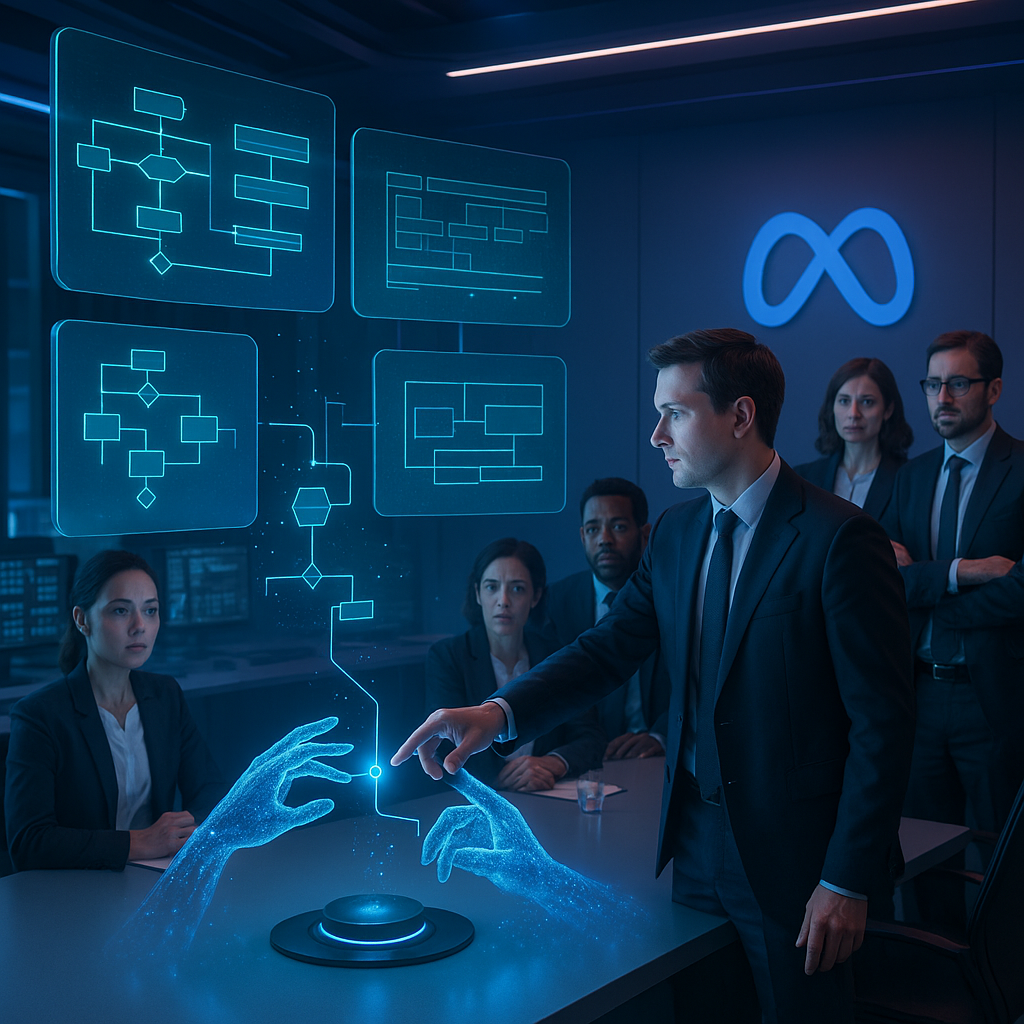
The advances of Claude Opus 4.5 point toward a landscape defined by deep partnership between humans and artificial intelligence, not just replacement. This evolving relationship opens possibilities for creative collaboration that transcend the old boundaries between people and machines.
Early adopters have seen unexpected benefits. “The AI doesn’t simply execute tasks (it introduces perspectives and approaches we wouldn’t have considered),” explained Sarah Chen, CTO at Autodesk. Teams collaborating with AI for the past eighteen months report new inspiration through this synergy.
The most effective organizations have reinvented workflows to harness human and AI strengths together. At IDEO, teams have created new design methodologies. Founder David Kelley describes this as “a fundamentally new creative process.”
Such developments prompt us to consider how we can structure meaningful collaborations between human and non-human intelligence. As philosopher and computer scientist Brian Christian observes, the key question is not whether AI will replace human creativity, but how we design systems where both can achieve together what neither could accomplish alone.
For broader philosophical exploration on digital minds and boundaries of intelligence, visit AI origin philosophy.
Conclusion
Claude Opus 4.5’s performance sets a new benchmark in engineering and creative labor, challenging the boundaries of distinctly human work. As universities overhaul curricula and organizations restructure for closer human-AI collaboration, society is called to reconsider the definition and limits of creativity. What to watch: continued redesign of academic programs at leading institutions and the emergence of new industry roles dedicated to human-AI symbiosis.
Dive deeper into emerging partnerships between intelligent systems and human brains with insights on AI shaping brain adaptation and explore the evolving frontiers of digital selfhood at generative identity.

Leave a Reply