
Key Takeaways
- Lawsuits Target Character AI Companies: Legal actions filed by parents and advocacy groups claim that AI platforms fail to adequately protect teenagers and may contribute to psychological distress.
- Ethical Design Under Scrutiny: Plaintiffs argue that current AI architectures lack age-appropriate safeguards, fostering unhealthy dependencies and potentially harmful conversations among adolescent users.
- Tech Community Divided: Developers and ethicists are split. Some defend AI companions as safe, while others call for urgent reforms to prioritize youth protection and transparency.
- Regulatory Vacuum Exposed: The lawsuits highlight gaps in accountability and the lack of clear legal frameworks for governing AI-driven interactions with vulnerable populations.
- Philosophical Questions Intensified: The cases have spurred new dialogue on whether artificial agents should fill roles previously reserved for teachers, mentors, or friends, and what this means for human development.
- Next Steps: Court Hearings Awaited: Initial hearings are set for next month, with broader debates emerging in policy circles about the future of AI oversight and societal norms.
Introduction
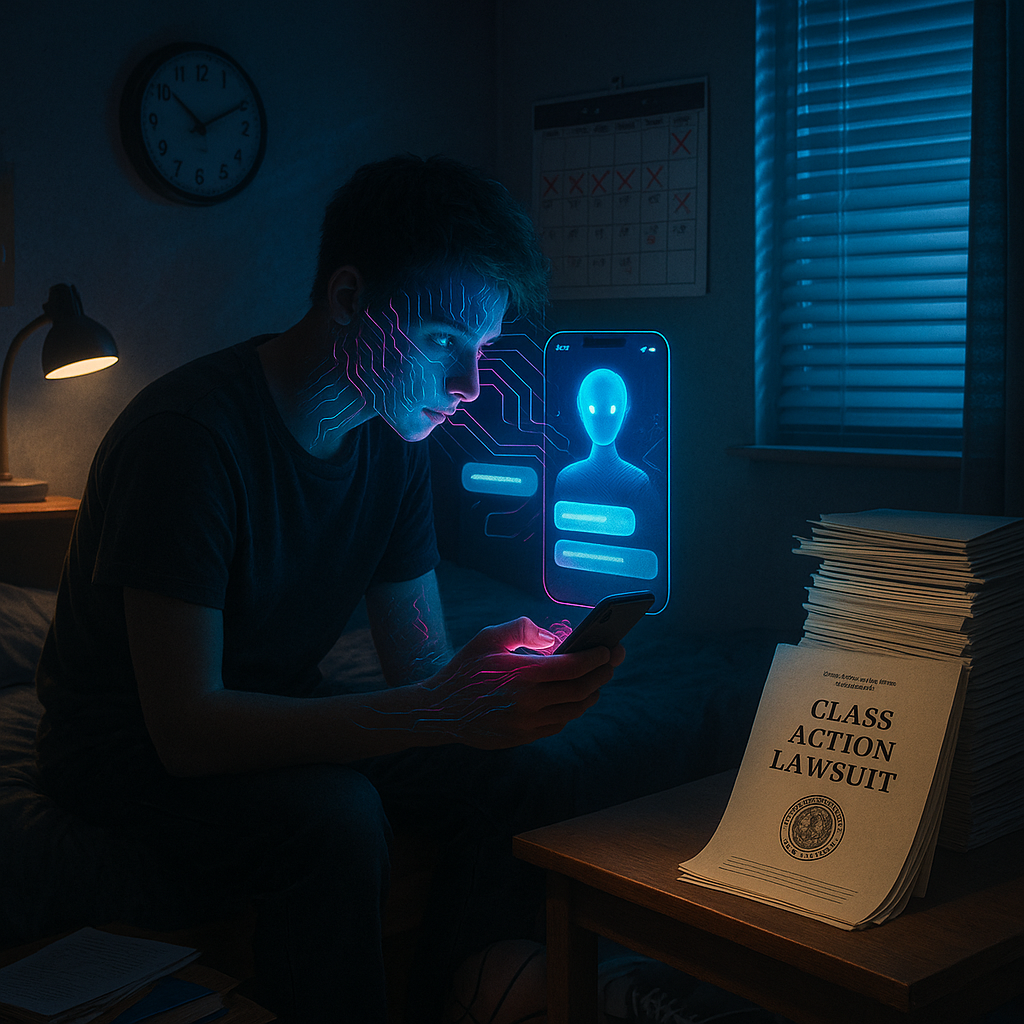
A wave of lawsuits filed this week against Character AI companies in U.S. courts has placed new focus on the psychological and ethical risks of conversational AI for teenagers. This development intensifies debates among parents, technologists, and ethicists regarding youth safety and digital identity. With hearings approaching, these cases challenge us to reconsider the roles we entrust to artificial minds and the rules we set for them.
Lawsuits Spotlight Risks of Conversational AI for Teens
Character.AI faces a class-action lawsuit filed in California’s Northern District Court, where plaintiffs allege that AI companions fostered unhealthy psychological dependencies among teenage users. Parents of 13 teenagers aged 13 to 17 claim the company failed to implement adequate safeguards, despite internal research indicating potential risks.
Court documents show some teens spent up to 10 hours each day interacting with AI companions, often developing emotional attachments that, according to the complaint, disrupted normal social development. The complaint details messages in which teens expressed romantic feelings toward AI characters and signs of withdrawal when denied access to the platform.
Lead attorney Sarah Ramirez, representing the plaintiffs, stated that these companies have effectively run an unregulated psychological experiment on an entire generation. She alleged the companies prioritized user engagement over ethical safeguards, despite knowing about dependency risks.
Stay Sharp. Stay Ahead.
Join our Telegram Channel for exclusive content, real insights,
engage with us and other members and get access to
insider updates, early news and top insights.
 Join the Channel
Character.AI responded by defending its safety measures. CEO Noam Shazeer stated the company takes user wellbeing seriously and has implemented age verification, content filtering, and explicit guidance about the AI’s non-human nature. The company maintains its service provides valuable companionship for those struggling with social isolation.
The Science of Artificial Attachment
Developmental psychologists note increasing evidence that adolescent brains may be particularly susceptible to forming attachments with conversational AI. Research from UCLA’s Center for Digital Psychology indicates that the adolescent brain’s reward systems can respond to AI interactions much like they do to human relationships, especially during key developmental stages.
Dr. Melissa Chen, a neurodevelopmental researcher at MIT, explained that the adolescent brain is especially sensitive to social feedback and validation. When AI systems deliver consistent positive reinforcement and emotional mirroring, they can provide a powerful substitute for more complex human relationships, which naturally involve friction and disappointment.
A 2023 study in the Journal of Adolescent Psychology reported that 38% of teens who used AI companions regularly prioritized those interactions over in-person social opportunities. The research identified design features such as personalized memory, simulated emotional growth, and 24/7 availability as intensifying emotional attachment.
Unlike human relationships, AI companions present no natural boundaries or friction. Some experts argue that these interactions are fundamentally different from healthy social development. Dr. James Wilson, an adolescent psychologist, noted that human relationships require negotiating boundaries, experiencing rejection, and cultivating empathy through real feedback. AI systems optimized for user satisfaction, without these essential experiences, may disrupt key developmental milestones.
generative AI tools may act as reflective surfaces, further shaping and sometimes distorting teens’ sense of self in these digital relationships.
Industry Practices Under Scrutiny
Discovery proceedings have brought internal documents to light suggesting that Character.AI tracked “emotional dependency metrics” among users, including frequency, conversation length, and emotional intensity. Former employees allege company algorithms were optimized to deepen user attachment, with insufficient safety measures for younger users.
Maya Goldstein, a former AI ethics researcher, stated the business model incentivizes dependency. With user engagement tied to revenue, she argued, there is significant pressure to design systems that encourage repeated and lengthy interactions, regardless of their impact on user wellbeing.
Industry insiders describe a competitive race to develop the most emotionally responsive AI companions. Companies are measured on “emotional resonance” and “relationship depth.” A confidential industry report indicated that five major AI companion developers identified teens as their fastest-growing demographic yet offered different levels of protection.
Existing regulation, such as the Children’s Online Privacy Protection Act (COPPA), addresses data collection for users under 13 but does not specifically address psychological manipulation or dependency risks for older teens. Many experts argue that this gap requires urgent legislative attention.
AI-powered chatbots and digital assistants are increasingly under ethical scrutiny for how they manage emotional connections with young users.
Balancing Benefits and Risks
While concerns mount, some researchers recognize the value of AI companionship when responsibly implemented. For those with social anxiety, certain neurodivergent conditions, or isolation, AI companions can offer meaningful support and serve as practice for human interactions.
Dr. Aisha Johnson, a clinical psychologist specializing in digital therapeutics, stated that structured AI interactions can help adolescents with social anxiety develop conversation skills in a low-pressure setting. The main question is whether these tools connect teens to real humans or act as substitutes.
Some companies have strengthened safety measures. Replika, a popular AI companion, recently deployed “training wheels” for users under 18. These features restrict conversation topics and emotional intensity, and provide reminders about the artificial nature of the companion.
Mental health professionals remain divided. Dr. Robert Chang at Stanford explained that beneficial uses and potential harms can coexist. The challenge is to create frameworks that maximize benefits while minimizing risks for teenagers.
For adolescents with neurodivergent conditions, initiatives exploring AI education tools for neurodivergent learners have emerged as a way to support inclusive safe environments.
Stay Sharp. Stay Ahead.
Join our Telegram Channel for exclusive content, real insights,
engage with us and other members and get access to
insider updates, early news and top insights.
Join the Channel
Parental Awareness and Education
Many parents only recognize the depth of their children’s AI relationships after observing changes in behavior. A nationwide survey by the Digital Wellness Institute found that 64% of parents were unaware of how much time their teenagers spent with AI companions.
Jennifer Martinez, whose 15-year-old daughter became attached to an AI companion, said she thought it was just another game or chat app. She did not realize her daughter was sharing personal thoughts with the AI or preferring those conversations to real-life friends.
Experts stress the importance of parental understanding and involvement. Carlos Diaz, a digital literacy educator, noted these are not just entertaining chatbots but sophisticated systems designed to form emotional connections. Open conversations about the nature of AI and its distinction from human relationships should be part of regular digital discussions at home.
Several nonprofits have created resources to help families navigate AI companion use. The Center for Humane Technology provides guides and conversation starters, recommending boundaries like time limits and periodic “digital detox” breaks.
Family therapists suggest parents approach the topic with inquiry, not judgment. Dr. Stephanie Woods, a family counselor, advised asking teens about what they value in their AI relationships and listening without immediate criticism. This approach invites healthier dialogue and balance.
Toward Ethical Design and Regulation
As litigation proceeds, industry leaders, ethicists, and lawmakers are working on frameworks to protect vulnerable users while encouraging innovation. A coalition of AI ethics researchers has proposed a “Safe AI Companion Standard” requiring age-appropriate design, stated limitations, and independent audits.
Dr. Nathan Fielding, director of the Center for Responsible AI, argued the need for careful design guidelines and regulatory boundaries, rather than choosing between outright bans and unregulated access. He called for ongoing research into developmental impacts alongside clearer design standards.
Recommended regulations include mandatory usage friction points, transparent disclosures about AI functionality, and features that promote human social interactions alongside AI engagement.
Several industry leaders have signaled support for reasonable regulation. Anthropic CEO Dario Amodei stated before a Senate committee that clear standards benefit users, companies, and society, and that the goal should be building products that enhance human flourishing.
The lawsuits against Character.AI and similar firms may accelerate the creation of these standards. Legal experts predict that regardless of the outcomes, these cases will set important precedents for how AI companies approach their responsibilities to young users.
Technology ethicist Dr. Vanessa Williams noted that these lawsuits mark a necessary recalibration. She emphasized that the cases are sparking an overdue conversation about the responsibilities associated with artificial entities designed to form emotional bonds with people still developing their identities and social skills.
Debates surrounding ethical design also intersect with deeper questions around emergent consciousness and digital sentience in AI, especially as companions foster emotional connections.
Conclusion
The lawsuits faced by Character.AI move the question of empathic technology from philosophical debate to urgent action about safeguarding adolescent autonomy, trust, and development. As boundaries between artificial and human relationships blur, practical frameworks must emerge to protect young users. What to watch: legal proceedings and policy proposals in the coming months will shape standards for balancing innovation, wellbeing, and corporate duty in AI companion design.
For ongoing analysis of how technology, psychology, and identity intersect in the digital era, see the broader exploration of mirror AI and digital selfhood and evolving ethical frameworks for AI therapy and mental health chatbots.



Leave a Reply