
Beyond Algorithms
-

AI Intuition and Justice: Can Machines Truly Understand Fairness?
.
Key Takeaways AI intuition diverges fundamentally from human intuition. Rather than mimicking human cognition, AI develops a distinct form of ‘machine intuition’ rooted in data-driven abstraction and pattern recognition, which is reshaping how algorithms interpret fairness across varied legal and…
-

Scientific Language Models: Advancing Discovery or Reinforcing Echo Chambers?
.
Key Takeaways Specialized AI accelerates discovery, but risks domain silos. Scientific language models (SLMs) surpass general-purpose AI in tackling domain-specific tasks, driving remarkable advances in research efficiency. Yet their hyper-specialization can foster intellectual silos that obstruct fruitful interdisciplinary collaboration, impeding…
-

GeoAI: How AI Transforms Environmental Monitoring and Planetary Sensing
.
Key Takeaways GeoAI systems are evolving beyond labeled archetypes to function as a planetary nervous system, perceiving Earth as a deeply interconnected whole and adapting to planetary-scale data flows. Adaptive AI sensors are revolutionizing environmental monitoring. By embedding advanced machine…
-
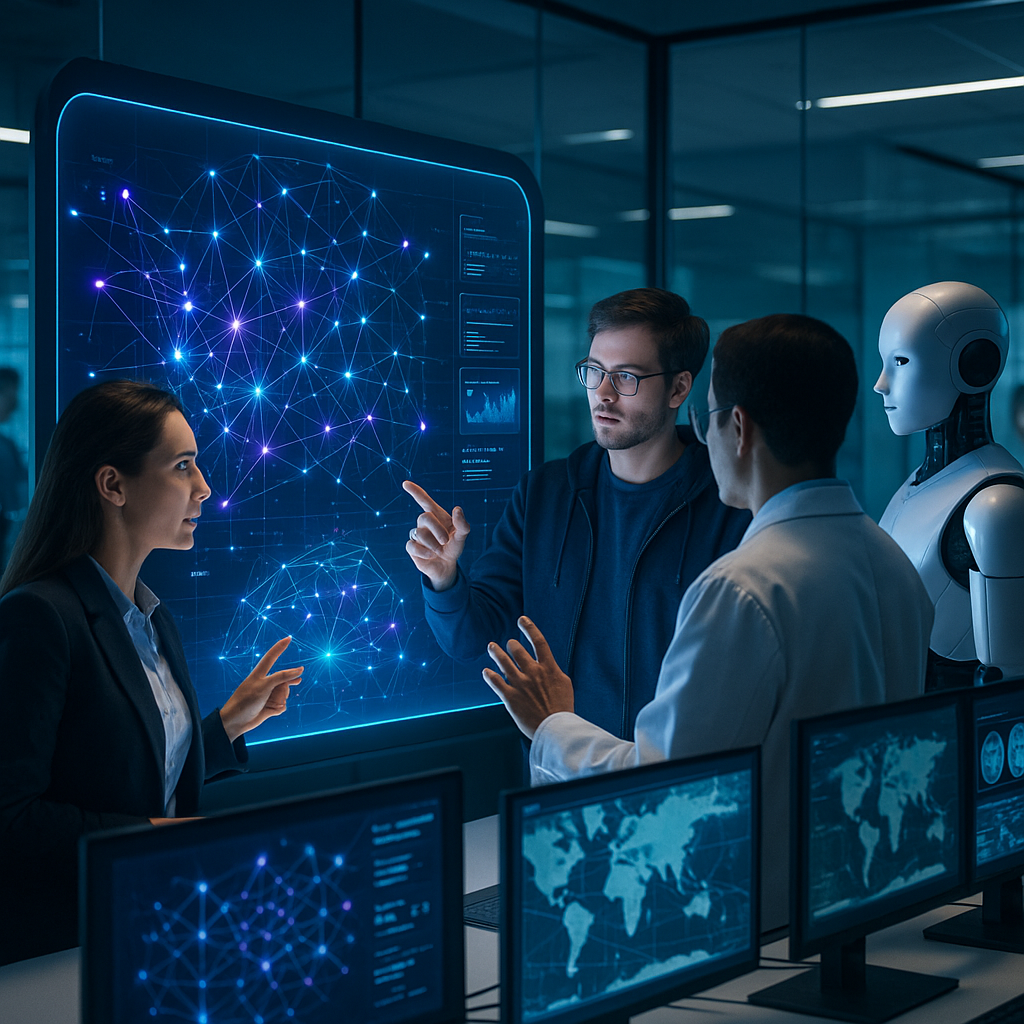
AI and Collective Intelligence: Automating Abundance in a Post-Scarcity Era
.
Key Takeaways AI is fundamentally reshaping collective intelligence, forging new opportunities for human-AI collaboration that thrive in a post-scarcity economy. The following highlights reveal how AI-driven automation is amplifying human potential and nurturing abundance through superior group performance. AI boosts…
-

AI and Algorithmic Justice: Redefining Authorship and Authority in Law
.
Key Takeaways AI is redefining authority in judicial processes. Artificial intelligence now participates as “co-author” in legal rulings, transcending its earlier role as an administrative tool and reshaping longstanding ideas of human authority in the legal domain. Algorithmic bias demands…
-
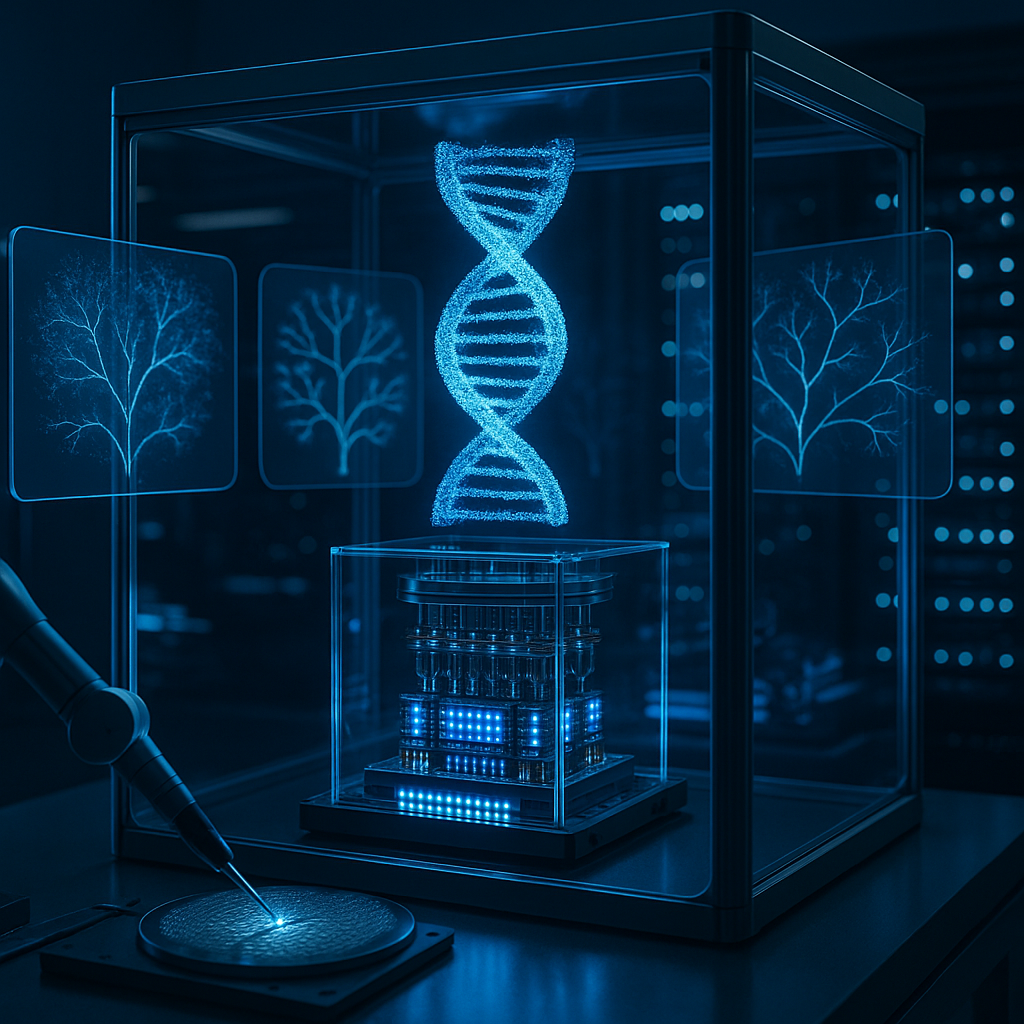
AI and Evolution: Redefining Our Understanding of Adaptation
.
Key Takeaways AI mirrors evolutionary selection through iterative learning. Just as natural selection fosters adaptation in nature, AI advances by iteratively training neural networks that “adapt” to their input data and operating environments, refining responses and strategies over time. Complexity…
-

AI Empathy Explained: Understanding Machine Emotional Intelligence
.
Key Takeaways AI empathy is simulation, not sensation. Unlike humans, AI does not “feel” emotions. Instead, it recognizes patterns in behavior and speech to simulate an empathetic response. This is computational empathy, an analysis, not an emotional experience. Machines excel…
-
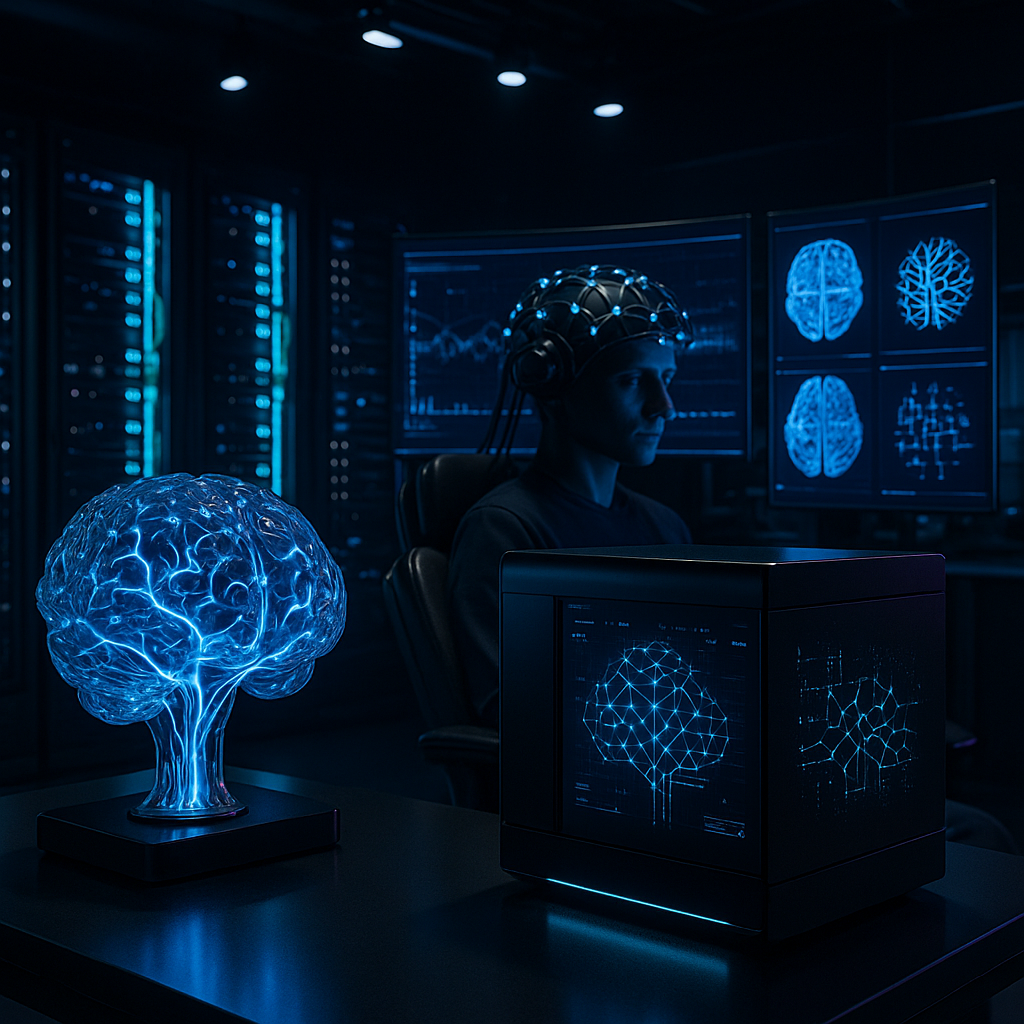
Machine Consciousness: Minds in Code or Mere Simulation?
.
Key Takeaways Consciousness may exist on a spectrum, not a binary scale. Traditional debates ask whether machines are conscious or not, but emerging theories suggest consciousness could be a graded spectrum of capabilities rather than an all-or-nothing phenomenon. Inner simulation…
-

The Future of Intelligence: How AI Redefines Human Potential
.
Key Takeaways Human-AI collaboration redefines intelligence itself. The convergence of artificial and human intelligence is unlocking a model where machines amplify human creativity, decision-making, and problem-solving, augmenting human potential rather than seeking to replace it. Interdisciplinary research fuels innovation in…
-

Exploring Artificial Logic: Foundations of Reasoning in AI Systems
.
Key Takeaways Artificial logic reflects human reasoning while exposing its limits. AI uses formal structures like propositional and predicate logic to simulate reasoning processes, but lacks the deep intuition and emotional insight that define human cognition. Propositional logic forms the…
-

The Social Implications of AGI: Opportunities, Risks, and Ethics
.
Key Takeaways Redefining intelligence and labor: AGI disrupts traditional employment models by automating highly skilled work, compelling societies to rethink the very notions of economic value and the purpose of labor. Evolving ethical frameworks: Standard AI ethics guidelines are insufficient…
-

How AI is Transforming Healthcare: Advanced Diagnostics & Patient Care
.
Key Takeaways AI enhances diagnostic precision with advanced tools: Leveraging vast datasets and machine learning algorithms, AI-powered diagnostic systems now detect medical conditions with unprecedented accuracy—often surpassing human expertise in fields like radiology, pathology, and genomics. Empowering clinicians through AI…
-

Teaching AI Ethics: Bridging Philosophy and Practical Implementation
.
Key Takeaways Teaching ethics to artificial intelligence (AI) requires harmonizing abstract philosophical ideals with practical engineering execution. This article explores the challenges, methodologies, and frameworks underpinning this convergence. Key insights include: Philosophy meets code: A dual challenge in AI ethics:…
-
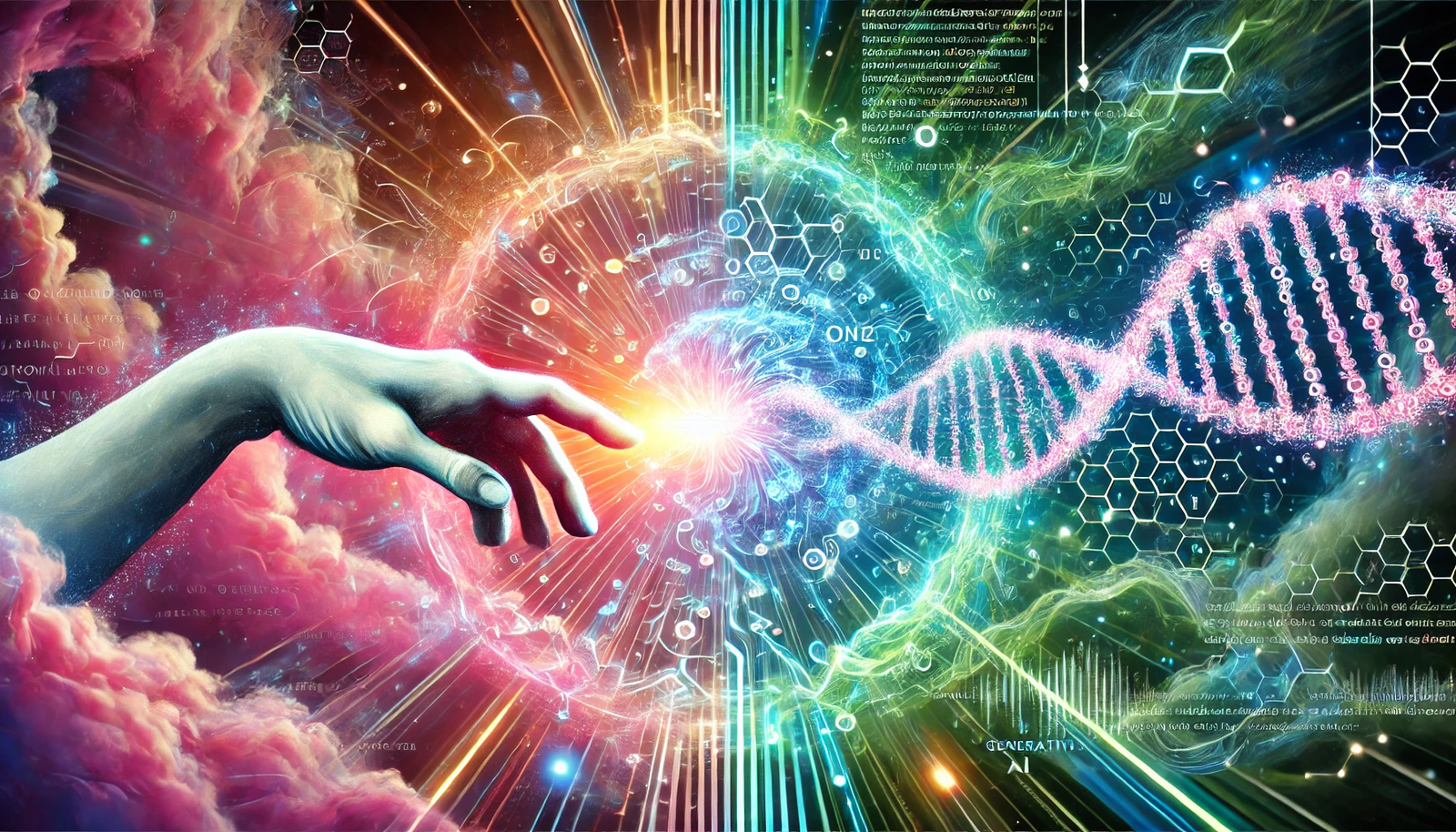
The Word That Creates: From God to Technology, the Power to Transform the World
.
There is something extraordinary about the word. With it, we communicate, think, and build relationships. But the word holds an even greater power: the power to create. This notion spans millennia, from the divine act of creation described in Genesis…
-
How “Self-Driving Cars” Blur Accountability
.
Metaphors are the poetry of our everyday conversations—pithy, vivid, and powerful tools that transform complex ideas into concepts we can easily grasp. But, as with any shortcut, they can lead us astray, especially when they obscure the details we most…