
Key Takeaways
- The Bezos Earth Fund has committed $30 million to support AI applications for climate action, directing attention to technology’s expanding role in sustainability.
- Increasing AI compute demands are driving higher household utility bills for consumers in several regions.
- Universities are revamping educational programs, establishing AI literacy as a foundational competency for future graduates.
- Routine tasks and jobs are increasingly handled by AI, displacing some roles but creating new positions focused on human-centered skills.
- The growing prevalence of AI, from classrooms to boardrooms, reflects an evolving societal dialogue about intelligence and adaptation.
Introduction
On 24 October 2025, the Bezos Earth Fund’s $30 million commitment to AI climate solutions marks a significant evolution in the tools used to understand and shape the future. Educational institutions are reforming to prioritize AI literacy, and the influence of AI society impact 2025 is visible across domains including energy consumption and workforce dynamics. Together, these developments illustrate a society actively reimagining intelligence.
Top Story
Bezos Earth Fund Commits $30 Million to AI Climate Solutions
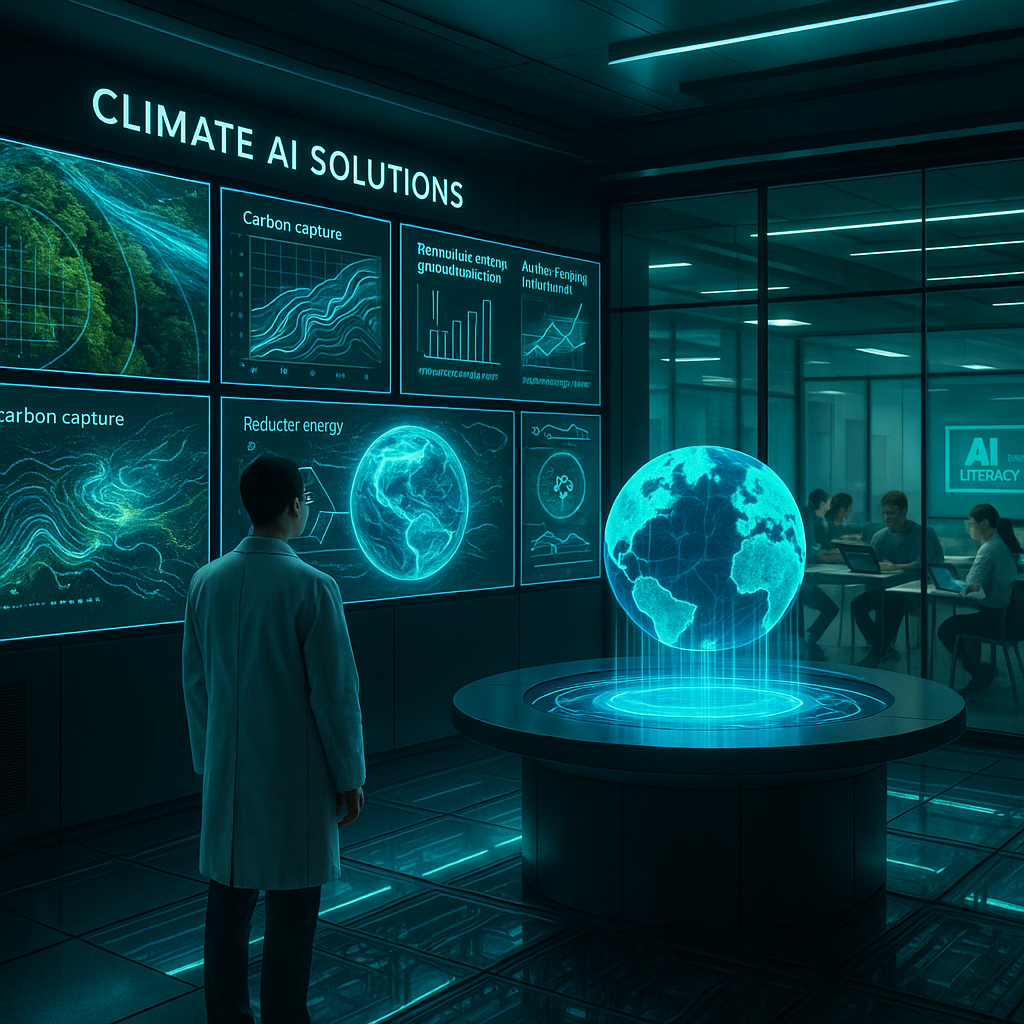
The Bezos Earth Fund has announced a $30 million commitment to advance AI-powered climate solutions. This marks the largest single investment by the fund in artificial intelligence for environmental protection to date. The initiative will prioritize research efforts in areas such as renewable energy optimization, carbon capture, and ecosystem monitoring using machine learning technologies.
Dr. Sarah Chen, executive director of the fund, stated that AI’s capabilities in pattern recognition and prediction could reduce the timeline for effective climate interventions from decades to years. This AI-centric direction represents a notable shift from previous climate technology investments, which primarily focused on hardware-based solutions.
Climate scientists and AI researchers have generally welcomed this initiative, while highlighting the importance of responsible implementation. Dr. James Morrison of MIT’s Climate AI Lab described the move as a vital connection between computational power and environmental science. The fund intends to begin accepting research proposals in January 2026.
Stay Sharp. Stay Ahead.
Join our Telegram Channel for exclusive content, real insights,
engage with us and other members and get access to
insider updates, early news and top insights.
 Join the Channel
Also Today
AI Drives Change in Daily Life
Major utility providers have reported an average increase of 12% in consumer bills, attributing this rise to investments in AI-based grid management infrastructure. Despite higher costs, these AI systems have contributed to a 47% reduction in power outages and a 28% improvement in energy efficiency within pilot programs.
The job market is also shifting rapidly. According to the Bureau of Labor Statistics, AI-related roles are growing at three times the rate of traditional positions, with 175,000 new jobs created over the past quarter. Companies in traditional sectors report that 40% have restructured workflows as a result of AI integration.
Also Today
Education Reshaped by AI
Fifteen leading universities have announced that AI literacy will become a mandatory component across all majors starting in fall 2026. Programs such as Stanford’s “AI Across Disciplines” aim to blend ethical analysis with practical application, reflecting a comprehensive approach to technological education.
At the K-12 level, AI-assisted learning initiatives have led to a 23% increase in student engagement and comprehension. Teachers report spending 35% less time on administrative tasks. Nevertheless, some educators remain concerned about the ongoing impact of the digital divide.
What to Watch
- The UN Climate Change Conference will open on 15 November 2025 in Singapore, featuring the first AI Climate Solutions Summit.
- Harvard University will launch its cross-disciplinary AI literacy track on 12 January 2026.
- The National Education Technology Forum will present standardized AI curriculum guidelines on 5 December 2025.
- The Department of Energy’s AI Grid Management Initiative will release its first-year results on 30 November 2025.
Conclusion
The Bezos Earth Fund’s $30 million investment underscores a turning point in leveraging AI to address climate change, signaling the deepening relationship between technology and environmental stewardship in the context of AI society impact 2025. As AI continues to shape utilities, employment, and education, discussions about ethics and inclusivity will intensify. What to watch: the UN AI Climate Solutions Summit on 15 November 2025 and national education guidelines expected in December.



Leave a Reply