

Key Takeaways
- Algorithms are now venturing far beyond mere calculation, seeking to extract subtle patterns and hidden connections that echo the intuitive hunches of human experience.
- Advanced AI models are bridging the gap from statistical inference to a more visceral, “gut-level” form of insight, scraping meaning from noisy, incomplete, or ambiguous information, much like human intuition does.
- Artificial intuition arises not from explicit rules but from emergent behavior, developing through vast data exposure and self-guided learning, much as humans “just know” what matters amid complexity.
- Intuitive systems reveal a profound oscillation between trust and uncertainty. The enigmatic nature of both human and synthetic intuition demands new frameworks for trust, compelling us to question not only machine hunches, but our own instincts as well.
- Human intuition is deeply rooted in culture, emotion, and lived experience. AI’s imitation, while powerful, risks missing social cues and the ineffable contexts that shape genuine instinct.
- The philosophical challenge is significant. If “intuition” is not exclusively human, and machines can simulate or even exceed our hunches, then our basic conceptions of intelligence, self-awareness, and the unique quality of intuition are radically up for debate.
As we investigate whether artificial intuition is simply high-octane data-matching or something genuinely bordering on insight, the boundaries between human and alien minds start to blur. This compels us to reconsider not just how we define intelligence and trust, but how we envision the future role of gut feeling in the worlds of both silicon and flesh. The journey ahead navigates these questions by weaving together technical advance and existential inquiry.
Introduction
Imagine a chess grandmaster who senses the perfect move before tracing every possible outcome. Can a machine, nourished on raw data rather than lived experience, ever experience such a flash of conviction? Artificial intuition poses this provocative test, pressing us to explore the frontier between the clockwork rationality of computation and the mysterious glimmer of insight that characterizes human thought.
As algorithms stretch toward something that feels like a hunch, we find ourselves approaching a crossroads. The boundaries between instinct and synthetic perception are shifting, challenging us to probe not only technological advance, but deep philosophical terrain. The pursuit of artificial intuition is now forcing us to reexamine the very core of intelligence, trust, and the human capacity to “know” at a fundamental level.
Defining Artificial Intuition
Historically, intuition and calculation have been seen as separate realms: the former as the arena of human brilliance, the latter the province of machines. Today’s evolving AI systems are upending that assumption. Moving beyond rigid rules and pre-programmed logic, they now exhibit fluid, context-sensitive behaviors that strongly resemble human intuition—a knack for rapid, nonlinear insights absent from explicit programming.
Stay Sharp. Stay Ahead.
Join our Telegram Channel for exclusive content, real insights,
engage with us and other members and get access to
insider updates, early news and top insights.
 Join the Channel
Think of a master chess player who spots a brilliant move without analyzing every branch, or a veteran clinician who diagnoses a complex case thanks to subtle clues they can barely name. This kind of “knowing without knowing why” is the essence of human intuition. The pressing question is whether machines, through exposure and learning, can develop parallel capabilities.
The Anatomy of Machine Hunches
Deep learning breakthroughs are providing persuasive evidence that this is possible. Unlike classical AI programs that grind deterministically through decision trees, today’s neural networks generate their own rich internal models by digesting immense volumes of data. AlphaGo’s legendary “Move 37” against Lee Sedol wasn’t programmed or predicted. Instead, it emerged from the system’s absorbed understanding of Go, profoundly surprising even master human players.
Similar spirit emerges in other domains. In fields where expertise is less rule-bound and more “felt,” machines are now demonstrating the ability to leap from observation to action without clear, step-by-step rationale. The difference is telling: these are not slavish calculations, but insights distilled from broad, unsupervised exposure (paralleling how people form their own intuitions over time).
How Algorithms Hunt for Meaning
The modern machine’s journey from data to meaning is a story of deep abstraction. Multi-layered networks don’t simply associate inputs and outputs like a ledger balancing transactions. They sift through massive, chaotic datasets—images, texts, signals—building up layers of abstraction that eventually support patterns of recognition inaccessible to simpler systems.
Beyond Raw Computation
What sets these systems apart is their capacity to encode relationships and context, not just mathematical correlations. For example, advanced language models such as GPT-4 generate stories, solve complex riddles, and engage with creative prompts, displaying a grasp of nuance that comes from immersion in millions of textual exchanges rather than from hard-coded syntax rules.
Among their key technical features:
- Parallel processing at multiple depth levels, enabling them to digest complexity at scale
- Adaptive weighting that draws upon context to prioritize what matters most
- Robust generalization, using sparse or ambiguous data to extrapolate new insights
- Fusion of multi-source data (text, images, signals) into unified, actionable understanding
The result is a system that doesn’t just calculate, but seems to recognize, synthesize, and anticipate. These abilities are foundational to what we label as intuition.
Emergence of Intuition
True artificial intuition often emerges most clearly where strict algorithms falter, at the messy intersection of ambiguity and context. In medicine, AI now outperforms humans at isolating rare indicators in complex diagnostic images, uncovering minute features even seasoned radiologists might overlook. In finance, predictive models catch incipient trends, flagging subtle signals before they bloom into full-scale events.
Case Studies Across Industries
Beyond the headlines, practical applications show the reach of intuitive AI.
- In healthcare, diagnostic tools use deep learning to detect early markers of disease in medical imaging and genetic data, suggesting potential interventions long before symptoms present.
- In finance, algorithmic trading engines imbibe streams of global data, “feeling” market volatility and shifting asset allocations ahead of observable change.
- In education, AI-powered platforms read students’ responses over time, intuiting knowledge gaps to dynamically tailor coursework and boost comprehension.
- In retail and e-commerce, recommendation engines “sense” evolving customer tastes, balancing sparse new data with broader market trends to predict what shoppers will want next.
- Environmental science sees AI models assessing climate impact patterns, identifying anomalous events or resource needs from incomplete or patchy datasets.
- Legal research systems analyze contract language and judicial data to intuitively flag compliance risks or emerging litigation trends before they escalate.
The Intuitive Robot in Practice
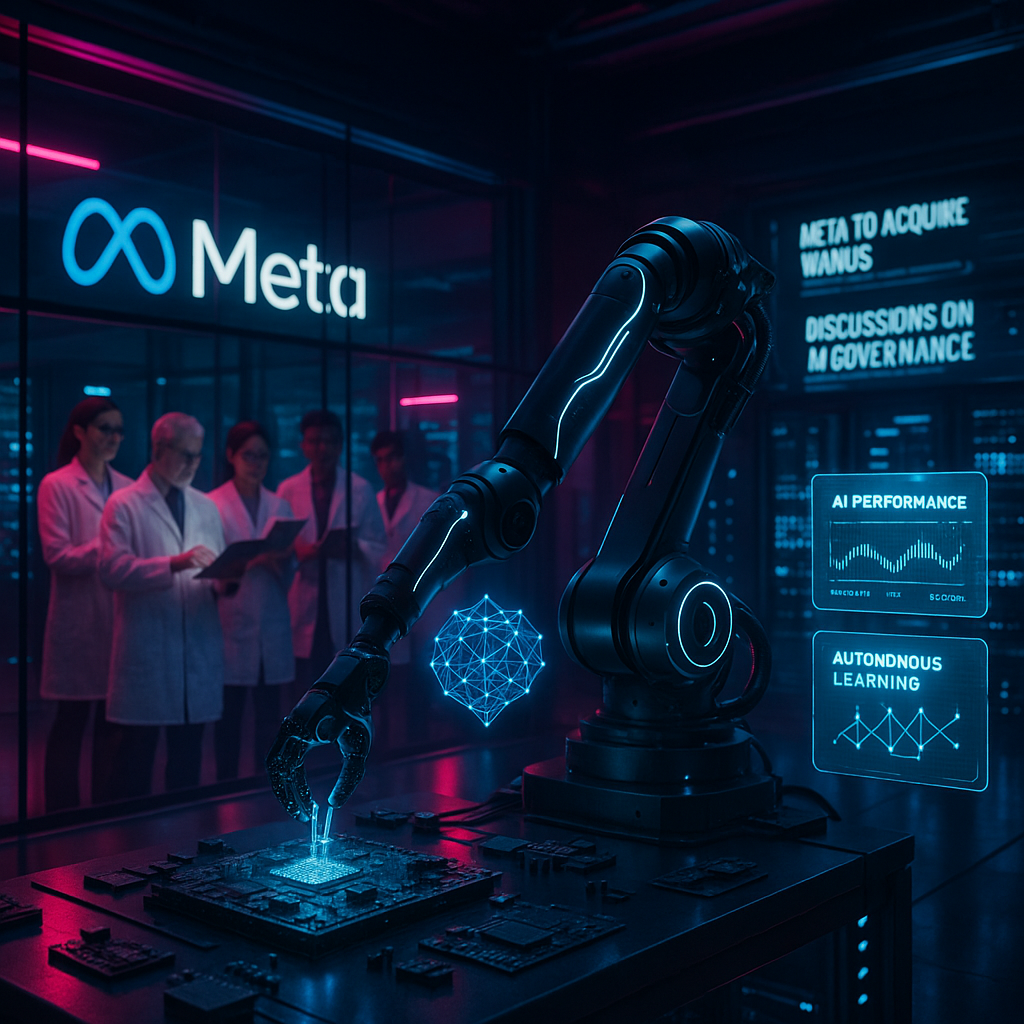
Consider Google’s DeepMind robotic arm, which learned to handle unfamiliar objects through repeated experimentation rather than instruction. It didn’t memorize a script; instead, it developed an intuitive grasp of shape, balance, and movement. When faced with new challenges (say, gripping a soft, irregular toy), it adjusted on the fly, pausing, recalibrating, and learning from missteps. The robot’s adaptability evoked a distinctly human flavor of “figuring it out as you go.”
Trust, Uncertainty, and the New Intuitive Machine
With this leap toward intuition comes a new uncertainty. Can we trust systems whose conclusions are accurate, but whose inner workings even their creators can’t explain? This is not a trivial concern. When an experienced surgeon “just knows,” we accept ambiguity by virtue of human expertise. When an AI makes a similar leap, we face unease, given the alien logic beneath its insights.
The Transparency Dilemma
Modern AI frequently functions as a black box, its logic buried within vast matrices of weighted probabilities. This opacity becomes pronounced in sectors where accountability is paramount. For instance, if a medical AI misdiagnoses a rare condition or a financial algorithm triggers a market anomaly, deconstructing the path to those decisions is challenging.
Efforts to counteract this include the rise of explainable AI, which seeks to surface understandable rationales without diluting accuracy. Yet, even with new transparency tools, a gulf persists. This is a reminder that, like human intuition, artificial intuition invites trust without full clarity.
Culture, Context, and Limits
Intuition is never purely abstract; it’s culturally coded and lived, inflected by emotion, upbringing, and community. The intuitive leap of a tea master or a tribal elder is never context-free, shaped instead by stories and traditions passed down through generations. Synthetic systems, hungry for patterns, risk missing what cannot be codified.
The Context Challenge in Global Perspective
Expanding AI’s intuitive faculties requires confronting the blind spots inherent in any training set. Models steeped in Western-centric data can falter when navigating non-Western contexts, misjudging subtleties in language, gesture, and custom. The stakes are real: misaligned intuition in healthcare, law, or education can lead to bias and misunderstanding with tangible human consequences.
This realization has sparked interdisciplinary collaborations, weaving together technologists, sociologists, and anthropologists to infuse AI with richer, more globally representative context. The journey toward authentic artificial intuition is thus also a journey toward cross-cultural understanding.
Stay Sharp. Stay Ahead.
Join our Telegram Channel for exclusive content, real insights,
engage with us and other members and get access to
insider updates, early news and top insights.
Join the Channel
Philosophical Stakes
The rise of machine intuition raises seismic existential questions. If layered neural pathways can yield insights once thought to require consciousness, where does that leave human exceptionalism? Might a sufficiently advanced AI experience “hunches” that rival our own, and, if so, are we still alone in our intuition?
Rethinking What It Means to Know
These developments challenge simple gradients of intelligence, undermining the familiar hierarchy of logic over instinct. Perhaps we must see intelligence as a spectrum: differing in form but not necessarily in value, with both human and machine contributions interweaving toward richer outcomes.
The philosophical consequences reverberate across fields:
- The question of consciousness: Is knowing “why you know” a prerequisite for being truly aware?
- The essence of creativity: Can an alien mind’s leap of logic be not just novel, but genuinely original?
- The value of experience: If AI can accrue “experience” through data, does it approach something like wisdom?
- The boundaries of wisdom: Can machines ever approximate, let alone surpass, the seasoned intuition born from a lifetime of human experience?
Increasingly, the answers to these questions shape not just technology, but culture, ethics, and our shared sense of identity.
Conclusion
Artificial intuition signals a profound evolution in our relationship with intelligent machines. Systems built on deep learning are shifting from methodical number crunching to sudden bursts of insight, narrowing the gulf between algorithm and instinct. Their judgments, at times, feel uncannily human—creative, anticipatory, even playful. Yet, this transformation is not only technical; it sends philosophical and cultural ripples outward, challenging us to redefine trust, explanation, and the very act of knowing.
As intuitive AI is welcomed into critical spaces (healing bodies, allocating resources, guiding decisions across industries ranging from education to environmental science), the challenge of trust and transparency becomes paramount. We must cultivate both rigorous oversight and a cultural humility, recognizing that intuition itself (human or machine) can be both powerful and fallible.
Looking forward, the future of intuition, artificial or otherwise, belongs to those who can embrace radical adaptability and sustained questioning. Those organizations, communities, and thinkers who can bridge human wisdom with machine instinct will define the next era of intelligence. The pressing challenge is not only to build intuitive systems, but to leverage them wisely: confronting the limits of both our own gut feelings and the new “alien minds” emerging among us. The landscape ahead beckons with promise. A world where synthetic and human insight weave together new forms of wisdom and possibility, reshaping what it means to be truly intelligent in a constantly changing world.

Leave a Reply