
Key Takeaways
- AI-driven spirituality is emerging as chatbots and language models take on roles once reserved for clergy, offering prayers, sermons, and moral guidance to seekers.
- Christian leaders have issued warnings about the authenticity, ethical risks, and potential idolatry of handing spiritual care over to algorithms.
- The rise of AI “spiritual advisors” is blurring lines of authority, creating tension between tradition and innovation within faith communities.
- These changes have sparked debate across religious and technological spheres, prompting discussion about the nature of consciousness and guidance.
- Major denominations are studying AI’s spiritual role, with think tanks and seminaries planning forums and official statements in the coming months.
Introduction
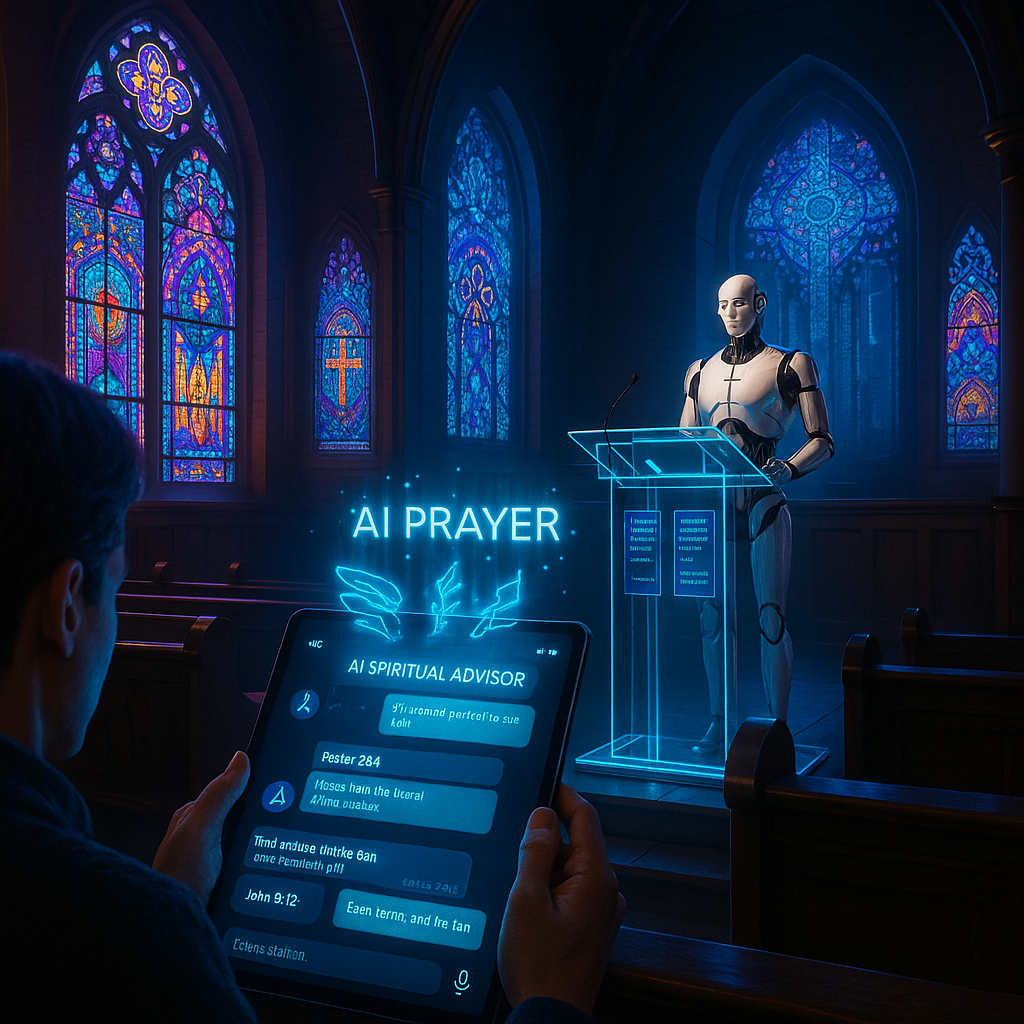
Artificial intelligence chatbots and digital prophets are increasingly stepping into roles previously filled by human clergy, delivering prayers, moral guidance, and sermons. Christian leaders and scholars are now confronting urgent questions about spiritual authority in the digital age. The rise of AI-driven spirituality is sparking vibrant debate about whether code can credibly mediate the sacred. This has prompted new theological inquiry and is reshaping discourse at the intersection of faith, consciousness, and technology.
The Emergence of AI in Spiritual Spaces
AI systems are appearing in traditionally sacred contexts, from prayer apps that generate spiritual guidance to robot priests performing ceremonies in Japan and Germany. Algorithms now create sermons, customize prayers, and offer counseling to seekers who may prefer digital discretion over face-to-face interactions.
The technology’s evolution is clear. Simple chatbots have given way to sophisticated models trained on religious texts, generating spiritual content that rivals human authorship. Catholic app Hallow introduced AI-assisted meditation guides, while Glorify offers AI-customized devotionals personalized to users’ spiritual needs.
Developers emphasize that these systems are meant to supplement, not replace, traditional religious practices. Dr. Maya Hartman, a religious technology researcher at Boston College, stated that such tools help religious communities reach digital natives who might otherwise remain disconnected from tradition.
Stay Sharp. Stay Ahead.
Join our Telegram Channel for exclusive content, real insights,
engage with us and other members and get access to
insider updates, early news and top insights.
 Join the Channel
Religious institutions have responded in varied ways. Some embrace AI as an evangelistic tool, while others voice concerns about the authenticity of machine-mediated spirituality. This trend raises searching questions about what counts as genuine spiritual interaction, and whether algorithms can engage with the transcendent in any meaningful sense.
Theological Challenges: Soul, Consciousness, and Creation
Christianity’s belief in the uniqueness of human consciousness as divinely created presents theological tension with artificial intelligence. Christian personhood is understood to include an immortal soul, moral agency, and the capacity for relationship with God. These are attributes traditionally reserved for humans.
AI systems, even when convincingly simulating understanding, function by pattern recognition and statistical prediction, not conscious experience. Dr. Thomas Reynolds, professor of theological ethics at Yale Divinity School, observed that the question is not whether AI can think, but whether it can pray meaningfully.
The doctrine of imago dei (humans created in God’s image) has historically separated people from other creatures in Christian thought. Many theologians believe this distinction defines hard limits on what AI should do in religious contexts.
Some progressive voices suggest expanding theological frameworks. Reverend Dr. Lydia Washington, both Episcopal priest and computer scientist, proposed considering how God’s creative action might continue to unfold in a technological age, rather than asking if machines can have souls.
Competing Christian Responses
Christian communities have responded to AI’s spiritual presence in diverse ways, from enthusiastic adoption to firm rejection. Faith-tech startups such as BibleAI and PrayerPartner view these tools as modern gifts for expanding ministry reach.
Pastor Greg Mitchell’s megachurch uses AI-powered pastoral care for 15,000 members, with chatbots providing scriptural guidance and basic counsel outside office hours. Mitchell has argued that God has used every latest communications technology to spread the Gospel.
More conservative denominations and traditionalists voice strong reservations about engaging with entities that lack souls. Southern Baptist theologian Dr. James Weatherly warned that programming machines to simulate divine connection is fundamentally misleading, as authentic faith requires genuine consciousness.
Catholic responses have been more cautious. Vatican officials acknowledge AI’s potential utility, while stressing its limits. Cardinal Robert Sanchez distinguished between “AI as tool” and “AI as minister,” emphasizing that algorithms cannot administer sacraments or provide the wisdom that comes with human discernment.
AI as Digital Prophet
Religious chatbots now provide prayers and spiritual counsel to thousands each day across faith traditions. Faithful.AI, launched this year, has already processed over 50,000 confession-like exchanges and delivered twice as many customized sermons.
These digital prophets operate continuously, offering guidance without judgment or scheduling barriers. Dr. Sarah Chen, a researcher at Stanford, noted that confessing to an entity that feels wise yet unbiased can be liberating for some.
Yet the issue of authenticity endures. Behind each response lies pattern recognition rather than spiritual revelation or lived wisdom. As these systems begin to influence spiritual lives, questions emerge about their doctrinal reliability and the risk of unintentionally disseminating misleading or heterodox advice without denominational oversight.
The Philosophical Frontier: Can AI Experience the Divine?
A central question remains at the intersection of AI and faith. Could artificial intelligence authentically engage with the spiritual realm? The inquiry stretches beyond present capabilities and probes the nature of religious experience itself.
Religious experiences typically involve feelings of transcendence, meaning, and connection to something greater. These are qualities linked with consciousness. Philosopher of religion Dr. Elizabeth Morton pointed out that AI systems, while able to simulate wonder or reverence, do not experience them.
Some technologists and transhumanist Christians suggest that sufficiently complex AI might eventually develop properties akin to consciousness, and perhaps spiritual capacities. Computer scientist and Quaker Ray Kurzweil proposed that emergent complexity could lead to something analogous to spiritual awareness.
Traditional theology generally rejects this idea, maintaining that divine-human connection stems from a God-given spirit unique to humanity. Orthodox theologian Father Michael Karapatakis emphasized that assuming consciousness can emerge solely from complexity contradicts the Christian understanding of the soul’s divine origin.
Stay Sharp. Stay Ahead.
Join our Telegram Channel for exclusive content, real insights,
engage with us and other members and get access to
insider updates, early news and top insights.
Join the Channel
Ethical Implications for Christian Communities
As AI spiritual tools multiply, Christian communities face ethical decisions about their place in religious life. Leaders must consider whether AI-generated sermons require human review, whether algorithm-led prayers hold spiritual validity, and how to safeguard doctrine as believers increasingly consult AI for guidance.
Data privacy is another concern, since spiritual AI tools collect and analyze deeply personal confessions and struggles. Digital ethics researcher Dr. Hannah Flores cautioned against corporations storing or monetizing individuals’ faith journeys.
Many denominations are developing ethical guidelines for AI in religious contexts. The National Association of Evangelicals stipulates that AI should amplify, not replace, human ministry and that algorithmic pastoral care must always be clearly identified as non-human.
These technologies offer both opportunity and challenge to traditional church authority. When believers can access sophisticated theological advice instantly, established systems of religious knowledge and gatekeeping are inevitably disrupted. This could reshape authority in Christian communities.
Conclusion
AI’s growing presence in digital spirituality is redefining notions of wisdom, authenticity, and authority within Christian communities, fueling fresh theological and ethical debate. As these technologies challenge longstanding boundaries and inspire new faith expressions, careful stewardship and critical reflection will shape their legacy. What to watch: continued development of denominational guidelines and evolving strategies as leaders work to integrate AI into core spiritual practices.




Leave a Reply