
Key Takeaways
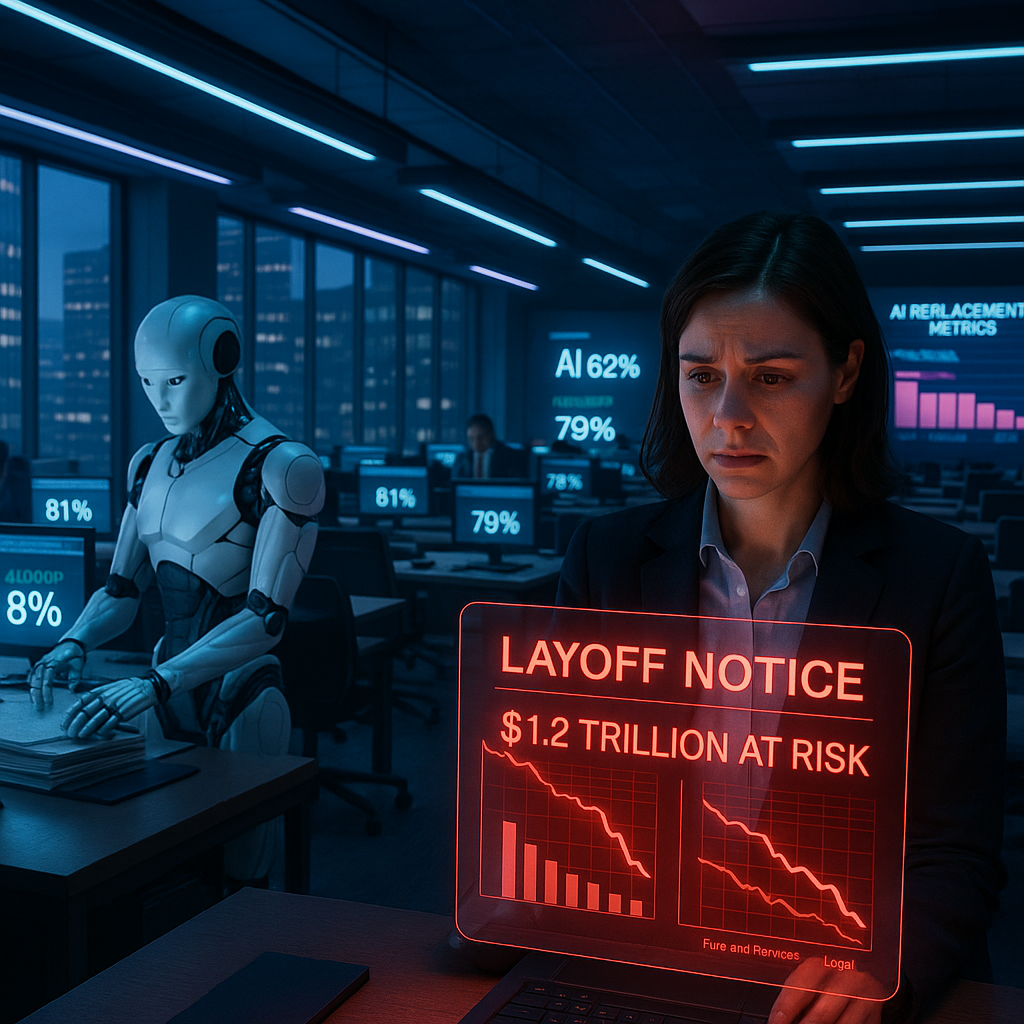
- Top story: Automation threatens $1.2 trillion in US wages, signaling AI’s disruptive advance into professional roles once considered secure.
- Bipartisan bill seeks mandatory quarterly reporting from companies on AI-related layoffs, aiming to enhance transparency amid job displacement concerns.
- Investment in humanoid robots surges, reflecting continued confidence in embodied AI despite notable practical limitations.
- Claude AI’s vending machine failure highlights the gap between theoretical intelligence and autonomous performance in real-world settings.
- Ongoing debate emphasizes the ethical duty to report job losses attributed to AI, raising issues of accountability and oversight.
Below, the full context and contrasting perspectives driving today’s discussion.
Introduction
On 26 December 2025, the intersection of AI and society is in the spotlight as automation puts $1.2 trillion in US wages at risk. This marks AI’s reach into traditionally secure white-collar roles. The evolving landscape has prompted lawmakers to pursue bipartisan legislation on AI-related layoff reporting. Meanwhile, today’s press review examines the philosophical, ethical, and practical tensions shaping how humanity coexists with its most complex creations.
Top Story: AI Set to Transform $1.2 Trillion in Wages
Labor Market Transformation Accelerates
Artificial intelligence is positioned to affect jobs representing $1.2 trillion in annual wages across the US economy, according to a comprehensive report issued on 25 December 2025 by the National Bureau of Economic Research. The analysis, covering over 800 occupations, found that AI systems could perform tasks accounting for about 20% of current American workforce responsibilities.
The transformation isn’t even across industries. Knowledge workers face the most immediate exposure, with the financial services, legal, and technology sectors showing the highest suitability for AI integration. In these sectors, 35 to 40% of tasks are considered highly suitable for automation or augmentation with current AI technology.
Stay Sharp. Stay Ahead.
Join our Telegram Channel for exclusive content, real insights,
engage with us and other members and get access to
insider updates, early news and top insights.
 Join the Channel
Manufacturing and service industries present a more complex adoption pattern. Physical tasks are more resistant to AI replacement than cognitive work. But the growing integration of AI and robotics is starting to blur this distinction, especially as humanoid robots move from laboratory development into commercial environments.
Economic Impacts and the Productivity Paradox
The report suggests that the economic effects of AI extend beyond straightforward job loss, offering a more nuanced view of transformation. Productivity gains from AI adoption could add $400 to $700 billion annually to US GDP by 2030, according to projections by Goldman Sachs economists cited in the report.
These gains likely won’t be distributed equally. Workers with higher skills who can harness AI to complement their abilities stand to benefit the most, while those without specialized skills may see stagnant wages unless reskilling programs are successful.
The report describes a paradox. While the broader economy may benefit, individual workers experience a level of uncertainty that headline statistics can obscure. This tension between macroeconomic optimism and the anxiety of labor disruption really frames the current debate.
Also Today: Policy Responses
White House Framework Draws Mixed Reactions
On 25 December 2025, the White House introduced a comprehensive AI regulatory framework, offering guidance for federal agencies but stopping short of immediate binding regulations. The framework focuses on transparency for high-risk AI systems and establishes an Office of AI Governance to coordinate policy across federal departments.
Industry leaders expressed cautious support. The CEO of Microsoft described the approach as a “balanced first step” that acknowledged both innovation and safety. However, civil liberties groups criticized the framework, stating it lacks strong enforcement and relies too much on industry self-regulation.
Political responses were divided, too. Congressional Republicans argued the protocol could hinder innovation. Progressive Democrats said it did not go far enough to protect workers and marginalized groups. This lack of consensus points to continued challenges for future AI legislation.
State-Level Initiatives Gain Momentum
California’s AI Bill of Rights advanced past a key Senate committee on 25 December 2025 and could soon become one of the country’s most comprehensive state-level AI laws. The legislation covers transparency, algorithmic impact assessments, and limited rights to challenge discriminatory outcomes from AI use.
Other states, such as New York and Massachusetts, are pursuing similar laws. Massachusetts’ bill specifically addresses AI labor impacts by requiring large companies to provide retraining for displaced workers.
With Congress moving slowly, state initiatives have become experimental grounds for a variety of approaches. Continued state-level momentum could eventually force federal harmonization of regulatory requirements.
Also Today: Corporate Developments
Big Tech Accelerates AI Deployment
Microsoft announced plans to integrate its most advanced AI technologies across its product line by mid-2026, pushing ahead of previous timelines. The announcement came as Azure AI surpassed 5 million business customers, marking 300% growth year-over-year.
Google also introduced a new AI architecture designed for managing complex supply chains, with early results showing a 28% reduction in logistics costs and a 15% decrease in carbon emissions. This system applies predictive analytics and reinforcement learning to optimize routing decisions.
These moves reflect intensifying competition among large technology companies seeking to expand enterprise AI adoption. There seems to be a growing focus on practical business outcomes versus pure research milestones.
Startup Funding at a Record High
Venture capital investment in AI startups hit $45.2 billion in the fourth quarter of 2025, a new record according to PitchBook data. This figure reflects a 22% increase from the previous quarter and more than double the amount from the same period in 2024.
Most of the funding went to enterprise AI applications (41%), followed by generative AI platforms (27%) and AI infrastructure firms (18%). Median Series B valuations for AI startups rose to $220 million, nearly three times the level from two years earlier.
Naturally, some concerns about an overheated market are emerging. A number of venture capitalists now argue that too many AI startups lack clear paths to profitability.
Stay Sharp. Stay Ahead.
Join our Telegram Channel for exclusive content, real insights,
engage with us and other members and get access to
insider updates, early news and top insights.
Join the Channel
Also Today: Philosophical Dimensions
Post-Work Debate Intensifies
The potential for widespread AI-driven automation is reigniting debates about the future of work and what gives human life meaning. At a conference at Stanford University on 25 December 2025, economists and philosophers presented divergent views on the existential challenges posed by AI.
Some economists argued for universal basic income and shorter work weeks, suggesting that technology-driven productivity gains could support a post-scarcity society. Others emphasized how meaningful work remains central to human well-being, advocating for new forms of valuable labor instead of widespread unemployment.
Even religious leaders, including Pope Francis, weighed in. In a statement, he warned against reducing human value to economic output and urged the development of technology that upholds human dignity.
AI and Human Creativity
Fresh questions about the relationship between AI and creativity arose after a novel, partially generated with AI tools, received a Pulitzer Prize nomination on 25 December 2025. The nomination triggered debate over the boundaries of authorship, originality, and artistic merit.
Artists and writers, organized as the “Human Creativity Coalition”, announced plans to create certification standards for works produced only by humans. Their aim is to maintain a clear distinction between AI-assisted and fully human art.
Technology advocates, on the other hand, argue that AI tools continue the tradition of creative instruments (think: cameras or synthesizers) that initially met resistance but were eventually embraced. This ongoing debate digs into deeper questions about what makes creativity distinctly human.
What to Watch: Key Dates and Events
- Congressional AI Task Force hearing on labor market impacts: 15 January 2026, 10:00 AM EST
- Department of Labor AI workforce transition guidelines, public comment deadline: 30 January 2026
- World Economic Forum special session on AI and social contracts: 3 February 2026, Davos
- Federal Reserve economic impact report on AI adoption, scheduled release: 12 February 2026
Conclusion
The rapid adoption of AI across industries is redefining work, creativity, and regulation, intensifying debates around societal values and our sense of direction. The gap between optimistic economic forecasts and individual disruptions highlights how AI and society are now firmly intertwined in political, ethical, and cultural dialogues. Looking ahead, congressional hearings, agency guidelines, and international forums in early 2026 will shape the next phase of US AI oversight.



Leave a Reply