
Key Takeaways
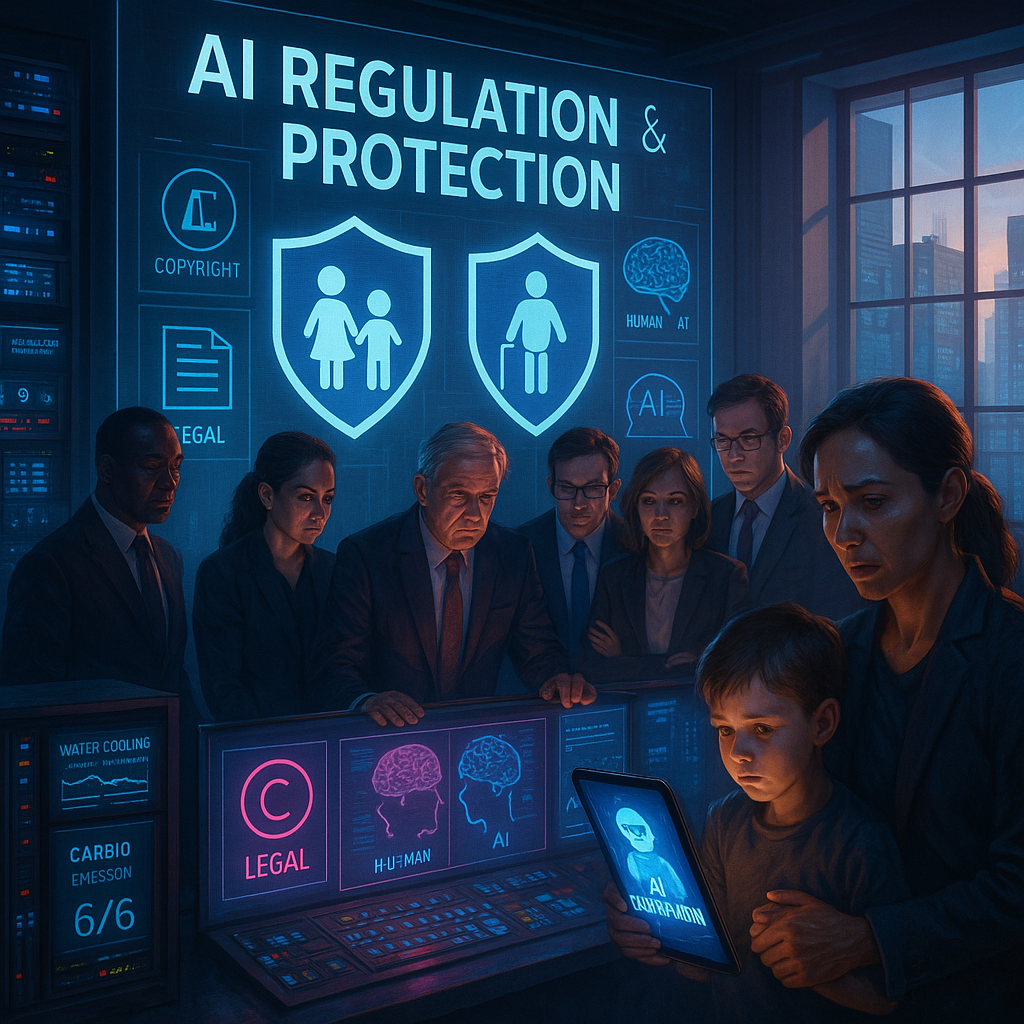
- On 11 December 2025, the Press Review highlights increasing demands to protect children and vulnerable individuals in an AI-transformed society as 42 state attorneys general advocate for regulatory safeguards.
- Top story: 42 state attorneys general urge stronger AI protections for children and vulnerable groups, raising concerns about safety, manipulation, and data exploitation.
- Howard Marks warns that AI poses threats beyond job displacement, challenging the fundamental purpose and meaning in human life and prompting essential philosophical questions for AI society impact.
- Major news outlets file lawsuits against AI companies for copyright infringement, intensifying debates over intellectual property in the era of generative technologies.
- Palm Beach County delays a planned AI data center in response to community opposition, illustrating tensions between technology advancement and local impact.
- AI society impact: Across these stories, AI’s rising influence drives urgent inquiry into boundaries, personal agency, and creative authorship.
Introduction
On 11 December 2025, concerns about AI society impact gain prominence as 42 state attorneys general demand concrete safeguards to protect children and vulnerable users from manipulation and data misuse. Howard Marks echoes this call, warning that artificial intelligence risks not only employment but also the foundations of human purpose. He frames today’s exploration of AI’s disruptive societal influence.
Top Story
42 State Attorneys General Demand AI Safeguards
A coalition of 42 state attorneys general has issued a joint demand for comprehensive AI protections. This bipartisan group, led by California and Texas, called on federal regulators to establish clear guidelines for artificial intelligence deployment in sectors such as healthcare, financial services, and public infrastructure.
The attorneys general underscored concerns about privacy violations, algorithmic discrimination, and potential labor market disruptions. Their 42-page letter to Congressional leaders urged prompt legislative action rather than waiting for negative consequences to emerge.
California Attorney General Maria Sanchez stated that society stands at a pivotal moment. The direction of AI development will influence future generations. The coalition emphasized that current regulations are inadequate as AI systems rapidly integrate into key areas.
Stay Sharp. Stay Ahead.
Join our Telegram Channel for exclusive content, real insights,
engage with us and other members and get access to
insider updates, early news and top insights.
 Join the Channel
Industry Response
Technology companies responded with mixed reactions. Some supported the need for “reasonable guardrails” but opposed what they described as overreaching restrictions that could hinder innovation. The AI Industry Association argued that excessive regulation may drive technological advances overseas.
Jonathan Wu, Google’s AI Ethics Director, countered that clear regulatory parameters can promote responsible AI development. Several smaller startups expressed support for defined boundaries, arguing that clarity would help level the competitive landscape.
This debate illustrates deeper philosophical tensions about whether technology should evolve freely or under preventative frameworks focused on public interest. The bipartisan nature of the coalition highlights that AI governance extends beyond traditional political lines.
AI’s disruptive societal influence has raised foundational questions about purpose and regulation in an era where new technologies continually outpace existing frameworks.
Also Today
Environmental Impact
Research Reveals Hidden Carbon Costs
A Stanford University study published today reports that AI systems have greater environmental costs than previously recognized. Researchers found that training a single large language model produces carbon emissions equivalent to 125 round-trip flights between New York and San Francisco.
The study’s authors noted that current sustainability reports from the industry may underestimate emissions by excluding the environmental impact of building computational infrastructure and cooling systems. Lead researcher Dr. Emily Chen called these overlooked costs “a blind spot in our collective understanding of AI’s societal impact.”
In response, companies including OpenAI and Anthropic announced initiatives for increased transparency. They pledged quarterly emissions reports and efforts to improve efficiency in AI training.
Water Usage Concerns
In a related move, officials in three Western states have started reviewing water consumption at data centers supporting AI systems, particularly in drought-affected areas. Cooling requirements in these facilities can use millions of gallons of water daily.
Nevada Water Resources Commissioner James Holbrook stated that community water security must not be sacrificed for technological gains. Some municipalities have implemented water usage caps targeting high-consumption computing facilities.
In response, tech firms are researching alternative cooling technologies and moving some operations to regions with ample water supplies. This growing friction underlines how environmental limits intersect with the physical demands of AI infrastructure.
Building computational infrastructure for advanced AI can drive up resource and energy needs, making hardware and data center design critical for the future of sustainable technology.
Psychological Effects
Digital Relationship Boundaries
New research from the Oxford Internet Institute reveals that 37% of regular AI companion users report decreased interest in human relationships. Tracking 3,400 participants over 18 months, the study documented changes in social expectations and satisfaction among heavy users.
Psychologist Dr. Sarah Thompson explained that the “perfect responsiveness” of AI companions can lead to unrealistic standards for human interaction. This recalibration in expectations has coincided with a 22% rise in mental health services addressing “digital relationship displacement” over the past year.
Therapists have begun designing targeted interventions for patients withdrawing socially due to reliance on AI companionship.
AI companions act as mirrors for identity and self-perception, shaping how users relate to both technology and each other in novel ways.
Childhood Development Concerns
Pediatric associations across Europe have released guidelines recommending strict limits on children’s contact with generative AI. The guidance cites research indicating that conversational AI may disrupt language acquisition and social development milestones.
Stay Sharp. Stay Ahead.
Join our Telegram Channel for exclusive content, real insights,
engage with us and other members and get access to
insider updates, early news and top insights.
Join the Channel
Developmental psychologist Dr. Andreas Weber emphasized the importance of human feedback, stating that children benefit from imperfect human interactions. The recommendations call for no AI use among children under four and supervised, time-limited exposure for older children.
In response, edtech companies are creating AI interfaces with built-in usage constraints. These emerging standards reflect a widening recognition of AI’s specific effects on young minds and the need for tailored governance.
Legal Precedents
Landmark Copyright Ruling
The Federal Circuit Court has delivered a significant ruling, determining that AI-generated content from copyrighted materials can be “transformative use” under specific conditions. The Publishers Alliance v. NexusAI decision establishes a three-part framework for assessing fair use claims involving generative AI.
Legal experts regard the decision as balancing creative rights with technological innovation. Intellectual property attorney Miranda Johnson stated that the framework neither gives AI companies unchecked access nor blocks legitimate development.
The court clarified that while training AI on copyrighted material may be allowed, generating content that competes directly with original creators could require compensation. Several publishers have announced plans to appeal to the Supreme Court.
Emerging Liability Frameworks
Separately, Connecticut has become the first state to enact comprehensive AI liability legislation, clarifying who is responsible for harms caused by AI. The law adopts a “proportional liability” model, distributing accountability among developers, deployers, and users based on their roles and level of control.
Governor David Chen stated that accountability is essential when AI causes harm. Legal commentators suggest that this law may serve as a blueprint for other states.
While most industry voices support the balanced approach, some continue to express concern over complexities in compliance across various state laws. The trend toward diverse state regulations is increasing calls for federal standardization.
Legal standards and protections for AI development are rapidly evolving in response to liability and governance challenges.
What to Watch
- Senate Commerce Committee hearings on AI regulatory frameworks (17 December 2025)
- Supreme Court review of the Publishers Alliance v. NexusAI copyright decision (12 February 2026)
- Implementation of AI impact assessment requirements for federal contractors (1 March 2026)
- International AI Governance Summit in Geneva (5-8 April 2026)
- Deadline for the California State AI Transparency Act implementation (1 July 2026)
Conclusion
The collective action by 42 state attorneys general to reinforce AI safeguards marks a crucial juncture in confronting the broader AI society impact, especially for vulnerable groups. Developments in legal standards, environmental responsibility, and mental health research underscore society’s growing readiness to address AI’s complexities. What to watch: imminent Senate hearings and new regulatory frameworks will reveal how responsive governance can align technological progress with the protection of people and community values.
Mental health research and digital well-being will remain at the forefront as AI technologies become deeply integrated into daily life.


Leave a Reply