
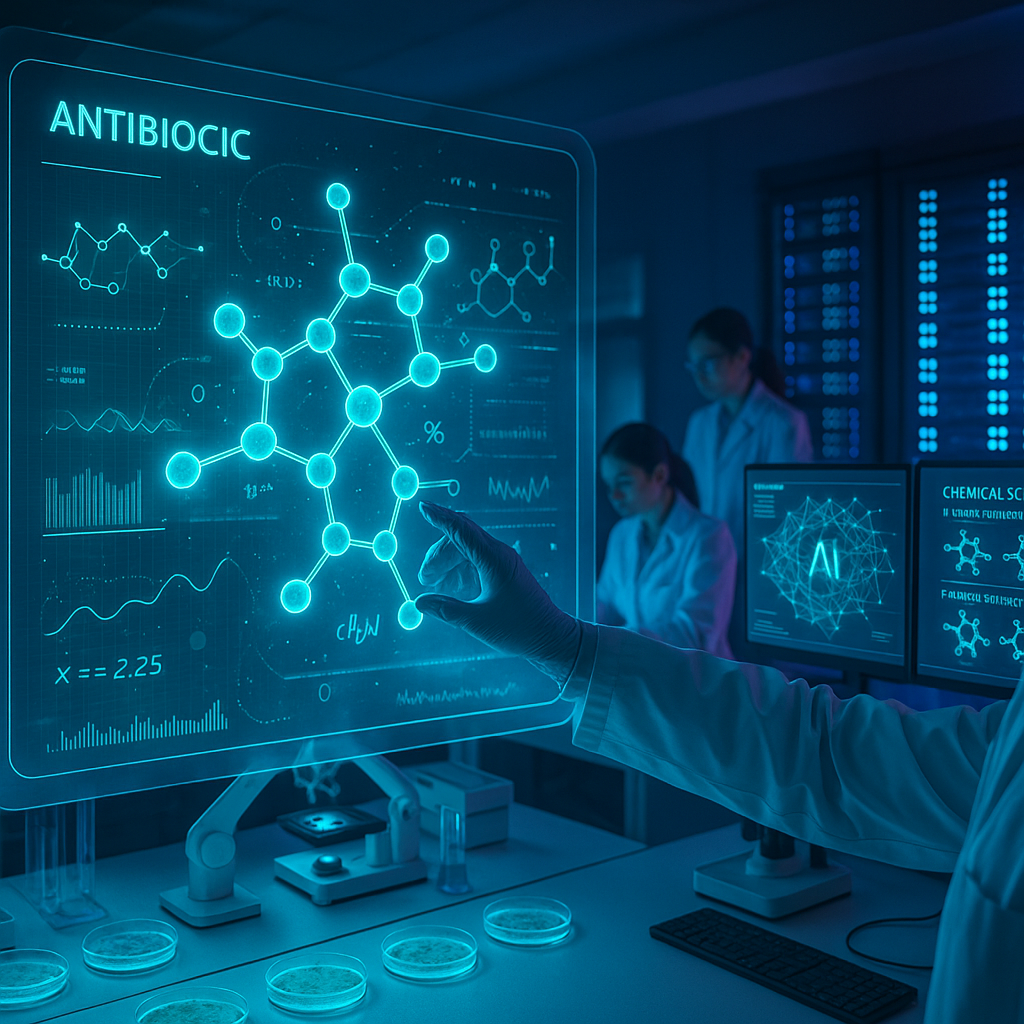
Key Takeaways
-
AI Turbocharges Antimicrobial Compound Discovery: Artificial intelligence is radically accelerating the identification and optimization of promising antimicrobial agents. Drug discovery AI sifts through vast chemical spaces, predicting compound efficacy on a scale incomparable to traditional methods, opening doors to breakthroughs that were once beyond reach.
-
Machine Learning Sharpens Target Identification and Design: Sophisticated machine learning models now unveil novel drug targets, forecast molecular behaviors, and simulate intricate biological interactions. This fusion of data and algorithm increases both the precision and success rate of antimicrobial development, reducing wasted effort and fueling new scientific insight.
-
Lab-in-the-Loop Bridges Digital Prediction and Wet-Lab Validation: The powerful alliance between AI-driven computational predictions and real-world laboratory validation creates a feedback loop that continually refines results. This approach reduces false positives, shortens experimental cycles, and ushers in a new era of efficient pharmaceutical innovation.
-
Generative AI Unlocks Untapped Chemical Diversity: Generative algorithms, including deep neural networks, can now design entirely novel molecular structures. This expansion of the chemical universe is reshaping computational drug design, providing creative solutions to long-standing issues such as antibiotic resistance.
-
Regulatory Navigation Is a Pivotal AI Challenge: As AI transforms antimicrobial research, navigating evolving regulatory frameworks becomes essential. Adherence to international standards and transparency protocols is now a determinant of both viability and acceptance for AI-driven discoveries within pharmaceutical communities.
-
Interdisciplinary Integration Fuels Innovation: The future of antimicrobial discovery is deeply interdisciplinary, spanning computational science, microbiology, chemistry, and regulatory affairs. Collaboration across these fields is essential, as AI-enabled development depends on diverse expertise and adaptability.
-
AI Holds Promise Against Drug-Resistant Bacteria: Through its remarkable predictive capabilities and rapid analytical power, AI is uniquely positioned to tackle the mounting crisis of antibiotic resistance. This technology brings new hope for tomorrow’s therapies, delivering potential cures where traditional methods fall short.
As you move into the main body of the article, you will discover how these technological advances are not just reshaping the drug discovery pipeline but are also influencing the regulatory, scientific, and operational frameworks that drive pharmaceutical innovation in the 21st century.
Introduction
Bacterial resistance is advancing rapidly, outpacing many traditional drug discovery strategies and intensifying the call for groundbreaking solutions. In this climate of urgency, drug discovery AI steps onto center stage. This suite of transformative tools is redrawing the boundaries of antimicrobial research. By harnessing machine learning, lab-in-the-loop feedback cycles, and generative molecular modeling, AI-powered pharmaceutical applications are now capable of exploring enormous chemical spaces, refining candidate molecules, and uniting computational predictions with experimental validation. This dramatically accelerates the search for next-generation antibiotics and targeted therapies while opening entirely new avenues for innovation.
The reach of these innovations extends far beyond the laboratory bench. For pharmaceutical leaders, practitioners, and researchers, utilizing antimicrobial research AI means gaining a competitive edge in compound identification, mastering emerging regulatory dynamics, and driving unprecedented cross-disciplinary collaboration. In the following sections, we will examine how AI technologies are not only quickening the pace of discovery but also redefining the very standards by which precision, efficiency, and clinical relevance are judged in the ever-intensifying battle against drug-resistant infections.
AI’s Current Impact on Antimicrobial Research
Accelerating Target Identification
Artificial intelligence is fundamentally changing how scientists identify potential antimicrobial targets, ushering in an era where computational power meets biological complexity. Modern machine learning models now examine enormous bacterial genomic datasets to reveal conserved genes vital to pathogen survival. These genes often eluded classic research techniques. AI-enabled platforms do this by harmonizing diverse types of data, such as genomic, proteomic, and metabolomic profiles, to build complex network models that pinpoint where bacteria are most vulnerable.
Stay Sharp. Stay Ahead.
Join our Telegram Channel for exclusive content, real insights,
engage with us and other members and get access to
insider updates, early news and top insights.
 Join the Channel
A vivid example can be found in Insilico Medicine’s target identification platform. By analyzing over 100,000 bacterial genomes and aligning them with human protein datasets, the system filtered for targets exclusive to pathogens. This approach led to the discovery of 37 previously unexplored bacterial targets. Of these, three moved to lead optimization stages, representing a nearly fivefold acceleration compared to more conventional screening methods.
The true potential of drug discovery AI rests in its ability to simultaneously evaluate a target’s druggability, essentiality, and the likelihood of resistance development. These systems improve in accuracy over time by learning from each new round of experimental results, creating a self-reinforcing cycle that fuels increasingly precise and actionable identification.
Advanced systems further enhance this process by considering evolutionary conservation across a broad range of bacteria. This capability is simultaneously scientific and strategic. It enables the prioritization of targets with the potential for broad-spectrum antibiotics, a pressing need as multidrug-resistant infections become common across hospitals and clinics worldwide.
Transforming Molecular Design and Screening
The fusion of AI and molecular design has revolutionized the drug discovery process for antimicrobials. Deep learning architectures, including generative adversarial networks (GANs) and transformer models, now forge novel antimicrobial scaffolds at unprecedented speeds. Far from simply mimicking existing drugs, these technologies generate molecules with desired physical and chemical properties, structural diversity, and enhanced potential to overcome resistance.
For instance, advanced AI systems can design molecules optimized for membrane permeability (particularly critical for targeting tough gram-negative bacteria), reduce susceptibility to bacterial efflux pumps, optimize binding affinities, and select for chemical structures less likely to foster cross-resistance with existing treatments.
A landmark case comes from MIT, where a deep learning system identified halicin, a molecule with a novel antimicrobial mechanism, after screening over 107 million compounds in just three days. This approach stands in sharp contrast to the protracted years required by conventional high-throughput screening.
Pharmaceutical AI applications also uplift the efficiency of virtual screening. Breakthroughs like DeepMind’s AlphaFold2, integrated with molecular docking tools, are improving the accuracy of hit identification by more than a third compared to traditional methods. As a result, early discovery costs fall dramatically, and research teams can pursue broader portfolios despite budgetary constraints, strengthening efforts across healthcare, biotechnology, and infectious disease sectors.
Predicting Pharmacokinetic Properties
Predicting how a new antimicrobial will behave in the body is one of the most complex challenges in drug development, especially for drugs targeting elusive gram-negative organisms. AI-powered ADMET prediction tools have significantly sharpened the precision of these critical pharmacokinetic and toxicological assessments in early-stage discovery.
These advanced models leverage antimicrobial-specific datasets to confront the unique hurdles of the field:
- Bacterial Membrane Penetration: Graph neural networks predict which molecules will successfully accumulate within bacterial cells, reducing costly attrition in later development phases.
- Metabolic Stability: Recurrent neural networks highlight metabolic liabilities particular to novel antibiotic structures, informing safer and more effective design.
- Toxicity Profiling: Multi-task deep learning systems evaluate multiple toxicity endpoints simultaneously, supporting nuanced risk assessments and safer therapeutics.
- Tissue Distribution Modeling: AI frameworks now predict penetration into specific infection sites (such as the central nervous system or deep tissue), helping to tailor agents for diseases like meningitis.
A recent highlight is Exscientia’s AI-designed antibiotic EXS-1389, which targets Acinetobacter baumannii. The compound was developed with fewer design-synthesis-test cycles, a 60% reduction from traditional approaches, and displayed excellent distribution in lung tissue. That’s a vital advance for respiratory infections.
Unified AI frameworks that blend structure-based and ligand-based methodologies have proved particularly successful. They provide robust ADMET predictions even with limited training data, an advantage given the relatively small but critical datasets available for antibiotics compared to other drug classes.
Optimizing Antimicrobial Combinations
The strategic combination of antibiotics is a linchpin against resistance. AI has revolutionized this arena by allowing researchers to examine massive combinatorial spaces via sophisticated predictive models, replacing laborious trial-and-error with targeted experimentation.
Modern neural network models, including those equipped with attention mechanisms, now predict synergistic (and antagonistic) antibiotic interactions with remarkable reliability. These systems analyze a tapestry of information—chemical structures, transcriptomic responses, resistance gene profiles, and bacterial genome data—to prioritize the most promising combinations.
For example, BenevolentAI’s combination prediction platform singled out a new synergy between cefepime and amoxicillin, neutralizing a difficult beta-lactamase resistance mechanism. Out of 10,000 theoretical pairings, only 80 needed laboratory confirmation. That’s an extraordinary reduction in required benchwork.
AI-guided strategies dramatically lower costs and accelerate timelines, essential for research teams operating under time or resource constraints. They have been particularly transformative in developing combination therapies that target multiple resistance mechanisms, balance pharmacokinetics for effective concentrations at infection sites, minimize toxicity, and disrupt persistent biofilms.
These advances are changing treatment paradigms for complex infections, including multidrug-resistant tuberculosis and recalcitrant intra-abdominal infections, with ripple effects felt across healthcare, emergency medicine, and infectious disease clinics.
Stay Sharp. Stay Ahead.
Join our Telegram Channel for exclusive content, real insights,
engage with us and other members and get access to
insider updates, early news and top insights.
Join the Channel
Challenges in Implementing AI for Antimicrobial Discovery
Data Quality and Availability Issues
Despite meteoric technical progress, AI in antimicrobial research faces entrenched challenges surrounding data quality and availability. The foundation of effective machine learning is robust, comprehensive data. That’s a standard that remains elusive in the antimicrobial domain.
Problems arise from several sources:
- Fragmented Historical Records: Much of the existing antimicrobial data is dispersed across non-standardized databases, often in incompatible formats, stymying integration.
- Inconsistent Methodologies: Variations in laboratory protocols hinder reliable cross-study comparison and model training.
- A Bias Toward Positive Results: Scientific publishing has historically underrepresented negative or null outcomes, skewing AI training datasets toward false optimism.
- Data Silos: Commercial caution and competitive pressures frequently keep valuable antimicrobial data locked within proprietary platforms.
Efforts such as the Antimicrobial Resistance (AMR) Consortium’s ATLAS database (housing surveillance data on over 760,000 bacterial isolates) are steps in the right direction but are only the start of what is required for comprehensive AI model development.
Further, recent Cambridge research found that antimicrobial discovery datasets contain markedly fewer comprehensively characterized compounds than those in cancer or metabolic research. That hampers model robustness precisely where it is needed most. The dearth is particularly acute for gram-negative antibiotics, the area hardest hit by resistance.
To overcome these barriers, organizations are developing creative strategies, including:
- Transfer Learning: Leveraging larger, adjacent datasets as a foundation, then refining models with specialized antimicrobial data.
- Active Learning: Employing algorithms that guide experimentation toward the most informative data points, maximizing the value of each lab cycle.
- Data Augmentation: Generating synthetic data to enrich small training sets, expanding the horizon of potential predictions.
- Federated Learning: Allowing collaborative AI development across institutions without the need to directly share sensitive data, balancing innovation with intellectual property concerns.
These approaches are rapidly becoming best practices for organizations determined to implement AI successfully in real-world antimicrobial discovery efforts.
Addressing Model Interpretability
Another significant barrier is the interpretability of advanced AI models. The complexity of state-of-the-art deep learning systems can raise red flags in environments where mechanistic transparency is not a preference, but a requirement. Regulatory agencies, clinicians, and scientists all demand explanations for why an AI system highlights one molecular candidate over another. Especially when patient safety is at stake.
This challenge is particularly relevant in areas such as:
- Target Identification: When an algorithm identifies new putative drug targets, scientists and regulators want to understand the rationale and evidence supporting these selections.
- Compound Prioritization: Researchers must trust that AI’s molecular recommendations rest on explainable patterns, not on inscrutable mathematical quirks.
- Toxicity and Risk Predictions: In both human healthcare and agricultural use cases, regulatory clearance hinges on clear, reproducible reasoning behind safety assessments.
Recent advances in model interpretability, like attention visualization, saliency maps, and surrogate models, are helping to address these concerns. By demystifying the “black box”, these tools enable teams in biotechnology, healthcare, and even legal and regulatory spheres to build trust, secure approval, and maintain scientific rigor.
Moreover, cross-disciplinary collaboration (bringing together computational scientists, experimental microbiologists, clinical practitioners, and regulatory experts) proves vital in interpreting AI-driven findings effectively. This interdisciplinary approach ensures that innovative AI insights translate safely into tangible therapeutic advances across diverse sectors, from hospital clinics to agricultural disease management.
Conclusion
AI-powered innovation continues to redefine the contours of antimicrobial research, bringing unprecedented speed, accuracy, and creative power to every phase. This spans target selection, molecular design, pharmacokinetics, and combination therapy optimization. By seamlessly weaving together genomic, chemical, and clinical datasets, these systems vastly expand the universe of potential drug candidates while driving efficiencies crucial to defeating drug-resistant threats.
However, the future is not merely a product of technical achievement. The real challenge lies in overcoming persistent obstacles: fragmented data landscapes, opaque model decision-making, and the imperative for regulatory transparency. The next leaders in antimicrobial discovery will be those who build transparent, adaptable AI strategies, foster interdisciplinary collaborations, and dismantle entrenched data silos.
This is not just a scientific or technical shift. It is a cultural and philosophical one. For those who are intellectually curious and strategically minded, this intersection between AI and antimicrobial research is more than theory. It is an arena where the pulse of innovation meets the urgency of global health, shaping the destiny of medicine’s oldest and most consequential struggle.
Looking ahead, organizations and individuals willing to embrace openness, collaboration, and responsible technology will find themselves at the forefront of discovery. The promise is enormous, but so is the responsibility. As “alien minds” continue to augment our human understanding, the profound question is not simply whether AI will change the fight against resistance, but how wisely and creatively we will harness these strange new allies to build a world where medicine stays ahead of mutation. The time for thoughtful, inclusive action is not tomorrow. It is now.
collaborative AI development across institutions



Leave a Reply